The Pentagon Opened the UFO Vault Again — and the Real Story Is What It Still Will Not Say

The Vault Opens Again
What if the most powerful government on earth has been keeping a diary for eighty years — and has just allowed you to read a few more pages, with the most important lines still blacked out? That is what happened on Friday, 20 November 2026. The United States Department of War published the eighth release of declassified Unidentified Anomalous Phenomena files under PURSUE, the Presidential Unsealing and Reporting System for UAP Encounters. Forty-three new records. Forty documents and three videos. A total archive that now stands at 521 files, released in eight batches since the programme began in May 2026 on President Donald Trump’s February directive.
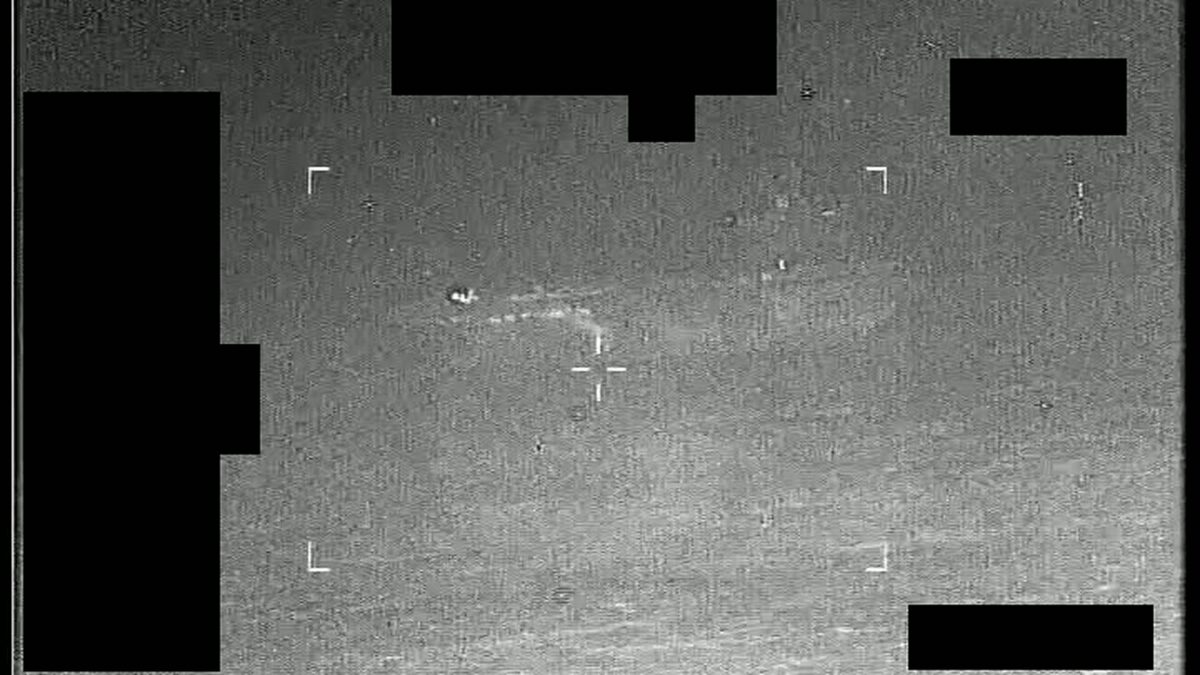
Three of the new videos were filmed by American military sensors over the Middle East. One of them, twenty seconds of black-and-white infrared from 2020, shows a small bright object gliding past what looks like a warship, then rising away into the dark. The Pentagon’s own label on all three clips is a single word: unresolved. Not alien. Not explained. Unresolved. And that word, I tell you plainly, is the whole story of the last eighty years.
For this is not the first time a government has opened a drawer, shown the public a handful of papers, and asked to be praised for its honesty. The pattern is older than the files themselves. In 1947 a pilot named Kenneth Arnold saw nine shining objects flying in formation over Mount Rainier in Washington State, moving, by his estimate, at some 1,600 kilometres an hour. Within weeks came Roswell. Within five years came the summer of 1952, when radar screens over Washington itself lit up with returns no controller could explain, and fighter jets were scrambled over the capital of the United States. And what did the state do then? Precisely what it is doing now. It released a little, explained a little, and filed the rest under a stamp that said: trust us.
Reader, I have spent my life watching power behave in exactly this way — in politics, in war, in the courts of kings and the corridors of ministries. The technique never changes. You do not defeat a question by answering it. You defeat it by answering a smaller question beside it, loudly, and hoping no one notices the difference. The eighth release of the PURSUE files is a masterclass in that old art. So let us read what was actually released, what the documents say in their own words, and what they still refuse to say. For the files are real, the footage is real, and the silence around them is the most revealing document of all.
What the Eighth Release Actually Contains
The facts first, because without facts a column is only noise. The Department of War’s own statement, issued on 20 November and attributed to its chief spokesman Sean Parnell, is short and careful: “Today, the Department of War is publishing the eighth release of declassified and historical Unidentified Anomalous Phenomena (UAP) files as part of the Presidential Unsealing and Reporting System for UAP Encounters (PURSUE). The collection continues to be housed on WAR.GOV/UFO, and the Department will release additional files on a rolling basis.” Parnell added that the department and its agency partners are “actively working on the next release.” The Secretary of War, Pete Hegseth, has said it is time for Americans to see the files with their own eyes.
The batch runs to 43 records spanning the years 1949 to 2026: six documents from the Central Intelligence Agency, and 34 documents plus three videos from the Department of War. The three videos were submitted by United States Central Command to the All-domain Anomaly Resolution Office, AARO — the Pentagon office created to investigate such reports — and all three were recorded by military sensors over the Middle East. Their exact locations and dates have not been disclosed, and parts of the frames are covered by black redaction boxes, a reminder that even in disclosure, the state keeps its hand over the lens.
The first clip, catalogued as DOW-UAP-PR166, is twenty seconds of infrared footage from 2020. Newsweek’s description of it matches what anyone can see with their own eyes: the outline of a ship, resembling an aircraft carrier, and a small bright dot that passes beside it from right to left, then moves away upward. The second, from 2023, is thirteen seconds long: a dot filmed from above that abruptly changes direction several times. The third, from 2026, is the longest at fifty-four seconds: several dots cross the frame together while the sensor zooms in and briefly loses two of them. The department’s accompanying text says the government could not determine what the footage shows, in some cases because there was too little data — and it adds, with unusual openness, that it welcomes independent analyses.
Alongside the videos sits a radar case that has already travelled around the world. A civilian air-surveillance radar recorded eight detections over eighty-four seconds in 2023, at altitudes between 55,000 and 70,000 feet. If those eight returns all belonged to a single object, it would have covered about 62 kilometres in that time — an average speed of roughly 1,650 miles per hour, about Mach 2.5. CBS News reported the figures from the Pentagon’s own slide. But the slide itself carries the warning that matters more than the number: the data are not sufficient to confirm that the eight returns came from the same object at all. A speed that exists only on the condition of an assumption is not a measurement. It is a hypothesis wearing a uniform.
1952: The Year the CIA Took the Saucers Seriously
The oldest papers in this release are also the most instructive, because they show us a government discovering, in real time, that it does not know what is flying in its own sky. Six CIA documents from July to December 1952 follow the agency week by week after the Washington radar sightings. One of them, a briefing dated 14 August 1952 from the CIA’s Office of Scientific Intelligence, assesses the Air Force’s flying-saucer investigation and its intelligence implications. Its numbers are startling even now: about 1,500 reports from across the United States, 250 of them in July 1952 alone, and the Air Force’s Air Technical Intelligence Center had classified about twenty per cent of the cases it examined as unexplained.
Think about that figure for a moment. One in five. In the summer of 1952, the richest and most heavily armed nation in human history looked at its own skies and admitted, in its own classified memoranda, that one report in five defeated explanation. The same briefing reaches back to Kenneth Arnold’s sighting of June 1947 — nine disk-shaped objects in formation — and records the discussion of convening a panel of scientists to assess the evidence. Other papers in the batch, as summarised in the coverage of the release, show officials weighing whether flying saucers could be studied for psychological warfare while keeping public interest quiet. The state was not merely puzzled. It was calculating what the puzzle was worth.
History, as I have always argued in these columns, is a mirror, and the mirror of 1952 reflects our own hour with uncomfortable clarity. The Washington flap happened at the height of the Cold War, when every unknown object was first suspected of being Soviet. The state’s response was to build an institution for the unknown — Project Blue Book, which ran from 1952 to 1969 and examined more than twelve thousand sightings, hundreds of which it never explained — and then, in 1968, to commission a university study, the Condon Report, that concluded there was nothing to see, and to close the office in 1969 as if a conclusion on paper could close a question in the sky. The sightings did not stop. Only the filing stopped. That is the first lesson of these files: a government can end an investigation. It cannot end a phenomenon.
The Engineer Who Built the Blackbird
If this release has a human heart, it beats in a report catalogued as DOW-UAP-D206. On 16 December 1953, at around five in the afternoon, Clarence “Kelly” Johnson — the chief engineer of Lockheed, the man who would design the U-2 and the SR-71 Blackbird, the fastest aircraft ever flown — stood on his ranch near Agoura, California, and watched a dark, elongated, elliptical object hang motionless in the gold and red light of the sunset. At first he took it for a cloud or a smoke trail. Then he looked through binoculars. The object stayed. Then it moved away. A drawing attached to the report shows light blue flames at the rear of the object. At roughly the same time, a Lockheed test crew aboard a WV-2 aircraft near Point Mugu reported an object of their own. The report was compiled on 20 January 1954.
The Air Force’s Air Technical Intelligence Center classified the sighting as a lenticular cloud. Johnson, according to the astronomer Avi Loeb’s summary of the file, wrote that he believed more firmly than ever that such devices exist. Pause on that sentence, reader. This is not a farmer frightened by a light, nor a teenager with a camera. This is the engineer who built the machines that defined the century’s idea of flight, telling his own government that what he saw was a device — and his government filing his testimony under the word “cloud.”
There is a cruelty in that filing, and a lesson in it too. Institutions do not lie by inventing facts. They lie by choosing the smallest possible explanation and stamping it as final. A lenticular cloud is a real thing; it is also, in this case, an explanation that the witnesses themselves rejected, describing the object’s apparent movement and sharply defined edges. The file contains no radar data, no photographs, no physical evidence that could settle the matter — and that absence, I submit, is itself the point. When the most credible witness imaginable reports the incredible, the system does not investigate harder. It investigates just enough to file the report away.
The Videos: What They Show, and What They Do Not
Let me now be as honest with you as the Pentagon has been cautious with us. The three new videos are genuine military sensor recordings, and they are genuinely unresolved. But unresolved is not the same as inexplicable, and inexplicable is not the same as extraterrestrial. The sober science matters here, and I will not trade it for a thrill.
Jacob Haqq-Misra of the UAP Science Advisory Council ran a preliminary analysis of the footage, as reported by Avi Loeb. In the 2026 clip, seven of the objects show periodic changes in infrared brightness of exactly the kind expected from birds flapping their wings; four of them appear to beat about eight times per second. He found one such object in the 2023 video. The analysis is preliminary and has not appeared in a peer-reviewed journal, but it is the kind of patient, unglamorous work that actually moves a mystery toward an answer. Loeb’s own assessment is blunt: the batch contains no measurement that points to technology of non-human origin. The 2020 clip, he adds, could also be a bird, but it is too faint and grainy to decide convincingly. And the Pentagon itself notes that these cases often lack sufficient data — no mission reports, no other sensor data, nothing that could settle what the dots are.
I admire that honesty, and I also notice its limits. The government has released three videos with the sensor data blacked out, the locations withheld, and the dates undisclosed, and then invited the public to analyse them. That is rather like handing a man a locked box and praising him for his freedom to shake it. The former head of AARO, the physicist Sean Kirkpatrick, warned readers in The Independent’s coverage not to expect a document with photographs of visitors from elsewhere, because, in his words, that document “just doesn’t exist.” AARO’s standing position, repeated across the programme, is that it has found no verifiable evidence of extraterrestrial activity. I record that position here because a column that hides the sceptical case is not a column. It is a sermon.
And yet — and yet. The same release contains seventeen Air Force intelligence reports from 1956 and 1957, including the original twenty-one-page investigation of Levelland, Texas, where witnesses described an oval object on the ground and cars stalling on the road beside it. It contains eight Project Blue Book case files from 1949 to 1966. It contains the 1953 sighting of the man who built the Blackbird. A single video of a dot may be a bird. A pattern of dots, across eighty years, across every administration and every war, is not a bird. It is a question that has outlived every attempt to file it away.
The Vault Under the Desert
The strangest document in the release is also the longest: a 538-page report dated July 2009, prepared by Bigelow Aerospace Advanced Space Studies — BAASS — under a contract with the Defense Intelligence Agency. The programme was funded by Congress at the urging of Senator Harry Reid of Nevada, and it investigated reported anomalous activity, including work associated with Utah’s Skinwalker Ranch, a property famous for decades of strange claims. A copy of the report had already surfaced online in 2025, but this is the first time the Pentagon itself has released it.
Read the plan inside it slowly, because it tells you what the people closest to this subject believed they might one day need. BAASS proposed an extremely secure underground vault, to be built at the Bigelow site in North Las Vegas, some four and a half to six metres underground, with a floor area of about 465 square metres and walls about ninety centimetres thick. Its purpose: to store objects and biological samples obtained from private individuals and companies, including material from Brazil. There is no public information on whether the vault was ever built. The government says it has found no record that it was. A later DIA official described the company’s reports as being of limited value, and the programme ended in 2012. Senator Reid’s letter of 24 June 2009, also in this release, asked for the programme to be given highly restricted special access protections. The request was denied.
NewsNation’s reporting on the release adds a detail that will travel further than any other in this batch: the report includes an account of an implant said to have been removed from the neck of a Brazilian military officer, with fleshy material attached to the object. I report that claim as a claim inside a contractor’s report, not as a fact, because the distinction is the entire discipline of this subject. A report that something was said is not proof that it happened. But a government that paid a contractor to write 538 pages about such things, and then kept the report from the public for seventeen years, has already told you something important: whatever the truth of the skies may be, the state took the question seriously enough to dig — quite literally — for an answer.
Why the Secret Matters More Than the Saucer
And here, reader, is where the column must turn from the sky to the ground, from the files to ourselves. For the deepest question raised by the eighth release is not whether the dots over the Middle East were birds or machines. The deepest question is why it took a presidential order, eight tranches, and eighty years of pressure for the most powerful government on earth to show its citizens forty-three files about lights in the sky.
Every empire in history has kept two sets of books: one for the public, one for the palace. The East India Company kept two sets of books in Bengal. The colonial office kept two sets of books in every territory it ruled. The modern security state keeps two sets of books about everything, from wars to weather, and the second set is always justified in the same language: national security, sources and methods, the public could not handle it. But a public that is never trusted with the truth is a public that is never permitted to grow up. And a state that treats its own citizens as children to be protected from facts will, sooner or later, treat them as subjects to be managed by fictions.
That is the true scandal of the UFO files. Not that the government may have hidden visitors from another world — for which, I stress again, this release contains no proof — but that it hid its own ignorance, and then hid the hiding. The CIA memos of 1952 show officials who knew they did not know. The Blue Book files show an office built to close questions, not to answer them. The Kelly Johnson report shows a hero of American engineering whose testimony was filed under “cloud.” The BAASS vault shows a state that prepared, in secret, for the possibility of recovered material while telling the public there was nothing to prepare for. At every step, the institution chose the comfort of a small explanation over the discomfort of an honest “we do not know.”
I am not asking you to believe in visitors from the stars. I am asking you to believe in something far more ordinary and far more proven: that power conceals, that concealment corrupts judgement, and that the only cure ever discovered for either is sunlight. The PURSUE programme, for all its limits, is sunlight — thin, filtered through redactions, arriving seventy years late, but sunlight all the same. Five hundred and twenty-one files are now public. A ninth release is already being prepared. The question is no longer whether the state will tell us everything. It will not, and no state ever does. The question is whether we, the public, will keep asking — politely, persistently, and with the evidence in our hands — until the habit of secrecy costs more than the habit of truth.
The Sky Is Still Asking
So what do we actually know tonight, on 21 November 2026, after the eighth release of the Pentagon’s UFO files? We know that the United States government has published 521 records about unidentified phenomena since May, and that 43 more arrived on 20 November. We know that three new military videos from the Middle East remain unresolved, that a 2023 radar track implies extraordinary speed only if several detections belonged to one object, and that the government itself says the data are insufficient to prove it. We know that in 1952 the CIA counted 1,500 reports and found one in five unexplained. We know that Kelly Johnson, the man who built the fastest aeroplane ever flown, saw something in the sunset of 1953 that he believed was a device, and that his government called it a cloud. We know that a defence contractor once drew plans for a vault under the Nevada desert to hold objects and tissue samples from around the world. And we know, from the Pentagon’s own investigators, that no verifiable evidence of extraterrestrial activity has yet been found.
That list is neither a revelation nor a debunking. It is something rarer in our age of instant certainty: an honest inventory of the unknown. And the unknown, I have learned in a lifetime of watching history repeat itself, is never the enemy. The enemy is the man who tells you the unknown has already been settled — whether he settles it with a saucer or with a cloud.
Look up tonight, if your sky is clear. The stars above you are the same stars that watched Kenneth Arnold in 1947, the same stars that hung over Washington in 1952, the same stars that Kelly Johnson watched darken over his California ranch. They have kept their secret for a very long time. The files will keep coming, the redactions will keep shrinking, and one day — perhaps not in my lifetime, perhaps not in yours — the last drawer will open. Until then, hold fast to the one discipline that has never failed the human race: ask for the evidence, read what is actually written, and never let any institution, however grand, do your wondering for you.
Sources & References
- U.S. Department of War — Department of War Publishes Eighth Release of Unidentified Anomalous Phenomena Files (20 November 2026)
- U.S. Department of War — PURSUE UAP archive, WAR.GOV/UFO
- Interesting Engineering — New Pentagon files reveal 1953 sighting of dark, elliptical UFO (20 November 2026)
- SkyGlitch — New UFO files: three Middle East videos and a Lockheed chief engineer’s 1953 sighting (21 November 2026)
- First Contact — PURSUE Program: Declassified UAP Files, Live Coverage 2026
- UFO Hunters — Pentagon Eighth UFO File Release: CIA Flying Saucer Papers, the BAASS Ten-Month Report and Three New Videos (20 November 2026)

About the Author — Abdul Mannan
Related Articles
Britain Knocks on Europe’s Door Again: The 100,000 Young People Who May Undo Brexit
She was twelve when Britain voted to leave the EU — too young to vote, old enough to…

Justice, Nine Years Late: The World Court Finally Calls the Rohingya Atrocity by Its True Name — Genocide
On 19 November 2026, the International Court of Justice ruled that Myanmar committed genocide against the Rohingya —…

The $190 Million Painting a Dying Man Could Not Sell: Van Gogh, the Chestnut Tree, and the Price of Genius
In May 1890, a 37-year-old Vincent van Gogh, newly released from an asylum, painted a blossoming chestnut tree…