Justice, Nine Years Late: The World Court Finally Calls the Rohingya Atrocity by Its True Name — Genocide

How Long Does a Word Take to Travel?
Nine years. I ask you, reader, to sit with that number for a moment before you read another line. Nine years is the time it takes a child to grow from a frightened five-year-old into a teenager who has never known a home. Nine years is the distance between a village burning in the dark and a courtroom in The Hague finally, finally speaking the one word that matters. On Thursday, 19 November 2026, the International Court of Justice spoke it. Genocide.
For nine years the world has circled that word like a man afraid to touch a live wire. We called it a crackdown. We called it clearance operations. We called it ethnic cleansing, a crisis, a tragedy, a humanitarian emergency, anything except the word the law itself had written for exactly this crime. And then, in a reading that lasted nearly three hours, the President of the Court, Judge Yuji Iwasawa of Japan, read out a sentence that will echo through history: the Republic of the Union of Myanmar has committed genocide against the Rohingya group in northern Rakhine State.
Nine judges to six. The highest court on earth. The first time in its eighty-year history that it has held a state responsible for committing genocide. Let that sink in. Not failing to prevent it. Not standing by while it happened. Committing it.
The Verdict the World Has Waited For
The facts, stated plainly, are these. The case was brought by The Gambia, a small West African nation thousands of miles from Rakhine State, in November 2019, under the 1948 Convention on the Prevention and Punishment of the Crime of Genocide. The Gambia argued that Myanmar’s military, in its so-called clearance operations of 2017, set out to destroy the Rohingya people. The Court agreed.
The judges found that Myanmar’s security forces intentionally committed acts prohibited under Article II of the Genocide Convention: the killing of members of the group, causing serious bodily and mental harm to members of the group, and imposing measures intended to prevent births within the group. The evidence, the Court said, established that at least 10,000 Rohingya were intentionally killed. The Court gave particular weight to the widespread acts of sexual violence, to the extreme violence against children, and to the attacks on Rohingya families as they fled in their thousands towards Bangladesh. The only reasonable inference, the judges concluded, was an intention to destroy a substantial part of the Rohingya population of northern Rakhine State, a community the Court numbered at roughly 815,000 souls before the operations began.
The Court also found that Myanmar had violated its obligations to prevent and punish genocide, had failed to enact the legislation the Convention requires, and had breached its own provisional measures order of January 2020. It ordered Myanmar to cease its violations, to guarantee they will never be repeated, to investigate and prosecute those responsible, and to make full reparation: to allow the safe, voluntary and dignified return of the displaced to their homes, to reunite families torn apart, to return or replace destroyed property, to help find the disappeared and give them proper burial, to provide physical and psychological rehabilitation to the injured, and to protect the Rohingya from further persecution. The amount of compensation will be decided in a later phase of the proceedings, and Myanmar must report to the Court within two years on what it has done.
The judgment is final. It is binding. There is no appeal.
History Is a Mirror, and This Mirror Is Eighty Years Old
I have always believed that history is not a museum. History is a mirror, and the present looks into it whether it wants to or not. This verdict cannot be understood without looking into that mirror, because the word at the centre of it, genocide, was itself born from a mirror image of horror.
In 1948, three years after the world had stood in the ashes of the Holocaust and sworn never again, the nations of the earth wrote the Genocide Convention. A Polish-Jewish lawyer named Raphael Lemkin had coined the word itself, from the Greek genos, a race or tribe, and the Latin cide, killing, because he understood that what had been done to the Jews of Europe, and to the Armenians before them, was not mere murder. It was the murder of a people as a people, the deliberate erasure of a group’s future. The Convention was humanity’s promise that no state would ever again be allowed to do that and call it an internal affair.
And yet, for seventy-eight years, the promise was kept only in half measures. The Court that wrote this week’s judgment had heard genocide cases before, and each time it stopped one step short. In 2007, in the case brought by Bosnia and Herzegovina, the Court found that Serbia had failed to prevent the genocide at Srebrenica, where more than 8,000 Muslim men and boys were slaughtered in July 1995. But it did not find that Serbia itself had committed genocide. The tribunals for Rwanda tried individuals, men who gave orders and pulled triggers, and rightly so. But no state, no flag, no government had ever been found guilty of the crime itself. Until Thursday.
Ask yourself what that means. For eight decades, the law had a word for the worst crime a state can commit, and it had never once used it against a state. Now it has. The precedent has been set, and precedents, once set, do not go back into the drawer. Every future case will begin from this one. That is why this verdict matters far beyond Myanmar, far beyond the Rohingya, far beyond the courtroom in The Hague. It matters because the law has finally done what it was written to do.
The Long Road to a Single Word
But let us not pretend that this verdict fell from the sky. It was carried to The Hague on the backs of the victims themselves, and the road was long and soaked in blood.
The Rohingya are a predominantly Muslim people who have lived for centuries in Rakhine State, in western Myanmar, along the border with Bangladesh. Successive governments treated them as foreigners in their own homeland. In 1978, the military government launched Operation Nagamin, and more than 200,000 Rohingya fled to Bangladesh. Then came the wound that never healed: the Citizenship Law of 1982, which recognised 135 national races and tied full citizenship to proof of ancestry before 1823. The Rohingya were not on the list. Overnight, a people who had lived in a land for generations became stateless in it, denied citizenship, denied the right to move freely, to study, to work, to marry without permission, to exist as equals. The United Nations would come to call them one of the largest stateless populations on earth.
The endgame came in August 2017. On 25 August, fighters of the Arakan Rohingya Salvation Army attacked some thirty police posts and an army base. What followed was not a counter-insurgency. It was, as the Court has now ruled, a campaign of destruction. Villages were burned to the ground. Men and boys were executed. Women and girls were raped, systematically, as a weapon. Children were slaughtered. Within months, around 740,000 Rohingya had fled across the border into Bangladesh, one of the fastest mass displacements of this century. The UN’s own investigators found sufficient evidence to warrant the prosecution of senior military officials for genocide.
And what did the world do? In December 2019, Myanmar’s then leader, Aung San Suu Kyi, the Nobel Peace laureate herself, travelled to The Hague and stood before the Court to defend her country’s army. It was one of the most painful spectacles of our age: a woman the world had once celebrated as a heroine of democracy, arguing that mass rape and the burning of villages were a legitimate response to terrorism. The Court was unmoved. In January 2020 it ordered provisional measures to protect the Rohingya. In July 2022 it confirmed it had jurisdiction. In January 2026, the main hearings on the merits were held. And on 19 November 2026, the verdict arrived.
In between, the men who ordered the killing seized power altogether. In February 2021, the military, led by Senior General Min Aung Hlaing, the same commander who oversaw the 2017 campaign, overthrew the civilian government in a coup. The prosecutor of the International Criminal Court, a separate court that tries individuals rather than states, requested an arrest warrant for Min Aung Hlaing in 2024 for crimes against humanity. The generals have never shown the slightest remorse. They denied everything, then and now.
The Small Country That Shamed the Great Powers
Now I want you to notice something, because it tells you everything about the world we live in. The case was not brought by a great power. It was not brought by the United States, or Britain, or France, or any of the nations that lecture the world about human rights. It was brought by The Gambia, a small West African country of barely two and a half million people, with the backing of the Organisation of Islamic Cooperation. Eleven states intervened in support, including Canada, Germany, the United Kingdom, France and the Maldives. But it was The Gambia that stood up.
Why does this matter? Because the Genocide Convention allows any state party to bring a case against another, even if it has no direct connection to the victims. The law calls this an obligation owed to all, erga omnes partes. Genocide, the law says, is not one country’s private business. It is everyone’s business. The Gambia understood that. The great powers, for the most part, did not act. They issued statements. They expressed concern. They waited. A small country with no army to speak of and no economic leverage did what the giants would not: it went to court.
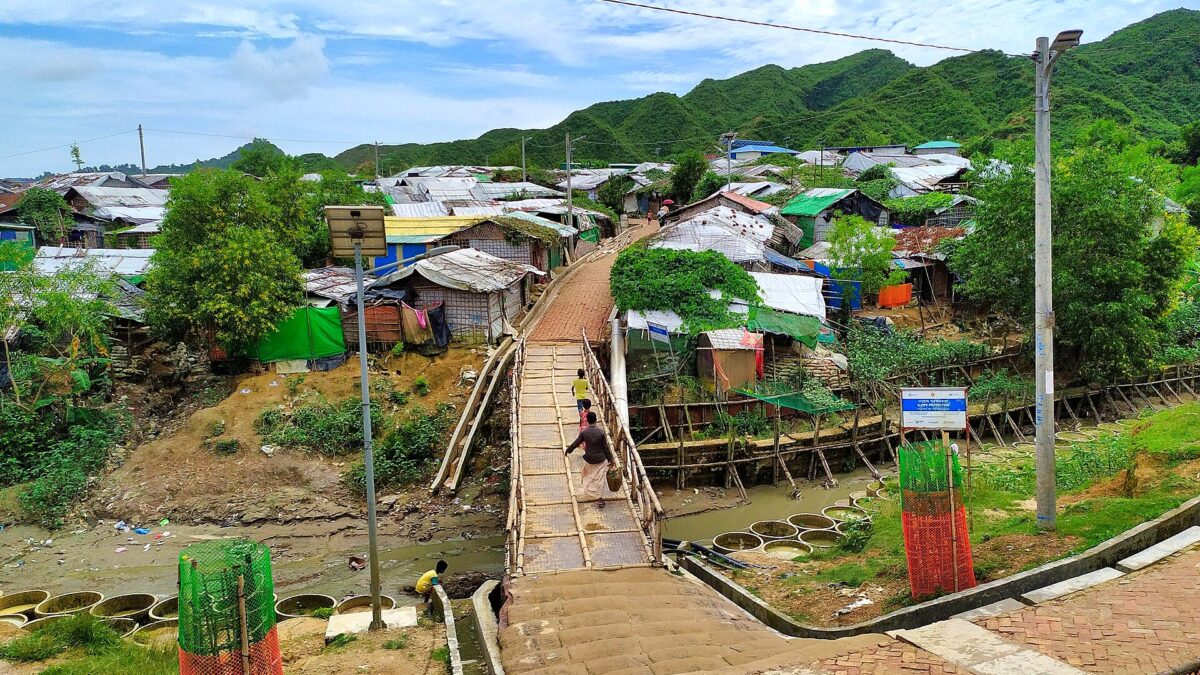
There is a lesson here for every reader, and I do not soften it. Justice does not arrive because the powerful decide to deliver it. Justice arrives because somebody, somewhere, refuses to accept that a crime can be committed in the open and forgotten in the dark. The Gambia’s lawyers spent seven years building this case, witness by witness, document by document, while the Rohingya waited in camps of bamboo and tarpaulin. Seven years. And the Court listened.
But Who Will Enforce It?
And now I must ask you the question that every honest person is asking tonight, in Cox’s Bazar and in The Hague alike: what happens next? Because here is the hard truth, and I will not hide it from you. The International Court of Justice has no police force. It has no army. Its judgments are binding, but it cannot send soldiers to enforce them. Its orders are transmitted to the United Nations Security Council, which may act, and which may not, because any one of its five permanent members can veto action. The generals in Myanmar have already shown, for nine years, that they do not care what the world thinks of them. Why would they start now?
This is the question that has haunted every genocide verdict in history, and it is the question that separates the cynic from the believer. The cynic says the judgment is a piece of paper. The believer says the piece of paper changes everything, slowly, the way water changes stone.
I tell you plainly: both are partly right. The verdict will not, by itself, bring a single refugee home tomorrow. It will not rebuild a single burned village. It will not raise the dead. No court can do that. But do not mistake the limits of a judgment for its uselessness. A judgment like this one does three things that nothing else can do.
First, it fixes the truth in the permanent record. From this day forward, no government, no diplomat, no apologist can say that what happened to the Rohingya is a matter of opinion. The highest court on earth has ruled, by nine votes to six, after seven years of evidence, that it was genocide. That is now a fact of law, and facts of law do not fade with the news cycle.
Second, it arms every other instrument of justice. Sanctions can now be imposed on a legal foundation that no one can dispute. Countries can invoke universal jurisdiction against individuals. Companies that did business with the Myanmar military, and the social media platforms whose algorithms amplified the hatred against the Rohingya, face a reckoning that is now far harder to dodge. And the case brought by South Africa against Israel, still pending before the same Court, will now be argued in the shadow of this precedent, whatever its outcome.
Third, and most importantly, it tells the victims that the world heard them. Agnes Callamard, the Secretary General of Amnesty International, called the ruling a rare victory for survivors. She is right. For nine years, the Rohingya have been told, in a thousand polite ways, to be patient, to wait, to accept that justice is slow. On Thursday, patience was rewarded. A child born in a camp in 2017 is nine years old today, and for the first time in that child’s life, the world has said, out loud and in law, that what was done to their family was a crime.
The Camps Are Still There
But I would be betraying you, and betraying the Rohingya, if I ended this column in celebration. Because the camps are still there. As of September 2026, more than 1.2 million Rohingya were registered in Bangladesh, most of them in the vast camp complex of Cox’s Bazar, the largest refugee settlement on earth. About 520,000 Rohingya remain inside Myanmar, many of them living under severe restrictions, and their situation has worsened since the 2021 coup. Since early 2024, more than 155,000 more have fled into Bangladesh. In August 2026, the United Nations human rights office reported widespread and systematic abuses against the Rohingya by both the Myanmar military and the Arakan Army, including arbitrary arrests, torture, forced labour, forced recruitment, sexual violence, property confiscation and renewed displacement.
And the aid that keeps these people alive is collapsing. International funding for the camps has fallen sharply in recent years, above all since the United States slashed its foreign aid in 2025. Food rations have been cut. Schools have closed. Clinics have run out of medicine. A people who survived genocide are now being asked to survive neglect, and neglect, I tell you, is only genocide in slow motion.
So the verdict, for all its historic weight, is a beginning, not an end. The Court has ordered Myanmar to allow the safe, voluntary and dignified return of the Rohingya to their homes. But return to what? To villages that were burned to ash and bulldozed flat? To a country ruled by the same generals who ordered the killing? To a citizenship law that still does not recognise them as human beings in the land of their birth? Return is meaningless without citizenship, without safety, without justice for those who gave the orders. The world must now do the unglamorous work: fund the camps, press for compliance, sanction the generals, and refuse to look away until the Rohingya can go home as citizens, not as supplicants.
The Word Has Been Spoken. Now We Must Live Up to It.
History will remember 19 November 2026 as the day the law finally found its voice. But history will also remember what the world did the day after. A verdict is not justice. A verdict is the promise of justice, and a promise is only as good as the people who keep it.
I think of the mother who fled across the Naf River in 2017 carrying a child who would not stop crying, and who has waited nine years in a bamboo shelter for someone, anyone, to say that what was done to her was wrong. On Thursday, the highest court on earth said it. She will not read the judgment. She may never hear of it. But it was spoken for her.
And I think of you, reader, sitting far from Cox’s Bazar, far from The Hague, perhaps wondering what any of this has to do with you. It has everything to do with you. Because the Genocide Convention was written in your name too. It says that the destruction of a people anywhere is the business of everyone everywhere. The Gambia believed that. The Court believed that. The question now is whether you believe it, and what you will do with that belief.
Nine years ago, the world watched a genocide and called it a crisis. Yesterday, the world called it by its true name. The next nine years will tell us whether the world meant it.
Sources & References
- UN News — World’s top court finds Myanmar guilty of genocide against Rohingya
- CNN — UN top court finds Myanmar guilty of committing genocide against Rohingya minority
- Amnesty International — Historic UN ruling that Myanmar committed genocide against Rohingya is rare victory for survivors
- Fortify Rights — World Court finds Myanmar responsible for Rohingya genocide
- NILS Bangladesh — The Gambia v. Myanmar: The ICJ finds genocide, and what it means for Bangladesh
- Mukwege Foundation — Statement on the ICJ’s genocide ruling in The Gambia v. Myanmar
- Government of Norway — Statement by the Minister of Foreign Affairs on the ruling of the ICJ
- Rohingya Refugee Crisis in Bangladesh — background, figures and the ICJ judgment

About the Author — Abdul Mannan
Related Articles
The $190 Million Painting a Dying Man Could Not Sell: Van Gogh, the Chestnut Tree, and the Price of Genius
In May 1890, a 37-year-old Vincent van Gogh, newly released from an asylum, painted a blossoming chestnut tree…
GTA 6 Has Arrived — and the Whole World Stopped to Watch
Thirteen years of waiting ended at midnight as Grand Theft Auto VI launched to a record-tying 99 on…

The Word of the Year Is “Human” — and That Is the Most Frightening News of 2026
Cambridge Dictionary has named 'human' its Word of the Year for 2026 — the oldest word we own,…