Britain Knocks on Europe’s Door Again: The 100,000 Young People Who May Undo Brexit

What do you say to a young woman of twenty-two who has never set foot in Paris — not because she never dreamed of it, but because her country voted, ten years ago, to make the dreaming expensive?
She was twelve years old when Britain voted to leave the European Union. Twelve. She had no vote, no voice, no say in the matter at all. And yet she has spent the whole of her adult life paying for it — in paperwork, in queues, in closed doors, in opportunities that quietly ceased to exist before she was old enough to reach for them. Today, in Brussels, the Prime Minister of Britain sat down with the leaders of Europe to discuss giving her — and one hundred thousand like her, every single year — a little of that stolen future back.
Do not mistake what happened in Brussels today for a small administrative adjustment. It is nothing less than a nation knocking, politely and a little sheepishly, on a door it slammed shut a decade ago, and asking whether it might be allowed back into the hallway.
The Day Britain Came Back to the Table
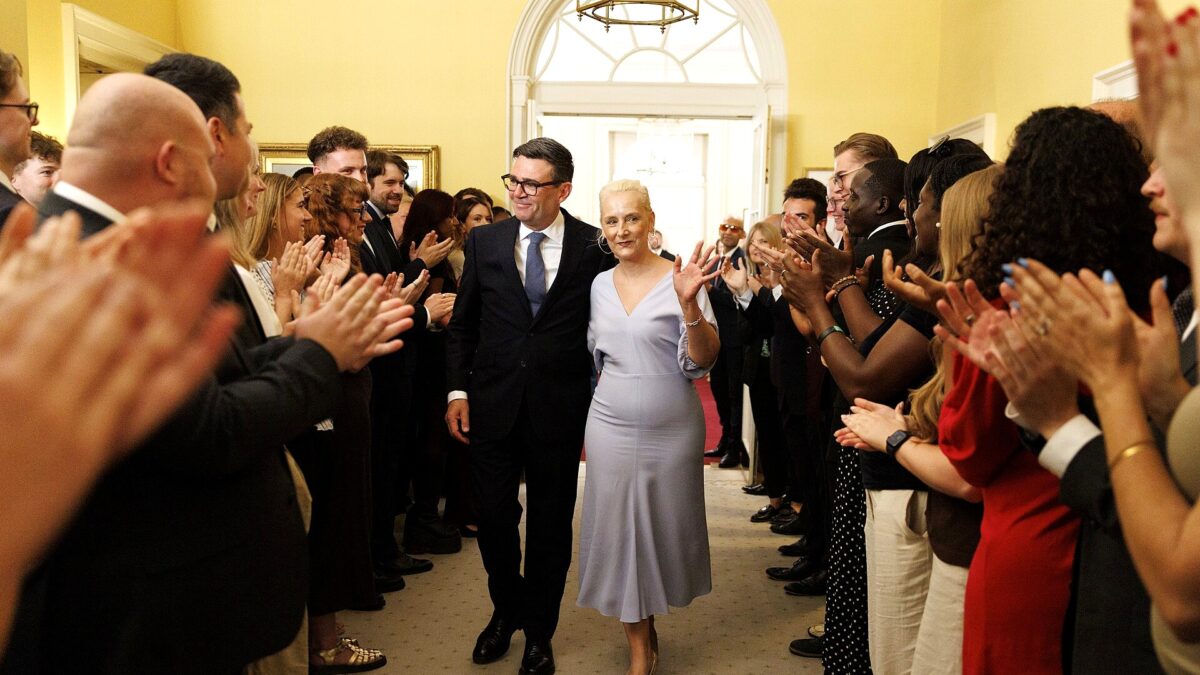
On Friday, 20 November 2026, Prime Minister Andy Burnham flew to Brussels for only the second summit between Britain and the European Union since Brexit — a meeting postponed from July, when his predecessor Sir Keir Starmer resigned. He sat for just under an hour of talks with European Commission President Ursula von der Leyen and European Council President António Costa, before a wider plenary session of ministers and commissioners. The package on the table, in the words of The Times, represents the biggest change to Britain’s relationship with the European Union since it left the bloc six years ago.
Burnham has described the summit as a step toward undoing a decade of damage caused by the divorce. “The test for this summit is simple,” he said before the meeting. “Does it make life better for people in Britain? That is what I will deliver in Brussels today — cutting costs, keeping prices down in the supermarkets and creating opportunities for young people.” He has called the deal “good for working people, good for Britain and good for Europe”, and insists Britain and the EU are “stronger together”.
Three agreements sit at the heart of the package. The first ends the checks on British food, drink and agricultural products exported to the EU. The second links Britain’s emissions trading system with Europe’s. And the third — the one that has set the whole country arguing — is a youth mobility scheme: one hundred thousand young Europeans allowed to live and work in Britain each year, and the same number of young Britons allowed to do the same across the European Union, for up to three years at a time.
Read that sentence again. One hundred thousand. In each direction. Every year. For the first time since Brexit, limited free movement for the young returns to Britain.
One Hundred Thousand — A Number With a Human Face
Numbers, I have learned in a lifetime of watching politics, are how governments hide human beings. One hundred thousand sounds like a statistic. It is not. It is one hundred thousand mornings in a Berlin flat, one hundred thousand evenings in a Barcelona bar, one hundred thousand young Britons learning that the world is larger than the island they were born on — and one hundred thousand young Europeans discovering the same in reverse.
But notice, if you will, how the number was reached, because the haggling tells you everything about the fear that still governs this debate. Britain first proposed fifty thousand. The European Union wanted more. Britain then offered eighty thousand. The Union pressed again. Only then, according to diplomats quoted by Reuters, did the two sides settle on one hundred thousand. Every step upward was a small admission: the door cannot stay half-closed and still be called a door.
The age band tells its own story. The scheme covers young people aged eighteen to thirty, with the ceiling lifted from thirty to thirty-one in the final round of talks. Think about what that means. A young person who is thirty-one today was twenty-one when the referendum happened — old enough, perhaps, to have voted. But the eighteen-year-olds of this scheme were eight years old in June 2016. Eight. They are the generation that inherited a decision made by their parents and grandparents, and they are the generation now being offered, at last, a partial refund.
Burnham said it plainly at a business roundtable in Brussels this morning: young people were Brexit’s biggest losers. He called the deal a “good day for young people in Britain”. He is right about the loss, at least. Whether the day is truly good depends on the small print — and the small print, as ever, is where the generosity quietly thins out.
For the scheme is not the open road it first appears to be. The European Union is dividing up the visas Britain offers among its twenty-seven member states, largely by population. On the basis of eighty thousand visas, that would mean roughly fourteen thousand young Germans, twelve thousand young French people and ten thousand Italians. And there are caps in the other direction too: the number of young Britons who may work in any single EU country will be limited, tied to how many of that country’s young people come to Britain. Some young Britons, in other words, could be turned away from the scheme even if Britain’s overall quota is not full. The door opens — but it opens on a hinge, and someone else still holds the handle.
And yet, and yet. Do not let the small print blind you to the size of the step. For ten years, the official position of the British state has been that free movement was a mistake to be corrected. Today the British Prime Minister stood in Brussels and argued that one hundred thousand young people moving freely, in both directions, is a good thing. That is not a tweak. That is a reversal wearing a diplomat’s suit.
Sausages, Steel and Sovereignty
The youth scheme is the emotional heart of the deal, but the food agreement is its economic spine. Under the sanitary and phytosanitary agreement — the SPS deal, in the jargon — the certificates, checks and controls that have burdened British food exporters since Brexit will end. Sausages, seeds, plants, animals and their products will cross the Channel as they once did. Britain estimates the deal could add up to £5.1 billion a year to its economy. Burnham puts the wider package at roughly 0.4 per cent of GDP.
But here is the part the headlines hurry past, and it is the part that matters most. Under this agreement, Britain will follow European Union rules on food and agricultural standards — and for the first time since Brexit, new EU laws in this area will take effect in Britain without being approved directly by MPs. The jargon for this is “dynamic alignment”. The plain English is simpler: Britain will obey rules it has no direct say in making. The EU says Britain will be consulted. Consulted — not obeyed. There is a difference, and it is the difference between sitting at the table and standing outside the room with your ear to the door.
The deal also carries a clause requiring Britain to repay European countries the cost of reimposing checks if a future government walks away. Read that clause twice. It is, in effect, a financial lock on the door — a price tag hung on any future act of slamming it again.
The third agreement, linking the emissions trading systems of Britain and the EU, sounds dry enough to put a reader to sleep. Do not sleep. It exempts British and European goods — steel above all — from each other’s carbon border levies, and it is designed to protect heavy industry in both places from being undercut by cheap exports from China. Climate policy, trade policy and industrial policy, braided into a single rope. The world, it turns out, does not respect the neat little boxes in which politicians prefer to file their problems.
There is also a new migration pact in the package: Britain and the EU working together on returns to third countries and on the “pull factors” for irregular migration. The same summit that opens a legal door for one hundred thousand young people also promises to bolt the illegal ones more firmly. The symmetry is deliberate, and it is political. Burnham knows that every open door in Britain is watched by those who fear what walks through it.
The Price of a University Place
And now we come to the part of the story that may yet undo the whole day — because as I write this, the deal is not signed, and the reason is as old as education itself: money, and who pays it.
The European Union is demanding that its students pay the same tuition fees as British students at British universities — “home fees”, in the jargon — rather than the international rate, which is typically some three times higher. Britain prefers to offer only “significantly reduced” fees. Late-night talks in Brussels ended in a stand-off. The European Commission proposed going ahead with the youth mobility and food deals while the fee question was resolved separately. The member states overruled it. Unless the fee issue is resolved, the entire package could be put on ice. The two sides are now aiming to settle it within six months.
Pause on that, because it is the most revealing moment of the whole summit. A deal about the future of a hundred thousand young people can be frozen — held hostage — by an argument about what a smaller number of students should pay for a degree. The young, once again, are the bargaining chip. They were the losers of Brexit, and now they are the leverage of the reset. History has a cruel sense of humour, and it is laughing at the very people this deal claims to save.
And yet there is something honest in the impasse, too. The EU is saying, in effect: if you want our young people, you must treat them as your own. If a French student in Manchester is to be welcomed as a neighbour rather than billed as a customer, then the welcome must be real. It is a hard demand. It is also, in its own way, a compliment — an insistence that Britain means what it says about being “stronger together”.
The Young Were Always the Invoice
Now step back with me, because a column that only reports the news has failed its reader. The news is the surface. The meaning is underneath.
Britain joined the European Economic Community in 1973, confirmed it by referendum in 1975, and spent the next four decades arguing with itself about whether it had done the right thing — an argument that ended, in June 2016, with a vote to leave. Ten years have passed since that vote. Ten years in which the promises of the departure curdled, the costs mounted, and the young — who had the least say in the decision — paid the highest price in lost horizons.
History, I have always believed, is a mirror, not a museum. And the mirror shows us something uncomfortable today. Every empire, every island, every proud nation that has ever built a wall has eventually discovered the same truth: walls are expensive to maintain and useless against time. The Romans built Hadrian’s Wall across the neck of Britain and called it security; within a few generations, the wall was a ruin and the people it was meant to keep out were the neighbours, the traders, the in-laws. Britain’s own history is a long lesson in this: a small island that became great not by closing itself off, but by sending its ships, its merchants, its writers and its restless young out into the world — and by letting the world come back in.
What is Brexit, if not the moment an island forgot that lesson and tried to live by the wall instead of the bridge? And what is today, if not the first quiet admission that the wall was a mistake — made not with a grand speech about rejoining, but with a modest, practical, almost apologetic scheme for the young? Nations rarely admit their errors in thunder. They admit them in footnotes, in pilot schemes, in “youth mobility” — a phrase so bloodless it conceals the revolution inside it.
Listen, too, to the voices raised against the deal, because they are part of the story. The leader of Reform UK told BBC Radio 4’s Today programme that Labour was elected promising not to rejoin the single market, and that “today we’re rejoining a chunk of it”. He is not wrong about the direction of travel — only about whether it is a betrayal or a correction. The same argument was made, in different words, by every voice that called the 2016 result a betrayal of the young. Betrayal, it turns out, is a word both sides own, and neither side will surrender.
But here is the question I want to leave with you, the reader, because columns are not written for governments — they are written for people. When a country spends a decade telling its young that the world is a threat, and then one morning offers them a three-year visa and calls it generosity, what has actually changed? The visa, or the story? A hundred thousand visas a year is a real thing — real jobs, real flats, real friendships, real love affairs across borders. Do not sneer at it. But do not mistake it for the whole of what was lost, either. The generation that never voted for the divorce is being offered a weekend pass to the house they used to live in. They deserve the keys.
The Door, Ajar
As the summit continues in Brussels, the deal hangs on a question about tuition fees — a fittingly small hinge for so large a door. Perhaps it will be signed today. Perhaps it will wait six months. Perhaps the impasse will harden and the whole package will cool on the table. That uncertainty is itself the honest condition of our time: nothing in the affairs of nations is ever finished; everything is renegotiated, re-priced, re-argued by the next generation, which inherits both the debts and the keys.
But something has already changed, and no fee dispute can undo it. A British Prime Minister has stood in Brussels and said, out loud, that Britain is stronger together with Europe, that young people were Brexit’s biggest losers, and that the answer is to let them move, work, study and live across the continent again. A decade ago, such words would have ended a political career. Today they are government policy, announced at a summit, defended at a business roundtable, and argued over in the small print of visa quotas.
The empires of the past fell when they forgot that their strength was never in their walls, but in their roads. The roads are being rebuilt now — slowly, cautiously, one hundred thousand young travellers at a time. The young woman of twenty-two, who was twelve when the door closed, may yet walk through it before she is thirty. If she does, she will owe it not to the generosity of the powerful, but to the stubborn fact that no generation can be locked out of its own future forever.
History does not reverse itself. But sometimes — rarely, and only when the young demand it — history turns around, looks at the road it has travelled, and quietly begins to walk back. Today, in Brussels, Britain took its first step on that road. The question now is not whether the step was big enough. The question is whether Britain has the courage to keep walking.
Sources & References
- Reuters — “Britain, EU set to agree to reset but divisions persist”, 20 November 2026
- The Times — “Andy Burnham agrees to 100,000 visas in EU youth mobility scheme”, 20 November 2026
- The Times — “Andy Burnham’s big Brexit reset: what’s in and what’s out?”, 20 November 2026
- The Times — “UK-EU summit live: tuition fee impasse threatens to put Andy Burnham’s deal on ice”, 20 November 2026
- NPR / WNCW — “The U.K. and EU hold a rare summit to strengthen ties”, 20 November 2026
- Hillingdon Times (PA Media) — “Burnham says UK and EU ‘stronger together’ ahead of deal with Brussels”, 20 November 2026

About the Author — Abdul Mannan
Related Articles
Justice, Nine Years Late: The World Court Finally Calls the Rohingya Atrocity by Its True Name — Genocide
On 19 November 2026, the International Court of Justice ruled that Myanmar committed genocide against the Rohingya —…
The $190 Million Painting a Dying Man Could Not Sell: Van Gogh, the Chestnut Tree, and the Price of Genius
In May 1890, a 37-year-old Vincent van Gogh, newly released from an asylum, painted a blossoming chestnut tree…
GTA 6 Has Arrived — and the Whole World Stopped to Watch
Thirteen years of waiting ended at midnight as Grand Theft Auto VI launched to a record-tying 99 on…