Thirty-One Summits Later, the Earth Is Still Waiting: What COP31 in Antalya Must Finally Answer

Thirty-one times. Let that number sit with you for a moment before you read another word. Thirty-one times the nations of this earth have gathered in grand halls, under great banners, with the cameras rolling and the speeches soaring, to save the planet. And thirty-one times they have gone home — and the planet has grown hotter still.
On Monday, 9 November 2026, they gathered again. This time on the glittering Mediterranean coast of Antalya, in Türkiye, where nearly 200 countries have come together for COP31, the 31st United Nations Climate Change Conference. Around 60,000 people — leaders, ministers, negotiators, scientists, activists — have descended on the Antalya Expo Center for two weeks of talks that will run until 20 November, with a World Leaders’ Summit on 11 and 12 November. The sea outside is the same blue it has always been. The question is whether anything else has changed at all.
I ask you plainly, as one citizen of this warming earth to another: if thirty summits could not cool the planet, what will the thirty-first do? Is Antalya a turning point — or is it merely the latest verse in a song we have all grown tired of hearing, sung beautifully, and forgotten by morning?
Do not mistake me. I am not a cynic. A cynic has stopped believing that human beings can rise to a moment. I believe we can. But belief without honesty is only comfort, and comfort is the one luxury this crisis no longer affords us. So let us look at Antalya with clear eyes — at what has been promised, at what has been delivered, and at what the next twelve days must finally answer.
The Longest Conversation in Human History
History is a mirror, and if you hold it up to Antalya, the reflection is sobering. The first climate conference met in Berlin in 1995. I was a young man then, and the world was a different place — but the warning was already the same. Scientists told the delegates that the burning of coal, oil and gas was warming the earth, and that the warming would bring floods, droughts, storms and rising seas. The delegates listened. They nodded. They went home and burned more.
Two years later, in Kyoto, the world produced its first real treaty — the Kyoto Protocol of 1997. It was hailed as a breakthrough. It bound the rich nations to cut their emissions. And then the largest emitter of the age, the United States, refused to ratify it, and the protocol limped forward without the very country whose participation mattered most. A promise made, a promise half-kept. Does that pattern sound familiar to you? It should. It is the story of this entire century.
Then came Paris, 2015 — COP21 — the summit the world still speaks of with reverence. One hundred and ninety-six parties agreed to hold global warming to well below 2°C above pre-industrial levels, and to pursue efforts to limit it to 1.5°C. The applause in that hall in Le Bourget was genuine. I remember it. The world believed, for a bright moment, that it had finally learned. But a treaty is only words on paper until it becomes steel in the ground, and the decade since Paris has been a decade of words.
Consider what the thermometers say, because they do not flatter anyone. The World Meteorological Organization confirmed in January 2026 that 2025 was one of the three warmest years ever recorded — 1.44°C above the 1850–1900 average. The years 2023, 2024 and 2025 are the three hottest years in all eight of the world’s major climate datasets. The past eleven years, 2015 to 2025, are the eleven warmest years on record. And 2023 to 2025 marked the first three-year period in which average temperatures exceeded 1.5°C above pre-industrial levels — the very line Paris drew in the sand. The line has been crossed, not in a distant future, but in the years we have just lived through. The year 2024 was the single warmest year ever measured, at 1.55°C above the pre-industrial baseline.
And so here we are in Antalya, thirty-one years after Berlin, eleven years after Paris, holding the thirty-first conference to discuss a crisis that the first conference already understood. If history is a mirror, then the mirror is asking us a question we have avoided for three decades: how many more times will we meet to say what we already know?
A Summit Like No Other — and a World Like No Other
Yet it would be unfair — and untrue — to say that nothing is different about COP31. This summit arrives in a world that would be unrecognisable to the delegates of Berlin in 1995, and even to the delegates of Paris in 2015.
For one thing, this is the first COP since the United States left the Paris Agreement earlier this year. The world’s largest economy and the largest historical emitter of greenhouse gases is no longer at the table as a party to the agreement it once championed. Whatever one thinks of that decision, its meaning is plain: the architecture of global climate action, built so carefully over thirty years, is under greater strain than at any point since Paris. The summit must now prove that the rest of the world can carry the work forward without Washington — or watch the whole enterprise drift.
For another, COP31 opens against the backdrop of war. The war in Iran that began at the end of February, and the closure of the Strait of Hormuz that followed, have thrown the world’s energy markets into turmoil and pushed energy security to the top of every government’s agenda. When oil and gas supplies are uncertain, the temptation is always the same: burn whatever is at hand, promise the transition tomorrow, and let the climate pay the price of the crisis. Antalya must resist that temptation in full view of the world — because if a war can pause the climate fight, then every future crisis will do the same, and the fight will never resume.
And then there is the newest guest at the table, one the founders of the COP process never imagined: artificial intelligence. The hunger for electricity from data centres and AI systems is surging so fast that it is reshaping energy demand in country after country. The Turkish presidency has made this a central theme of the summit, calling for a pledge to ensure AI is developed and deployed sustainably, and pushing for a commitment to raise electricity to 35 per cent of global final energy consumption by 2035, up from around 23 per cent today. It is a bold target. But it carries a warning inside it: if the electricity that powers the age of AI comes from coal and gas, then our cleverest machines will be fed by our oldest mistakes.
Even the presidency of this COP is unusual. In a compromise struck after Turkey and Australia both sought to host, the two countries now share the helm: Türkiye hosts the summit, and its Environment Minister, Murat Kurum, serves as COP President, while Australia’s Climate Change and Energy Minister, Chris Bowen, presides over the negotiations themselves. Two captains, one ship. It is an arrangement born of diplomacy — and it will be judged, as all such arrangements are, not by how cleverly it was negotiated, but by whether it can deliver.
Note, too, who is not coming. French President Emmanuel Macron, a fixture of climate summits for a decade, will not attend the leaders’ summit in Antalya. His absence is not decisive in itself, but it is a signal, and signals matter in diplomacy: the world’s attention is fractured, pulled toward wars and trade tensions and domestic politics. The question hanging over Antalya is whether the climate crisis can still command the room when the room is on fire in so many other ways.
The Number That Should Shame Us All
If you remember one number from this article, let it be this one: 305 billion dollars.
That is what the United Nations Environment Programme says developing countries will need every year by 2035 to adapt to the climate change that is already locked in — to build flood defences, to breed drought-resistant crops, to move water to where it is needed, to protect the clinics and schools that the rising heat now threatens. The figure comes from UNEP’s Adaptation Gap Report 2026, published just days before this summit opened, under a title that reads like an indictment: “Ready? Not.”
Now set beside it the other number. In 2024, the latest year for which figures exist, the money that actually flowed from developed countries to developing countries for adaptation was between 28.2 and 31.7 billion dollars. Barely a tenth of what is needed. And the growth in that flow is flattening — it rose by just one billion dollars between 2023 and 2024, far below the pace required even to meet the Glasgow pledge of doubling adaptation finance to around 40 billion dollars by 2025.
Read that again, slowly. The rich world promised, at COP26 in Glasgow in 2021, to double adaptation finance. Five years later, the flow has barely moved. And now the world’s governments are being asked to triple it by 2035, as agreed at COP30 in Belém last year. Even if they succeed — even if the tripling happens in full — UNEP calculates that it would cover only 20 to 29 per cent of what developing countries will need. The gap is not a crack. It is a chasm.
“The world is not ready to adapt to current climatic conditions, never mind what overshoot of 1.5°C will bring,” said Inger Andersen, the Executive Director of UNEP, when the report was released. Those are not the words of an activist. They are the words of the head of the United Nations’ own environment agency, speaking in the measured language of her office — and they amount to a verdict on thirty years of promises.
And the need is not abstract. The Loss and Damage Fund — the mechanism created to help countries recover from climate disasters they did not cause — received requests worth 2.8 billion dollars in its first funding round. Its envelope was 342 million. Eight times more was asked for than was available. Behind every one of those dollars is a farmer whose field has turned to salt, a family whose home the flood took, a village whose well has run dry. These are not statistics. They are people, and they are waiting.
Who Pays for the Fire?
Here, my reader, is the moral heart of Antalya — the question that no amount of technical language can hide. The people who suffer first and worst from climate change are, overwhelmingly, the people who caused it least.
The farmer in Sindh whose cotton withers in heat he did not create. The fisherman in Senegal whose sea is warming and whose catch is shrinking. The mother in a tent in Gaza, where heavy rains have flooded tens of thousands of shelters in recent days, leaving families who have already lost everything to sleep in the water. The islander in the Pacific who watches the sea take a little more of his island every year. These are the people for whom adaptation finance is not a negotiating line — it is the difference between survival and ruin.
And what of the first day of this summit? It opened on Health Day. The World Health Organization has made health central to this COP, and its warning should stop every delegate in his tracks: between 3.3 and 3.6 billion people — nearly half of humanity — now live in contexts highly vulnerable to climate change. Heat kills the elderly and the labourer alike. Floods breed disease. Droughts starve children. “Health is the strongest argument for climate action,” says Dr Diarmid Campbell-Lendrum, who leads the WHO’s climate and health work. He is right, and the argument is not an abstraction: it is measured in hospital beds and burial grounds.
I think of the great moral questions of history, and I tell you plainly: future generations will not judge us by the elegance of our communiqués. They will judge us by a single, simple test — did the people who had the power to act, act in time? The delegates in Antalya hold that power today. The farmers, the fishermen, the mothers in the tents do not. Power unused is not neutrality. It is a decision, and history will record it as one.
There is an old pattern in human affairs, and I have written of it before in these columns: when a crisis comes, the powerful protect themselves first and call it prudence. The East India Company came to Bengal promising trade and left with an empire. The promises of climate finance have followed a quieter version of the same logic — grand announcements in the hall, slow arithmetic in the treasury. The peoples of the developing world have heard thirty years of announcements. What they have not received is the money. Antalya must answer for that record, not with new announcements, but with new arithmetic.
What Would Success Look Like?
So what should we watch for in Antalya over the next twelve days? Not the speeches — speeches are cheap, and the Mediterranean air is already thick with them. Watch instead for four things, and judge the summit by them alone.
First, the Leaders’ Summit on 11 and 12 November. When heads of state and government gather, do they bring new commitments or only old ones reheated? A leader who arrives empty-handed has told you everything you need to know about his government’s seriousness.
Second, the money. Does COP31 produce a credible, timetabled path toward tripling adaptation finance — with numbers, dates and names attached — or does it produce another aspiration? An aspiration is a wish. A timetable is a promise. The developing world has had enough wishes.
Third, the fossil fuel roadmap. At COP30 in Brazil, the presidency published a roadmap for moving away from coal, oil and gas, prepared alongside the formal negotiations, and it is to be presented in Antalya. Does the summit embrace it, strengthen it, and give it deadlines — or does it quietly file it away? The world cannot electrify a third of its economy by 2035 while continuing to expand the fuels that made the crisis. That contradiction sits at the centre of this summit, and it will not resolve itself.
Fourth, the test of honesty: will the final text of COP31 keep the 1.5°C threshold alive as a guiding principle, or will it be allowed to slip quietly into history as a beautiful idea whose time has passed? The threshold is already breached in the short term — the three-year average has passed it. But as a compass, as a statement of what humanity still owes itself, it matters enormously whether the world abandons it or recommits to returning below it. To abandon 1.5°C is to tell the island nations and the farmers and the mothers in the tents that their suffering is now officially acceptable. No summit has the moral right to say that.
The Sea Is Watching
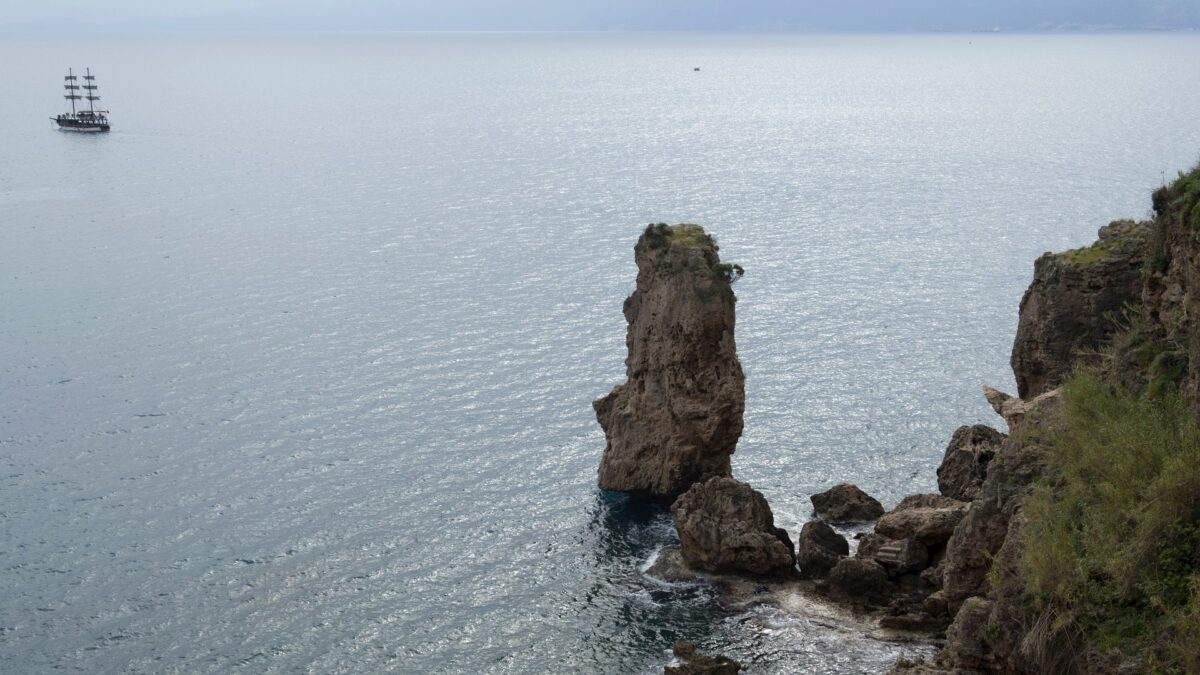
I have never stood on the cliffs of Antalya, but I have seen its photographs — the white rock, the deep blue water, the old sailing ships on the horizon. It is a beautiful place to hold a conference about the fate of the earth. Perhaps too beautiful. Beauty can be a sedative. It can make delegates feel that the world is still whole, still generous, still forgiving. The sea below those cliffs is rising all the same. The heat above them is rising all the same. Beauty does not negotiate, and neither does physics.
Thirty-one summits. Thirty-one years. In that time, a child born in Berlin in 1995 has grown to middle age. The climate crisis has been explained to that child in every classroom, in every newspaper, in every documentary. What that child has not yet seen — what none of us has yet seen — is the generation of leaders that matches the scale of its own knowledge.
And yet, I refuse to end on despair, because despair is also a kind of surrender, and surrender is the one thing the drowning cannot afford. The tools exist. The sun falls free on every roof in the world. The wind blows free over every ocean. The money exists — the world spends trillions on weapons and subsidies for the very fuels that are burning it. What has been missing is not knowledge, and not technology, and not wealth. What has been missing is will — the simple, stubborn, human decision to do what we already know must be done.
So let Antalya be the place where that changes. Let the thirty-first summit be the one where the talking stopped being the product and started being the prelude. Let the delegates look out at that blue sea and remember that it does not care about their communiqués, their brackets, their footnotes — it cares only about what they do when they go home.
And you, my reader — do not leave this to them alone. The climate crisis is not a matter for conference halls; it is a matter for every home, every vote, every purchase, every voice. Ask your leaders what they did in Antalya. Ask them what they will do next. Hold them to the arithmetic, not the applause. For in the end, the earth will keep its own accounts, and it does not accept promises as payment.
Thirty-one times we have gathered. The thirty-second gathering must not be another reminder of our failure. Let history record that in Antalya, in November 2026, the world finally stopped admiring the problem — and started solving it.
Sources & References
- Reuters — “COP31 to open in Turkey, with climate goals under pressure from war and AI” (9 November 2026)
- Le Monde — “COP31 conference: Turkey aims to move climate up the agenda in a crisis-rocked world” (8 November 2026)
- UN News — “‘The world is not ready’: Climate adaptation cash falls far short as warming heads past 1.5°C” (4 November 2026)
- UNEP — Adaptation Gap Report 2026: “Ready? Not” (November 2026)
- World Meteorological Organization — “WMO confirms 2025 was one of warmest years on record” (14 January 2026)
- Health and Me — “COP31 Begins on Health Day: How Will Countries Measure the Health Impact of Climate Change?” (9 November 2026)
- Wikipedia — “2026 United Nations Climate Change Conference (COP31)”

About the Author — Abdul Mannan
Related Articles
The Strait of Fire: Hormuz, Qeshm and the Week the World Held Its Breath
In seven days: two rounds of American strikes on Qeshm Island, a cargo ship disabled in the Gulf…
The Girls Who Lost First and Won the World: Nigeria’s Flamingos and the Night Africa Stood Tall
Nigeria's Flamingos lost their first match of the U-17 Women's World Cup — then won six in a…
The Square That Survived Empires: Kraków, and the Enemy Who Came From Within
On a Saturday afternoon, a gunman drove into Kraków's Main Market Square and opened fire. Six people died.…