Google’s Project Suncatcher Reaches Orbit as SpaceX Deploys 130 Payloads

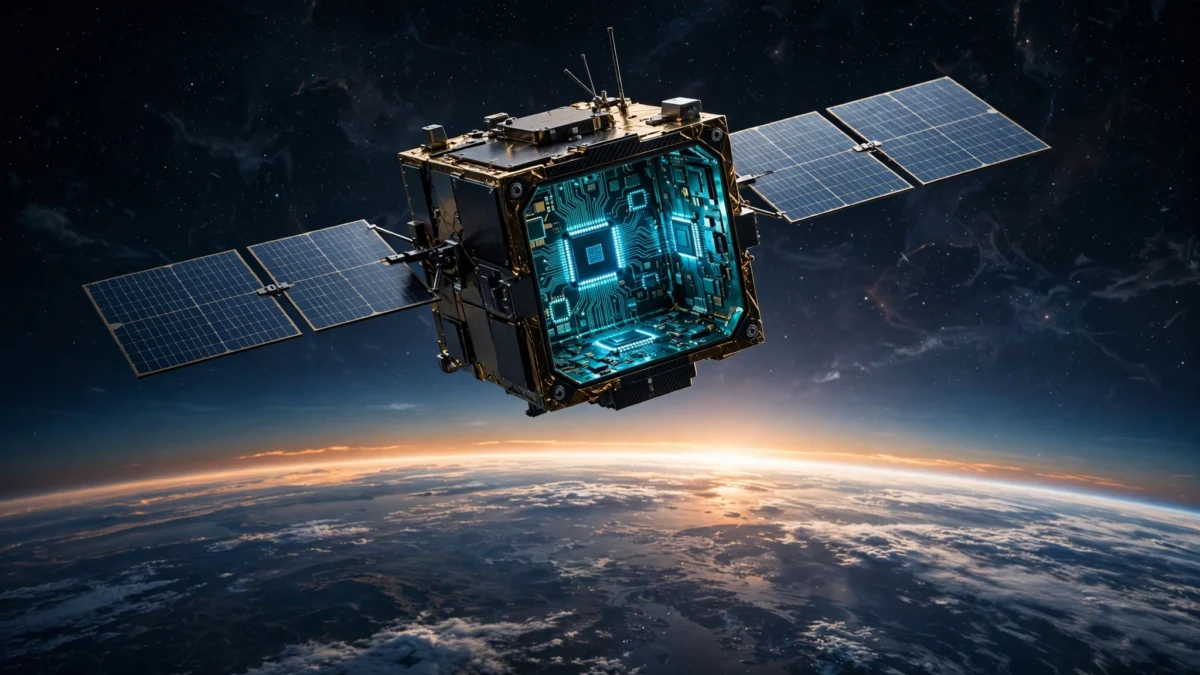
Google’s race to take artificial intelligence into orbit reached a milestone on Thursday, as the company’s Project Suncatcher prototype became one of 130 payloads launched aboard a SpaceX Falcon 9, according to Planet Labs and specialist space coverage.
The rocket lifted off from Space Launch Complex 4 East at Vandenberg Space Force Base in California at 11:32 a.m. Pacific time on October 1, as part of SpaceX’s Transporter-18 dedicated rideshare mission, NASASpaceFlight reported. After stage separation, the first-stage booster flew back for a safe touchdown at Landing Zone 4 near the launch pad.
Deployed just over an hour into the flight, the Suncatcher M1 satellite — built by Planet in partnership with Google — carries four of Google’s Trillium Tensor Processing Units into low Earth orbit. Planet confirmed it made initial contact with the spacecraft and has begun the commissioning process, calling it the first-ever test of Google’s TPU AI chips in space.
The refrigerator-sized satellite is not a data centre. As Google explained in its September announcement, the mission answers a single question: whether its AI hardware can survive and operate in orbit, enduring launch vibration, radiation and extreme temperature swings. Google previously tested the chips against radiation doses greater than a five-year mission would deliver.
The next milestone comes in 2027, when Google plans to fly two satellites designed to work together, testing high-bandwidth laser links between orbital computing nodes.
Sources

About the Author — Abdul Mannan
Related Articles

Falcon Heavy to Launch First NRO Spy Satellite Tonight in SpaceX Triple-Launch Day
SpaceX aims for three orbital launches in one day on October 1, climaxing with the first-ever National Reconnaissance…

NASA and SpaceX Target Thursday Liftoff for Crew-13 Mission to Space Station
Four astronauts are set to launch to the International Space Station on Thursday morning after a September delay…

White House Launches America.gov, AI-Powered “Front Door” to Federal Services
Trump launched America.gov, an AI chatbot backed by Google's Gemini, as a single digital entry point to US…