One Week On, GTA 6 Has Not Just Broken Records — It Has Moved the Centre of the World

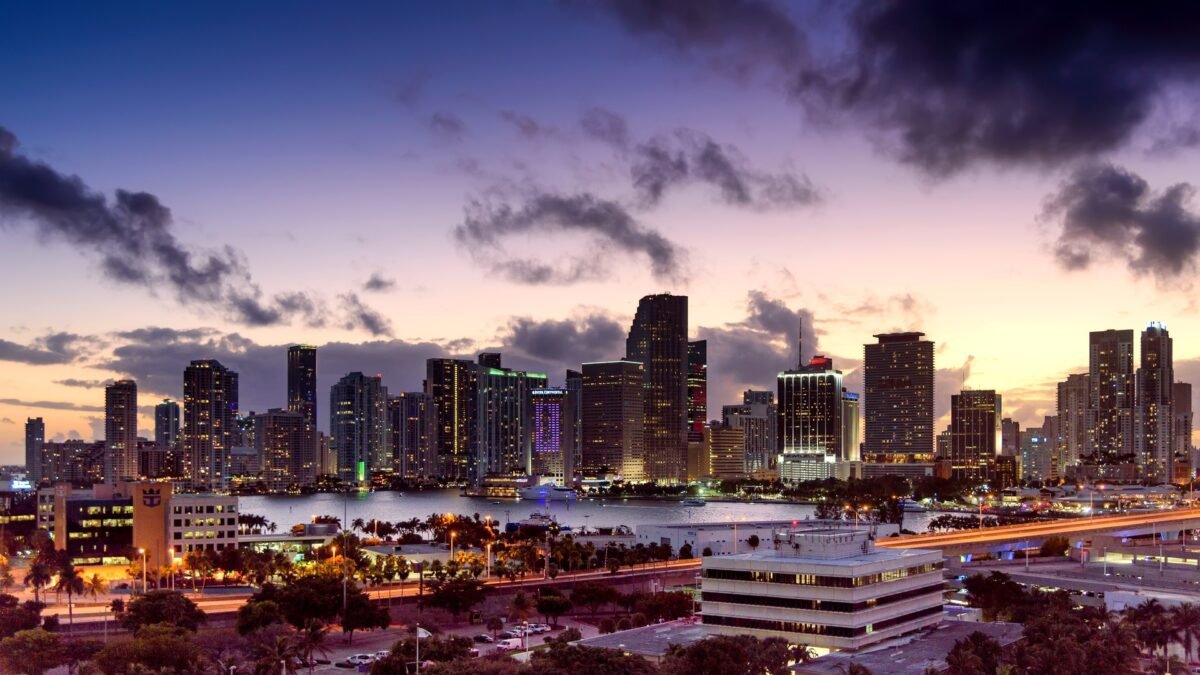
One week ago, the whole world walked into a city that does not exist. It has not come back out yet. Ask yourself a simple question tonight, and answer it honestly: what else in your lifetime has made forty million people rearrange their days, their sleep, their conversations and their money around a single evening? Not a war. Not an election. Not a World Cup final. A game. A story told in neon and rain on a screen, set in a Miami that never was, and the world moved into it as though it were home.
I wrote on the eve of this launch that the planet was holding its breath. I did not know then how long it would hold it. A week has passed since Grand Theft Auto VI opened its gates on 19 November, and the numbers that have come back are no longer the kind of numbers you compare with other games. They are the kind of numbers you compare with nations, with industries, with history itself. So let us look at them properly, without the hysteria and without the shrug, because something real has happened here, and it deserves to be understood rather than merely gasped at.
The Numbers Are Not Numbers
Begin with the figure Rockstar Games and its parent company Take-Two Interactive announced on 20 November, the morning after launch. In a single day, Grand Theft Auto VI took an estimated $3.79 billion in worldwide retail sales. Read that again slowly. Three point seven nine billion dollars. In one day. Before a single player had finished the story, before the reviews had even settled, 32.5 million copies had already been sold before release, and the first day’s takings made it the biggest entertainment launch in history, across every medium that has ever existed. No film has opened like this. No album has sold like this. No book, no concert, no sporting event has ever taken this much money in a single day.
And then the week went on, and the figures kept climbing past the point where comparison breaks down altogether. On 27 November, the research firm Alinea Analytics estimated that the game had sold 53 million copies in its first week, for roughly $4.7 billion in revenue. These are estimates, not official figures from Take-Two, and honesty demands that I say so plainly. But they are estimates built on real sales data, and they point in only one direction. If they are even close to right, then in seven days this game has sold more copies than there are people in Spain. It has taken in more money than the entire global box office of most years’ biggest films earn in their whole runs. It has, in a single week, become one of the best-selling games ever made.
To feel the scale of that, put it against its own past. In September 2013, Grand Theft Auto V sold about $800 million worth of copies on its first day and passed $1 billion within three days, and the world called that a miracle. Its successor has taken nearly five times that first-day figure in a single day, and passed the old three-day record before the first night was over. Thirteen years ago, the miracle was that a game could behave like a blockbuster film. Today, the blockbuster film behaves like a small thing beside the game.
A City Bigger Than a Country
But money is the dullest way to measure what happened, and the least interesting. The human figures are stranger and more beautiful. On 23 November, Sony announced that Grand Theft Auto VI was the biggest launch in PlayStation history, across three decades and five console generations. More than 39 million unique players had experienced the story of Jason and Lucia on PlayStation 5 alone. Between launch and 22 November, those players had logged 683 million hours inside the game. Do the arithmetic and it stops sounding like a statistic and starts sounding like a spell: 683 million hours is nearly 78,000 years of human life, spent inside a fictional Florida in four days. The average player spent 17.4 hours there in those first four days, more than four hours a day, which is to say that millions of people gave this imaginary city a working week of their real lives before the first weekend was done.
It set the record for the highest number of concurrent players for any game on PlayStation, ahead of every multiplayer giant and free-to-play colossus that has ever lived on the machine. It drove the largest number of newly connected PlayStation 5 consoles on a single day since the system launched in 2020, outside the Christmas season, and it was the first game played on 70 per cent of those brand-new machines. People did not merely buy the game. They bought the machine in order to buy the game.
And the watching matched the playing. At its peak, 7.91 million people were watching somebody else play Grand Theft Auto VI at the same moment, the largest game launch audience the streaming trackers have ever measured. In the first 24 hours alone, viewers watched 125.47 million hours of it. Across the first week, that figure reached 420 million hours. Stop and hold that thought for a moment, because it contains the whole riddle of this week. Hundreds of millions of hours were spent not playing the game but watching other people play it. The game is not only a game. It is a spectator event, a shared language, a place millions of us visit by watching our neighbours walk its streets. A city that does not exist now has tourists.
The Soundtrack That Ate the Charts
Then came the twist nobody had quite predicted, and it may be the most telling part of the whole story. The music of Grand Theft Auto VI has eaten the pop charts alive. Ten songs from the game now sit in the UK’s Official Singles Chart top 100. Ten. From a video game.
At the top of them, “Flower in a Hurricane”, the single by the French electronic duo Justice featuring Tame Impala, SZA and King Gizzard and the Lizard Wizard, has climbed to number three. Dua Lipa’s “Go Easy”, recorded specially for the game, is the highest new entry at number 21. And then there is the loveliest detail of all: Carly Rae Jepsen’s “Run Away With Me”, a song from 2015 that plays during a needle-drop moment in the game’s first chapter, has re-entered the chart at number 28, higher than its original peak of 58 eleven years ago. A decade-old pop song, resurrected by a car chase, is now outselling almost everything released this year.
Seven other songs written for the game also placed in the top 100, from Lana Del Rey and Travis Scott and Morgan Wallen among others. The official album, 34 tracks released on 20 November, set a first-day streaming record for a game soundtrack album. The original score, composed by Justice, follows in full on 11 December. And behind the singles sits the deeper fact: the game’s radio stations carry more than 800 licensed tracks, and over 40 million people will spend the coming weeks and months listening to them, possibly hundreds of times each.
Think about what that means for music itself. For decades, the music industry has hunted for the new radio, the new MTV, the new discovery machine. It turns out the new radio is a car radio in a city that does not exist. A game has become the most powerful A&R machine on earth, and it did it without trying, simply by letting its characters drive around listening to songs. The charts have not been conquered by a game. They have been quietly re-homed inside one.
Ninety-Nine Against Five Point Seven
And yet, in the middle of all this triumph, there is a crack in the story, and the crack may be the most important part of it. The critics have given Grand Theft Auto VI a Metascore of 99 out of 100, from more than 150 reviews, every one of them positive. It ties The Legend of Zelda: Ocarina of Time from 1998 as the highest critic score in Metacritic’s history. IGN, GameSpot and Game Informer gave it perfect marks. By the measure of professional criticism, this is one of the greatest games ever made.
The players, on the same website, give it 5.7 out of 10.
How can one game be both a masterpiece and a disappointment? The answer is that the number is not measuring the game at all. Within a day of launch, thousands of zero scores poured onto the page, many from accounts that had never rated anything else. Metacritic had already been forced to remove ratings submitted before the game was even available, and to disable user ratings temporarily. Part of the flood was a fan war: the game’s 99 pushed the original Ocarina of Time down the all-time list, and some Zelda fans answered with zeroes, while some GTA fans returned fire on the Zelda remake, dragging its user score down from 9.6 to 8.3. Part of it was genuine complaint, about a 30-frames-per-second cap, about launch bugs, about a price of $80 to $100. But the honest summary is stranger than any of it. The scoreboard has become the battlefield.
Here is the number that cuts through the noise. On the PlayStation Store, where only people who actually own the game can rate it, Grand Theft Auto VI holds 4.78 out of 5, from around 378,000 ratings. The people who are actually playing it are having a considerably better time than the Metacritic average suggests. So the divide is not between critics and players at all. It is between people who experienced the thing and people who experienced the argument about the thing. We no longer only argue about art. We shell its scoreboard. We have built a world in which a number on a website can be besieged like a city, and this week two of the best-reviewed games ever made watched their fanbases lay siege to each other over a decimal point.
There is a warning in that for all of us, far beyond gaming. When the measurement becomes the war, the thing being measured disappears. A generation is learning to fight over scores instead of judging works, and the scoreboard, like every idol, eventually eats the worshippers.
Thirteen Years of Waiting
Now step back, and ask the question the numbers cannot answer. Why this? Why now? Why did the world wait thirteen years for this game, and why did the waiting make it stronger rather than weaker?
Rockstar announced the game and then did something almost unheard of in the age of instant gratification: it made the world wait. The release was delayed not once but twice, first from the autumn of 2025, then from May 2026, and each delay was met not with anger but with a strange, reverent patience. Gamers did not riot. They nodded. Because Rockstar had earned something no marketing budget can buy: trust. Its last two epics, Grand Theft Auto V and Red Dead Redemption 2, both scored 97 on Metacritic. When a studio with that record says it is not ready, the world believes it.
And here is the mirror that history holds up to us. We live in an age that has abolished waiting. Everything arrives instantly, everything is available now, everything is disposable by next week. Yet the single biggest entertainment event in human history was built on the opposite principle: on waiting, on patience, on refusing to ship until it was ready, on thirteen years of silence punctuated by two delays that only deepened the hunger. The market rewarded patience more richly than it has ever rewarded haste. There is a lesson in that for every creator, every studio, every young person told that speed is the only virtue left. The world does not only want things fast. It wants things good. And it can tell the difference.
History is full of such reversals. The printing press was first dismissed as a toy for scholars. Cinema was a fairground trick. Television was a passing fashion. Rock and roll was noise. Every dominant art form of the modern age began as something serious people laughed at, and every one of them ended by swallowing the culture whole. This week, the game did not ask for permission to join that company. It simply took the chair at the head of the table, with $3.79 billion in its pocket and the pop charts in its wake, and dared anyone to call it a toy.
What It Means When a Game Becomes the World
So what has actually changed? Not the technology, or not only that. What has changed is the centre of gravity of our shared imagination. For a century, the shared stories of the world were told by films and by television, and we gathered around them at the same hour and talked about them the next day. That gathering has moved. Today, forty million people gather inside a story they can walk through, and they talk about it while they are still inside it, and the talking itself becomes part of the story, watched by millions more.
The game is not replacing film and music. It is absorbing them, the way the novel once absorbed poetry and history, the way cinema once absorbed theatre and painting. Its soundtrack tops the charts. Its story is discussed like a novel. Its city is photographed like a real place. Its actors, Jason and Lucia, are spoken of as though they were people. This is not a game that contains other art forms. It is a new art form that contains the others.
And there is something quietly democratic in it too. The gates of Vice City opened at the same midnight for a teenager in Karachi and a banker in London and a student in São Paulo. No premiere, no red carpet, no velvet rope. The same streets, the same rain, the same radio. For one week, the most exclusive club in the world was a city that belongs to everyone who owns a controller. That is a kind of equality the old culture industries never managed, and it is worth noticing, even by those of us who have never held a controller in our lives.
But the honest columnist must also say the other thing. A week is not a verdict. The numbers are real, and the joy is real, but the test of a work of art is not its first week. It is its tenth year. Grand Theft Auto V is still being played thirteen years after its release, and that is the standard its successor must now meet. The charts will move on. The scoreboard war will be forgotten. The question that remains is the only question that has ever mattered about any work of art: when the noise dies down, will people still want to live inside it?
On the evidence of this week, my answer is yes. Not because of the money, though the money is historic. Not because of the records, though the records will stand for years. But because of something simpler, something I have watched all week in the faces of people talking about this game: wonder. Grown men and women, tired and busy and cynical about almost everything, talking like children about a city made of light. A world that can still do that to us is a world that is not finished yet.
And that, dear reader, is the real story of this week. Not that a game sold 53 million copies. But that after thirteen years of waiting, after delays and doubts and a whole industry telling us that nothing can hold the world’s attention anymore, the world proved it can still be held. It can still gather. It can still wonder. It can still, all at once, walk through the same gates into the same impossible city, and decide, together, to stay a while.
The neon is still burning over Vice City tonight. The question is not whether the world will come back out. The question is what it will bring back with it when it does.
Sources & References
PlayStation Blog — “Thank you for making Grand Theft Auto VI the biggest launch in PlayStation history” (Sony Interactive Entertainment, 23 November 2026): more than 39 million unique PS5 players, 683 million hours played between 19 and 22 November, an average of 17.4 hours per player, the highest concurrent-player record on PlayStation, and the largest single-day number of newly connected PS5 consoles since launch outside the Christmas season.
GamesBeat — “GTA VI has sold 53M copies after a week” (Alinea Analytics estimates, 27 November 2026): an estimated 53 million copies sold in the first week, about $4.7 billion in revenue, with 75.7 per cent of sales on PlayStation 5. Estimates, not official Take-Two figures.
Polygon — “GTA 6 Officially Passes a Massive Sales Milestone Just 1 Week In” (27 November 2026): Alinea Analytics’ week-one estimates of 53 million copies and $4.7 billion in revenue, alongside the official day-one figure of $3.79 billion.
Official Charts — “Pedal to the metal: GTA VI soundtrack hits accelerate up the Singles Chart” (27 November 2026): “Flower in a Hurricane” at number 3, Dua Lipa’s “Go Easy” the highest new entry at 21, Carly Rae Jepsen’s “Run Away With Me” at 28, and seven further GTA VI songs in the UK Top 100.
Mneemo — “GTA 6 Metacritic Score, Sales and Streams: The Launch So Far” (27 November 2026): a peak of 7.91 million concurrent stream viewers, 125.47 million hours watched in the first 24 hours, 420 million hours watched in the first seven days, and the critic score of 99 against a player score of 5.7.
iPlayGTA6 — “GTA 6 Review Bombed on Metacritic as User Score Hits 5.7” (26 November 2026): the timeline of the review-bombing, the Zelda fan-feud, the removal of pre-launch ratings, and the contrast with the PlayStation Store’s owner-only rating of around 4.8 out of 5.

About the Author — Abdul Mannan
Related Articles
Elon Musk Has Given Every American Child Two Shares of SpaceX — and a Stake in the Future Itself
On 25 November 2026, SpaceX announced it would give one share to every American child in a Trump…

A Million Machines in the Sky: Who Owns the Night Now?
On 25 November 2026, America gave one company permission to fill the heavens with a million machines. The…
The Guitar Has Gone Quiet: Remembering Andy Taylor, the Fire Inside Duran Duran
Andy Taylor, the guitarist whose riffs powered Duran Duran's imperial 1980s, has died aged 65. A tribute to…