Elon Musk Has Given Every American Child Two Shares of SpaceX — and a Stake in the Future Itself

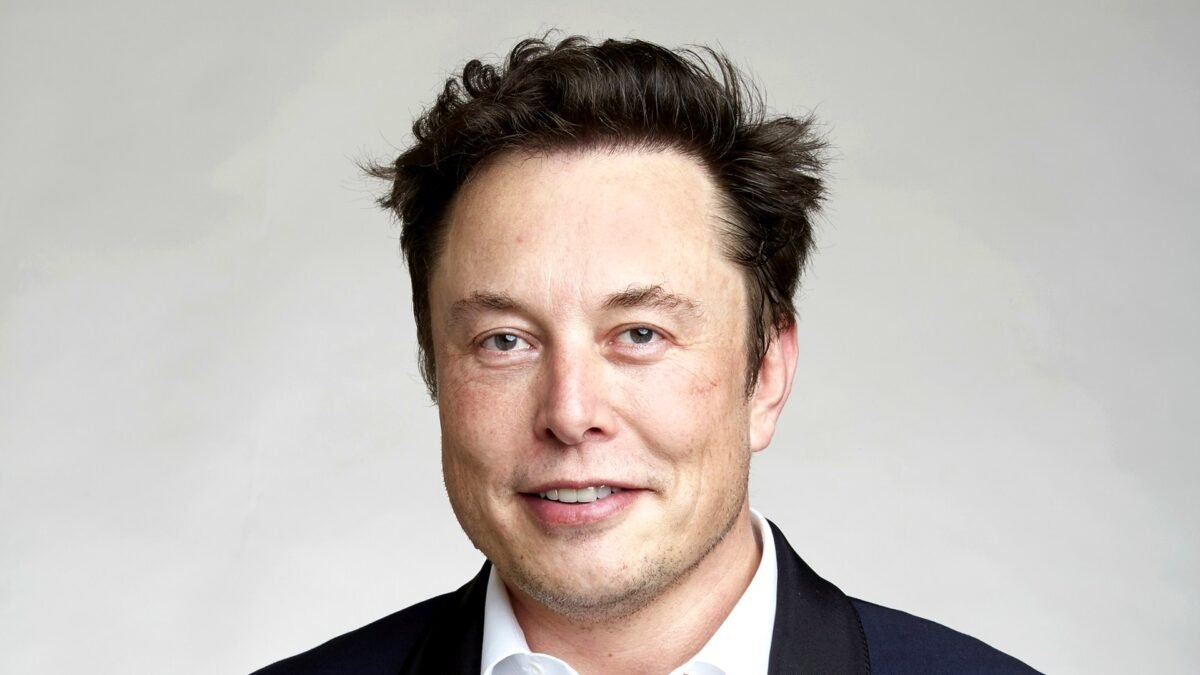
What would you do if the richest man on earth knocked on your door on Thanksgiving Day and handed your child a piece of the sky?
Not money. Not a toy, not a cheque, not a promise wrapped in a press release. A share. A small, legal, breathing stake in the company that launches rockets into the heavens and now wants to put a million computers among the stars. Two shares, in fact, for every child in America. And then, the man said, he would do it again next year. And the year after that.
I have spent my life watching the powerful make promises to children. Politicians kiss babies on camera and forget their names before the motorcade turns the corner. Corporations print smiling children on their annual reports while their factories darken the skies above those same children’s schools. And yet this week, something happened that stopped me mid-sentence, and I want to be honest with you about why. Elon Musk, a man whose fortune is counted not in millions but in hundreds of billions, has done something no one in history has ever done at this scale. He has made every child in the richest country on earth a part-owner of the future.
Is it generosity? Is it genius? Is it the most brilliant piece of political theatre the age of artificial intelligence has yet produced? Perhaps it is all three at once, and that is exactly why it deserves more than a headline. It deserves a long, hard look in the mirror of history.
The Announcement That Stopped Thanksgiving
On Wednesday, 25 November 2026, the eve of Thanksgiving in the United States, SpaceX announced that it would contribute one newly issued share of its Class A common stock to every currently active Trump Account in America. Elon Musk, the company’s chief executive, said he would personally match the company’s gift, share for share. Two shares for every child. SpaceX shares closed that Wednesday at $127.44, which puts the value of the combined gift at nearly $18 billion.
Read that number again, slowly. Eighteen billion dollars. Not pledged over a decade, not spread across a foundation’s lifetime, but handed over in a single gesture, on the eve of the one American holiday built entirely around gratitude.
The company’s shares, Musk said, will be transferred in December. His own shares cannot move until the lock-up on his holding expires in June next year. And then, on Thanksgiving Day itself, he went further. Answering a supporter on X, Musk wrote: “I will be donating another share of SpaceX to all kids in America every year.” When asked why, he gave an answer of five words that will be quoted for years: “Vital that children have a stake in the future.”
Consider the scale of what is being described. The White House said in October that almost 70 million Trump Accounts had been opened. SpaceX and Musk together will therefore issue and donate roughly 140 million shares. Add the two million shares already pledged by SpaceX president Gwynne Shotwell and her husband, and the total rises to about 142 million shares, worth more than $18 billion at Wednesday’s price. If Musk keeps his annual promise, the gift will run to more than $9 billion every single year at today’s value.
I have covered enough announcements in my life to know the difference between a headline and a happening. This is a happening.
What Exactly Is Being Given — and What It Is Not
Before the romance carries us away, let us be precise, because precision is a form of respect for the reader. A Trump Account is a tax-advantaged savings account created for Americans under the age of eighteen, designed to give every child a stake in the stock market and to help families build wealth from an early age. Children born between 1 January 2025 and 31 December 2028 receive a one-time contribution of $1,000 from the United States Treasury. The White House said in October that nearly 70 million accounts had been created, more than 60 million of them through automatic enrolment of children who hold Social Security numbers.
Here is the first honest complication, and I will not hide it from you. SpaceX’s announcement speaks of “currently active” Trump Accounts, and no one has yet said precisely how many of the 70 million accounts count as active. An automatically created account must still be claimed by a parent or guardian before it can receive the government’s $1,000 deposit, and the Treasury has not said how many accounts have been claimed. The true number of shares that change hands in December may be smaller than 140 million, and we will only know the real figure when the transfer happens.
Here is the second complication. The gift is real, but it is not spendable. Money in a Trump Account generally cannot be withdrawn before the child turns eighteen, after which the rules for traditional individual retirement accounts apply. A share given to a newborn baby in December 2026 cannot be sold until 2044. Two shares at $127.44 are worth about $255 today. What they will be worth in eighteen years, nobody on earth can tell you, and anyone who pretends otherwise is selling you something.
And here is the third complication, the one the sceptics have seized upon. Half of this gift comes not from Musk’s own pocket but from SpaceX itself, in the form of newly issued shares. Issuing new shares dilutes existing shareholders, which means the company’s investors are, in effect, funding half of the world’s most generous Thanksgiving gesture. That is not a criticism, it is a fact, and facts are the furniture of honest argument.
So let us be clear about what this is. It is not cash in a child’s hand. It is not a university place, not a meal, not a roof. It is a locked box containing a small piece of a company that may one day be worth far more than it is today, or far less. It is a seed, not a harvest.
And yet, reader, I ask you: when in history has a seed been planted in 70 million gardens at once?
The Other Announcement Nobody Noticed
There is a second half to this story, and it arrived on the very same day, wearing the quiet clothes of a regulatory filing. On Wednesday, 25 November, the Federal Communications Commission authorised SpaceX to deploy one million satellites to build data centres in space. The constellation is called Starmind.
One million. Let that number sit in your mind for a moment. SpaceX already operates just over 11,000 Starlink satellites, the largest constellation ever assembled. Starmind would multiply the number of satellites in Earth’s orbit roughly fifty-fold. These are not communications satellites. They are orbital compute modules, solar-powered data centres designed to process the vast workloads of artificial intelligence above the atmosphere, where the sun never sets and cooling is free.
The FCC’s licence gives SpaceX until November 2033 to place its first operational satellite in orbit, 10 per cent of the constellation by 2035, half by 2038, and the full million by 2040. The satellites would fly at altitudes between 500 and 1,002 kilometres, communicating with one another by laser. SpaceX’s chief financial officer has said the company plans to begin launching the first orbital data centres in 2027.
Now connect the two announcements, as any thinking person must. On the same day that the American state handed Musk’s company permission to fill the sky with a million computing machines, Musk handed every American child a share of that company. The timing may be coincidence. I have been a journalist long enough to know that coincidence is the laziest explanation ever offered for anything, and also sometimes the true one. But whether it was planned or providential, the pairing is extraordinary: the man who is about to own the largest infrastructure in the heavens has just made the nation’s children his junior partners in it.
His rival, Anthropic, has committed five per cent of its own shares, worth around $54 billion, to a fund for the public good. The age of artificial intelligence is producing a new kind of question, and it is no longer asked in whispers: if machines are about to generate unimaginable wealth, who owns the machines? Musk’s answer, whatever his motives, is the most direct ever given by a man of his station: the children do. At least a little of them. At least two shares’ worth.
History Holds Up a Mirror
Now I come to the part of this column that matters most to me, because a column that only reports the news is a newspaper, and I have never wanted to write a newspaper. I want to hold this moment up to history and ask what history sees.
History has seen rich men give before. Andrew Carnegie, the steel king who built his fortune on the backs of labourers who worked twelve-hour days in furnaces, spent the second half of his life building more than 2,500 libraries across the English-speaking world. He believed, and said so plainly, that a man who dies rich dies disgraced. John D. Rockefeller, the oil monopolist whose name was once a synonym for ruthlessness, founded a university and a foundation that fought disease across continents. The great givers of the Gilded Age understood something that the merely rich never learn: that a fortune is not a possession, it is a verdict, and the only appeal against that verdict is what you do with it while you are still alive to choose.
But there is a difference, and it is a difference that cuts to the bone of our age. Carnegie gave libraries. Rockefeller gave medicine. Both gave things that belonged to the world they already lived in. Musk is giving children a stake in a world that does not yet exist. He is not endowing the present; he is selling shares in the future, and inviting the youngest among us to come along for the ride.
There is an older mirror still, and it is a darker one. I have written to you before about the East India Company, that merchant corporation which arrived in our part of the world with ledgers and left with an empire. The Company did not conquer with armies first; it conquered with shares, with charters, with the quiet legal magic that turns a trading firm into a sovereign power. A company that owns the routes owns the trade, and a company that owns the trade eventually owns the law. When I read that a single private company has been authorised to place a million machines in the sky above every nation on earth, I feel the old warning stir in my chest. The sky, like the sea lanes of the eighteenth century, belongs to no one, which is precisely why everyone should be watching who fills it first.
And yet, and yet. The East India Company never gave a share to the children of Bengal. It took. That is the whole of the difference, and it is not a small one. A company that gives its own stock to seventy million children is doing something the old empires never imagined, because the old empires never needed the people’s love. Musk needs it. He needs it because his empire is not built on land or law but on public belief: belief in rockets, belief in Mars, belief that the future will be better than the present. A man building an empire of belief must pay for that belief in the only currency that never devalues, which is the hope of parents for their children.
Is that cynical? Perhaps. Is it also generous? Yes. Both things can be true at the same time, and any columnist who tells you otherwise is selling you simplicity, which is the cheapest product on the market.
The Sceptics Have Their Say
Let us hear the sceptics fully, because a column that hides the other side is a sermon, and I am not your preacher. The sceptics say this is a charm offensive, and they have evidence. Musk’s satellite and artificial intelligence businesses are under intense public and political scrutiny. The rapid growth of computing infrastructure raises serious questions about its environmental cost, about water, about power, about the concentration of influence in the hands of a handful of technology billionaires. A gift of $18 billion buys a great deal of goodwill at precisely the moment goodwill is most needed.
They say, too, that two shares locked away for eighteen years is a small thing beside a fortune of some $824 billion, and they are right in arithmetic. Eighteen billion dollars is barely two per cent of Musk’s wealth. A man who gives two per cent of his fortune and is celebrated as the most generous soul alive is a man living in a world where the bar for billionaire generosity has been set very, very low.
They say the gift is illiquid, abstract, and possibly worthless. A share in a private company that a child cannot sell, cannot touch, and cannot understand for eighteen years is a strange present. And they note, with some justice, that the children of America are not the children of the world. A child in Gaza, a child in Faisalabad, a child in the Congo, where an Ebola outbreak has now passed twelve thousand cases, will receive nothing. The gift stops at the American border, and generosity that stops at a border is a question, not an answer.
I have listened to all of this, and I say to the sceptics: you are right about the facts, and wrong about the meaning. A thing can be small beside a fortune and still be the largest gift of its kind ever made. A thing can serve the giver’s interests and still serve the receiver’s. A locked box is still a box, and inside it there is still something real. The question is not whether the gift is perfect. The question is whether the world is better with it than without it. And to that question, I believe the honest answer is yes.
What It Means for a Child Born Today
Now let me speak to you directly, as a father speaks to another father, as one parent to another. Imagine a child born in America this week. In December, before she can even hold her head up, two shares of SpaceX will be placed in an account in her name. She will grow up in a world where rockets land themselves, where satellites are counted in the millions, where the machines in the sky above her head are partly hers.
She will not remember the announcement. She will not remember Thanksgiving 2026, or the FCC, or the share price of $127.44. But when she is ten years old and someone tells her that she owns a piece of the company that is building cities on Mars, something will happen inside her that no classroom can manufacture. She will feel, in the untranslatable way children feel things, that the future belongs to her. Not to the rich. Not to the distant. To her.
That feeling is the real gift. The shares are only the envelope it arrives in.
We have spent a generation telling children that the future is something that happens to them: the climate will change, the jobs will vanish, the machines will decide. We have raised a generation fluent in anxiety and illiterate in ownership. Musk’s gift, for all its flaws, says the opposite. It says: the future is not something that happens to you. It is something you own a piece of. That is a sentence worth $18 billion, and I would argue it is worth considerably more.
Think of your own childhood, wherever you spent it. Did anyone ever hand you a piece of tomorrow? A teacher who believed in you, a parent who saved for you, an elder who told you the world was yours to shape? If someone did, you know what it did to you. It made you taller inside. Multiply that feeling by seventy million, and you begin to understand what happened this week, even if you doubt the motives of the man who made it happen.
Why This Matters Beyond America
You may be reading this in Pakistan, or in Britain, or anywhere else on earth, and wondering what the gift of an American billionaire to American children has to do with you. It has everything to do with you.
Because the question Musk has accidentally asked is the question of our century, and it will not stay inside America’s borders. If machines are about to produce wealth on a scale humanity has never seen, who owns the machines? If a million satellites are about to fill the sky, who owns the sky? If artificial intelligence is about to transform every job, every classroom, every hospital on earth, do the benefits belong to the handful of people who built the systems, or to the billions of people whose lives the systems will reshape?
For two hundred years, the answer to that question was settled by force: the strong took, and the weak watched. The East India Company took the trade. The oil companies took the wells. The empires took the land. What is new about this week is not that a rich man gave something away; rich men have given things away before. What is new is the form of the gift. He did not give charity. He gave ownership. He did not build a hospital and put his name on it. He gave children the deed to a corner of the future itself.
That idea will travel. It will travel to parliaments and boardrooms and dinner tables across the world, and everywhere it lands, someone will ask: if Musk can do this for American children, why can no one do it for ours? Why should the children of the poor inherit only the consequences of the future, while the children of the rich inherit the future itself? That question, once asked, cannot be unasked. And that is why this story matters far beyond the borders of the United States.
There are dangers, and I will not pretend otherwise. A world in which every child owns a share of the same few companies is a world in which every child has a stake in those companies’ success, which is another way of saying that the companies will never lack defenders. A gift can also be a chain, and the gentlest chains are the ones we are grateful for. The children of 2044 may look back at this week and see not generosity but the moment a generation was bought, cheaply, with its own future. I do not believe that today. But I am honest enough to admit that history will decide, and history has a habit of surprising the confident.
The Verdict of the Week
So where does this leave us, you and I, at the end of a week in which the richest man alive gave away $18 billion and promised to do it again every year?
It leaves us with a choice, and the choice is not Musk’s. It is ours. We can sneer at the gift because it is small beside the fortune, because it serves the giver, because it stops at a border. Or we can recognise it for what it is: the first time in human history that a private fortune has been divided among an entire generation of children, not as charity, not as welfare, not as a favour, but as ownership. As a stake. As a share in the sky.
I have spent this column holding up mirrors, and I will hold up one last one. The mirror of the child. Go tonight, wherever you are, and look at a child you love. A son, a daughter, a niece, a nephew, a student. Ask yourself what you have given that child that will still be growing when she is eighteen. A savings account? A skill? A story? A belief that the world can be hers?
Elon Musk has given seventy million children a piece of a rocket company. You may think him a hero or a showman, a visionary or a salesman. But before you decide, ask yourself the only question that matters. What have you given the children you love that will still be growing when they are eighteen? And if the answer is nothing yet, then perhaps the richest man on earth, on a Thanksgiving evening in November, has taught us something after all.
The future is not a place we go. It is a thing we own, or a thing that owns us. This week, for the first time, seventy million children were given a chance to own a little of it. May they grow up worthy of the gift, and may the rest of us learn to give as boldly, even with far less in our hands.
Sources & References
Reuters — Musk pledges two SpaceX shares for every US child in $18 billion AI charm offensive
CNN — US authorizes SpaceX to deploy 1 million satellites for AI data centers in space
SpacePolicyOnline — FCC Approves Elon Musk’s One Million Orbital Data Centers

About the Author — Abdul Mannan
Related Articles
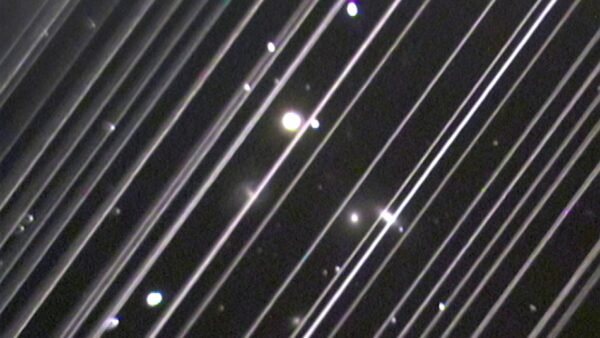
A Million Machines in the Sky: Who Owns the Night Now?
On 25 November 2026, America gave one company permission to fill the heavens with a million machines. The…
The Guitar Has Gone Quiet: Remembering Andy Taylor, the Fire Inside Duran Duran
Andy Taylor, the guitarist whose riffs powered Duran Duran's imperial 1980s, has died aged 65. A tribute to…
From Wembley to the Dock: Raheem Sterling and the Long Fall from Grace
On 25 November 2026, four-time Premier League champion Raheem Sterling stood in the dock at Basingstoke Magistrates' Court…