Houthis Claim Missile and Drone Strikes on Saudi Airports and Aramco Refinery

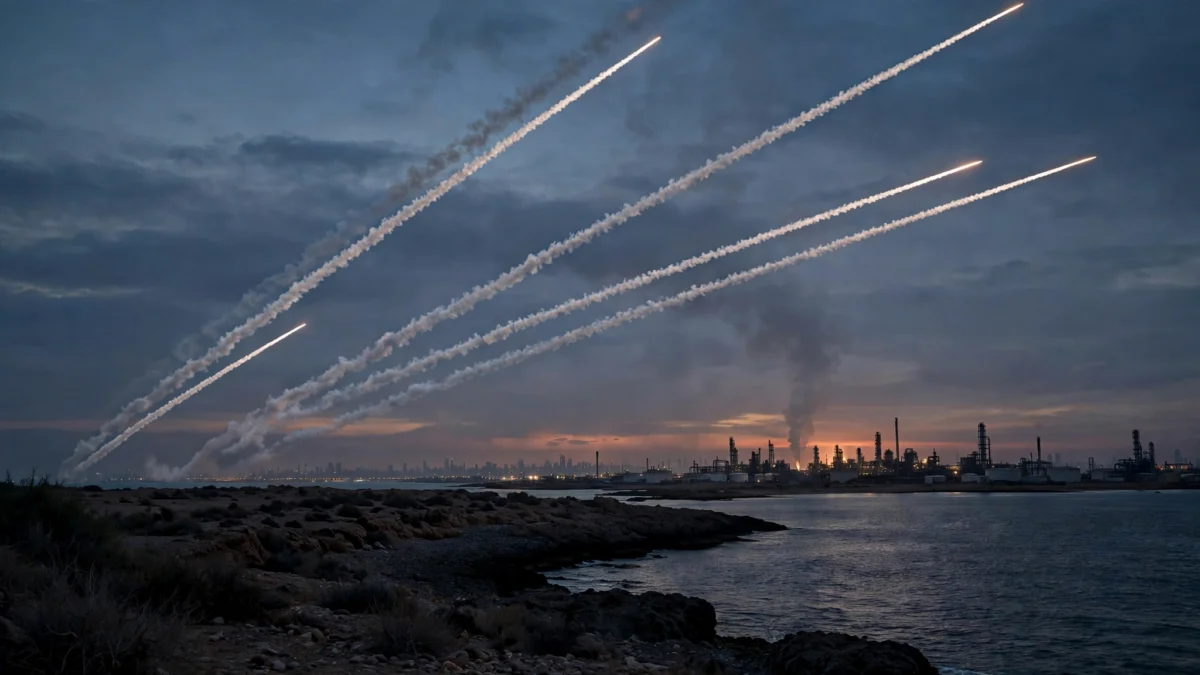
Yemen’s Houthi movement said on Monday that it had carried out three military operations using ballistic and cruise missiles and drones against targets across Saudi Arabia, in what marks a sharp escalation of the battle for control of the country’s Red Sea coast.
The group’s military spokesman, Yahya Saree, said in a statement posted on the social media platform X that the first operation targeted King Khalid International Airport in the capital Riyadh, claiming it struck its target and disrupted air traffic. The second, he said, hit a refinery belonging to state oil company Aramco in Rabigh, on the Red Sea coast, and caused a fire at the facility. A third operation targeted Abha Airport, the Khamis Mushait airbase and the Akfa camp in the southern Asir region, along with what Saree described as other “sensitive sites” in Najran and Jazan, according to Anadolu Ajansi.
Saree said the strikes were carried out in response to 60 Saudi airstrikes and missile attacks over the preceding 24 hours against targets in Sanaa, the capital, and in the provinces of Al-Jawf, Taiz, Hajjah, Saada and Marib. He put the total number of Saudi-led attacks since the escalation began at 1,576.
There was no immediate comment from Saudi authorities on the Houthi claims, and the reported damage could not be independently verified. Saree also warned international airlines using Saudi airspace that it was now within the group’s area of operations, except for the airspace over Mecca and Medina, according to Anadolu.
The claims came as Saudi-backed Yemeni government forces pushed to retake positions along the Bab el-Mandeb Strait, one of the world’s most important shipping chokepoints. Forces allied with the internationally recognised government retook the crucial town of Dhubab just north of the strait, as well as the towns of Bab and Hadeid, Yemeni officials told the Associated Press on Monday, with witnesses reporting government tanks entering the towns.
The government push is part of a major offensive launched early Monday — dubbed “Dawn of Yemen” by President Rashad al-Alimi — under air cover from the Saudi-led military coalition. The coalition has said around 100 fighter jets are providing support and that it has struck 324 “high-value targets,” with its naval forces also destroying weapons depots and explosive-laden boats in Hodeidah province to prevent attacks on vessels in the Red Sea, according to Sky News and the Wall Street Journal.
The offensive aims to reverse a Houthi advance last month that put the rebels in control of the strait, through which around 12 per cent of global trade passes. With Gulf energy exports already restricted by Iran’s partial closure of the Strait of Hormuz, fighting around a second major oil route has pushed up global prices, according to reporting from the region.
US Secretary of State Marco Rubio told reporters that Washington expected the Saudi-backed government to hit back at the rebels to reclaim territory. “They have a right to defend themselves,” he said, adding that Saudi Arabia and the United States have a defence agreement, though he would not say whether the coalition’s offensive had been coordinated with Washington.
Why It Matters
Until this week, the latest round of fighting in Yemen was largely contained to the country’s western coast. The Houthis’ claimed strikes on Riyadh airport and an Aramco refinery change that equation: this is no longer only a battle for a Yemeni waterway, but an exchange of fire reaching deep inside Saudi territory. Whether or not the damage claims hold up, the message the Houthis are sending is deliberate — Saudi airpower in Yemen will be answered with missiles over Saudi cities and oil infrastructure.
The pattern will feel familiar to anyone who has followed this conflict. In past rounds of escalation, Houthi attacks on Saudi energy facilities and airports have rattled oil markets and forced Riyadh to invest heavily in air defences. Aramco infrastructure, in particular, carries outsized symbolic and economic weight: Rabigh is one of the kingdom’s largest refining complexes, and a fire there — confirmed or not — keeps the oil price premium for regional risk firmly in place.
Three things are worth watching now. First, how Saudi Arabia responds to the claims. Riyadh has historically been slow to confirm Houthi strikes, and its silence so far keeps both the facts and the retaliation options deliberately foggy. Second, whether the airline warning affects regional air traffic — a threat to civil aviation would widen this from a military exchange into something that touches millions of travellers, including pilgrims headed to Mecca and Medina. Third, how far Washington gets drawn in. Rubio’s language stopped short of endorsing the offensive, but the US-Saudi defence agreement he cited gives Washington both a lever and a liability: American intelligence and logistical support are already reportedly part of this campaign, and an escalation that disrupts global energy flows lands squarely on US interests.
The Bab el-Mandeb fight was always about more than one strait. With Hormuz partially closed and the Red Sea contested again, the world’s two most important oil chokepoints are now flashing red at the same time — and that is what makes this escalation genuinely global.
Sources
- Associated Press (via Reflector): https://www.reflector.com/news/national/a-saudi-led-coalition-says-its-fighter-jets-are-bombing-yemens-iran-backed-houthi-rebels/article_558e39ce-692b-5b11-a6fe-66a852562b68.html
- Wall Street Journal: https://www.wsj.com/world/middle-east/saudi-backed-forces-launch-fight-to-free-bab-al-mandeb-from-houthis-f94b91fd
- Sky News: https://www.radiox.co.uk/news/uk-world/yemen-hundreds-of-houthi-targets-attacked-as/

About the Author — Abdul Mannan
Related Articles
Iran’s Oil Minister Mohsen Paknejad Resigns Under US Blockade Pressure; NIOC Chief Hamid Bovard Takes Over
Iran's oil minister Mohsen Paknejad has resigned, state media reported, with the chief of the National Iranian Oil…
Yemeni Government Forces Claim Recapture of Bab el-Mandeb Strait in Saudi-Backed Offensive
Saudi-backed Yemeni government forces say they have retaken key positions at the Bab el-Mandeb Strait from the Houthis,…

ICC Chief Warns Hormuz Gridlock Risks Global Food Crisis as Fertilizer Trade Stalls
The International Chamber of Commerce's secretary-general warns that months of disruption to shipping through the Strait of Hormuz…