Israeli Strikes Kill at Least Five in Gaza on First Anniversary of US-Brokered Ceasefire

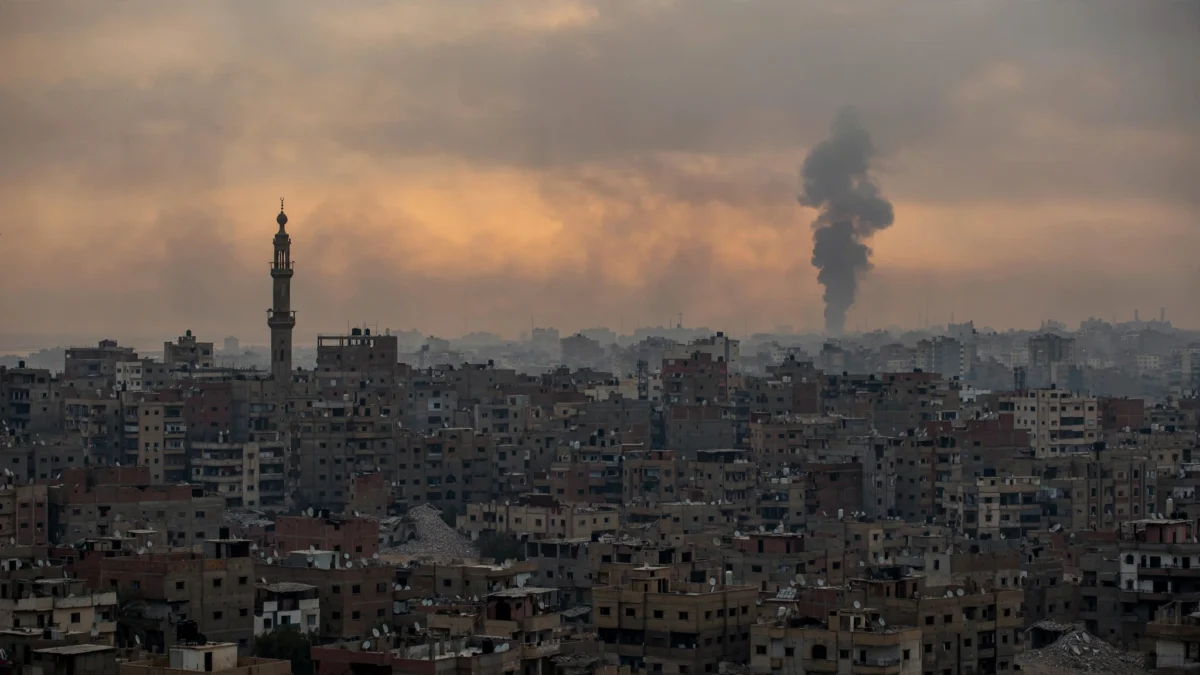
Israeli strikes killed at least five Palestinians in the Gaza Strip on Saturday, according to health officials, in two separate attacks on Gaza City that landed on the first anniversary of the US-brokered ceasefire between Israel and Hamas.
Medics said an Israeli strike killed four people near Panda Mall in Gaza City, while a second strike killed one person in the Tuffah neighbourhood further south of the city, according to Reuters, which cited health officials in the enclave. The Israeli military said both strikes targeted militants, without providing further detail.
Al Jazeera, reporting from Gaza, put the day’s toll higher, saying at least seven people had been killed in Israeli attacks across the territory on Saturday. Its correspondent reported that an eight-year-old girl, identified as Shahd Abdul-Razzaq al-Najjar, was killed by an Israeli quadcopter drone in the al-Jawazat area of western Gaza City, according to a source in the ambulance and emergency services. Al-Shifa Hospital in Gaza City said four people were killed and several injured in a separate Israeli bomb attack near the Haider Abdel Shafi roundabout, and that one more Palestinian was killed in a drone attack in the Tuffah neighbourhood. In the southern city of Khan Younis, a woman succumbed to injuries sustained in an earlier Israeli attack, Al Jazeera reported.
The differing tallies reflect the fog that routinely surrounds casualty reporting in Gaza, where access for independent observers is severely restricted and figures emerge at different times from hospitals, medics and health officials. What both accounts agree on is the core fact: Israeli forces carried out multiple lethal strikes in Gaza City on Saturday, killing several Palestinians, on the very day the ceasefire completed its first year.
A truce that never stopped the killing
The ceasefire, brokered by the United States, took effect on October 10 last year, and was supposed to end a war that has devastated the Gaza Strip. A year on, the agreement’s central promises remain unfulfilled. The deal called for the eventual reconstruction of the territory, for Hamas to disarm, and for Israel to withdraw its troops. According to Reuters, little progress has been made on any of those terms.
Gaza health officials have said at least 1,400 Palestinians have been killed by Israeli fire since the truce was agreed last October. Gaza’s Health Ministry, cited by Al Jazeera, put the figure at 1,481 killed and 5,254 injured since the ceasefire took effect, and said that in the previous 24 hours alone, Israeli attacks had killed at least nine people and injured 65. Israel says four of its soldiers have been killed by militants in Gaza over the same period.
Israel has stepped up strikes against Hamas in recent weeks, saying the Palestinian militant group has been rearming and carrying out attacks in violation of the ceasefire. Hamas denies rebuilding its arsenal or planning attacks, and accuses Israel of undermining the agreement.
The Gaza war was triggered by the Hamas-led attacks on Israel on October 7, 2023, which killed about 1,200 people, while a further 251 were taken hostage, according to Israeli figures cited by Reuters. Israel’s subsequent bombardment and ground operations in Gaza have killed more than 74,000 people, according to Gaza health officials, whose figures are regarded as generally reliable by United Nations agencies and independent experts.
Two narratives, one anniversary
Saturday’s strikes illustrate the two irreconcilable narratives that have defined the ceasefire year. Israel presents each strike as a targeted, defensive action against militants who, in its account, are exploiting the truce to rebuild their capabilities. Its military’s statements on individual strikes are typically brief — in Saturday’s case, a confirmation that militants were targeted, with no further information.
Hamas, for its part, denies that it is rearming or planning attacks, and frames the continuing Israeli strikes as evidence that Israel never intended to honour the ceasefire. Palestinian officials and medical sources describe a steady drumbeat of attacks on civilian areas — markets, residential neighbourhoods, aid workers — that continued almost daily through the truce year.
Between these two accounts sits the lived reality reported from Gaza: a population that marked the ceasefire’s first anniversary not with reconstruction but with funerals. As Al Jazeera’s correspondent in Gaza reported on Saturday, the truce has only heightened uncertainty in the enclave, with residents describing a danger that never fully went away.
Analysis: Why It Matters
The anniversary paradox. There is a grim symbolism in lethal strikes falling on the exact day a ceasefire turns one year old. Anniversaries are moments when agreements are supposed to be measured — and by any measure, this one fails. A truce under which more than 1,400 people are killed by one side’s fire in twelve months is not a ceasefire in any functional sense; it is a slower war. The Saturday strikes, falling on the anniversary itself, strip away the diplomatic fiction more brutally than any statement could.
The rearmament claim and the verification vacuum. Israel’s justification for its intensifying strikes — that Hamas is rearming in violation of the deal — is impossible for outside observers to verify independently. Gaza is sealed; journalists face extreme restrictions; and the claims and counter-claims arrive pre-packaged from the two sides. This information vacuum is itself a feature of the conflict’s current phase: each strike is presented as pre-emption, each denial as deception, and the truth about what was hit and who died must be reconstructed from hospital records and witness accounts. The discrepancy between Reuters’ five and Al Jazeera’s seven dead on Saturday is not an anomaly — it is the normal condition of reporting from Gaza.
The disarmament impasse. The ceasefire’s core bargain was always its hardest part: Hamas would disarm, Israel would withdraw, and reconstruction would begin. A year later, none of the three has happened in any meaningful way. Hamas has not disarmed — and shows no sign of doing so while Israeli strikes continue. Israel has not withdrawn — and shows no sign of doing so while Hamas remains armed. Reconstruction has not begun — and cannot begin while the shooting, however intermittent, continues. Each side’s precondition is the other side’s concession, and the circle has now held for a full year. Saturday’s strikes are both a symptom of that deadlock and a guarantee of its continuation: every funeral hardens the constituency against compromise on both sides.
The American dimension. The ceasefire was a US-brokered deal, which makes its erosion a test of American leverage as much as of the parties’ intentions. The Trump administration, now consumed by the wider regional war with Iran and the escalating Saudi-Houthi conflict, has shown little appetite for pressing either Israel or Hamas on the Gaza file. The truce’s slow collapse has proceeded with barely a diplomatic ripple from Washington — a silence that both sides have read as permission.
What to watch next. Four things will determine whether the second year of the “ceasefire” looks like the first, or worse. First, whether Israel’s stepped-up strikes continue at their recent tempo or accelerate into something closer to a resumed campaign. Second, whether Hamas’s denials hold — any confirmed militant attack on Israeli forces would give Israel the pretext for a far larger operation. Third, whether reconstruction ever begins; without it, Gaza’s residents face another winter in ruins, and humanitarian pressure will build on all parties. Fourth, whether the United States re-engages: a ceasefire nobody enforces is a press release, not a peace.
A year ago, the deal was sold as the end of the war. Twelve months and more than 1,400 deaths later, Gaza’s residents could be forgiven for asking what, exactly, was ended. Saturday’s strikes provided the anniversary’s bleak answer: the killing never stopped — it only slowed down enough for the world to look away.
Sources
Reuters — “Israeli strikes kill five people in Gaza, medics say” (October 10, 2026)
Al Jazeera — “Child among seven killed by Israel in Gaza on ‘ceasefire’ anniversary” (October 10, 2026)
JFeed — “6 killed, 10 wounded in two drone strikes in Gaza City” (October 10, 2026)

About the Author — Abdul Mannan
Related Articles
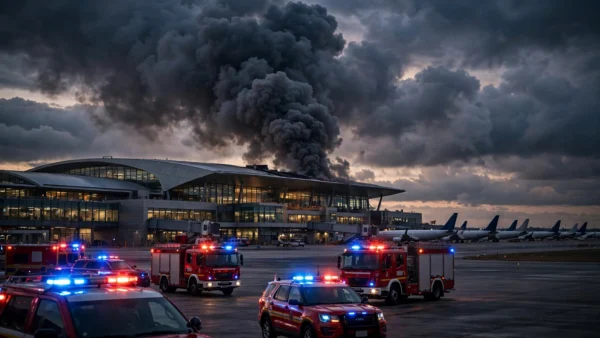
Missile Strike Hits Terminal 3 at Riyadh Airport, Many Wounded, as Saudi-Houthi Conflict Escalates
A missile struck Terminal 3 of King Khalid International Airport in Riyadh on Saturday, wounding many and forcing…
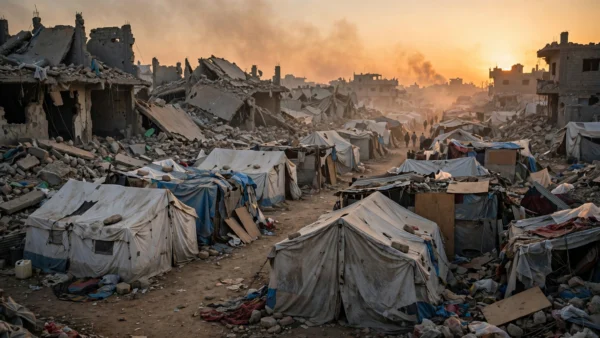
Gaza Ceasefire at One Year: Promises Unfulfilled as Strikes and Suffering Continue
One year after the 10 October 2025 US-brokered ceasefire was meant to end the Gaza war, its political…

Syria Weighs Military Aid for Saudi Arabia as Yemen War Escalates After Deadly Houthi Airport Strikes
Reuters reports that Damascus is weighing defensive or offensive military support for Riyadh against the Iran-backed Houthis —…