Syria Weighs Military Aid for Saudi Arabia as Yemen War Escalates After Deadly Houthi Airport Strikes

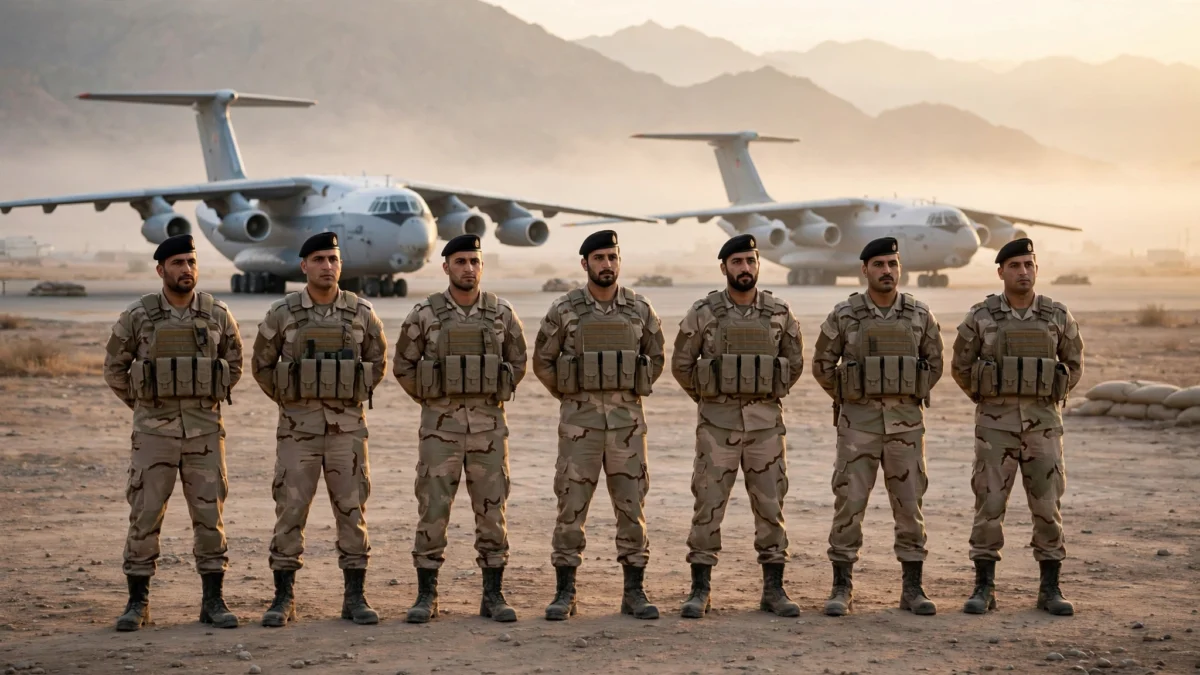
Syria is carefully considering providing military assistance to Saudi Arabia in its escalating war against the Iran-backed Houthis in Yemen, according to two officials cited by Reuters, in a development that would mark the first foreign military commitment of post-Assad Damascus — and the clearest sign yet that the kingdom’s renewed Yemen campaign is drawing new states into a conflict already burning across the region.
The options under consideration range from defensive aid to protect the kingdom from missile and drone attacks to deploying Syrian forces in an offensive capacity alongside Saudi-backed Yemeni troops fighting the Houthis, a US official and a Syrian military official briefed on the matter told Reuters.
A US official said Saudi Arabia had specifically requested that Syria deploy forces to fight the Houthis — an assertion swiftly denied by Syrian President Ahmed al-Sharaa’s media adviser, Ahmad Zaidan, in a post on X after the story appeared. In a separate statement, a Syrian diplomat said Damascus stood firmly with Saudi Arabia in the face of Houthi attacks, but stressed that the government’s primary focus remained domestic recovery from the country’s civil war, adding that any military cooperation would take place exclusively through official channels and within the framework of bilateral agreements.
The reported deliberations come as the Houthis step up attacks on Saudi territory. Saudi civil aviation authorities said late on Wednesday that three people had been killed in Houthi strikes on the kingdom’s airports this week — two in a strike on Abha airport in the southwest on Tuesday and one in a strike on King Khalid International Airport in Riyadh on Wednesday. The Houthis said on Thursday that they had attacked the Riyadh airport again with a ballistic missile, a claim that came hours after a succession of loud booms was heard over the Saudi capital on Thursday morning. Reuters said it could not identify the source of the blasts, and there was no immediate official Saudi comment on either the explosions or the latest Houthi claim, although some diplomats said they had received warnings and some Riyadh schools advised parents of shelter-in-place orders.
Syrian President Ahmed al-Sharaa made a public visit to Riyadh on Tuesday, where he met Saudi Crown Prince Mohammed bin Salman, also known as MbS. Potential Syrian military assistance was discussed between the two leaders among other matters, the US official told Reuters.
A campaign looking for allies
According to Reuters, Saudi Arabia has been pressing allied nations for support — including Turkey and Pakistan, even if only in a logistical or purely defensive capacity — as the Houthis widen their attacks. The News reported that Turkey was sending mainly defensive and technical support, according to two officials, after the NATO member and Pakistan pledged to implement a collective defence commitment under their newly formed alliance.
The ground war is being led by a patchwork of Yemeni government forces with Saudi air support. Those forces have made limited advances since the campaign, dubbed the “Dawn of Yemen” operation, was launched on Monday, Reuters reported. Fighting on the western front remains concentrated in the Dhubab district overlooking the Bab el-Mandeb strait, with pro-government forces attempting an advance in the strategic hills east of that coastal plain, Yemeni military and government sources told The News. The Yemeni government said on Monday it had reached Mocha, which sits at a junction with a supply route to the critical battleground of Taiz, but the claim was premature, according to Yemeni military officials on the ground and analysts.
The possible entry of Syrian forces into the battle would represent an overspill of the wider US-Iran conflict, Reuters noted, showing how Yemen’s reignited civil war — which paused with a ceasefire in 2022 but has erupted again in recent weeks, with the Houthis seizing stretches of the Red Sea coast last month — is adding new chaos to a region already aflame and risks drawing regional states into gruelling mountain fighting.
From refusal to reconsideration
Notably, this is not the first time Riyadh has looked to Damascus for manpower. On September 19, the Turkish outlet Türkiye Today reported, citing sources familiar with the matter, that Syria had rejected a formal Saudi request — made several months earlier — to organise and deploy Syrian fighters to Yemen. “This issue has been exhausted and is over. Syria politely turned it down, saying it was focused on its own military organisation process and did not intend to enter a conflict as a third party,” one Syrian source told the outlet at the time. Turkish sources also rejected claims that Türkiye had helped transport or organise Syrian fighters for Yemen.
Against that backdrop, the current account — Syria now “carefully considering” support — represents either a genuine shift in Damascus’s position or a deliberate signal being leaked by the Saudis, the Americans, or both. It is also worth noting that the Houthis themselves have long alleged that Saudi Arabia has been recruiting hundreds of Syrian fighters and moving them into Yemen through Saudi territory, claims reported by the Lebanese newspaper Al-Akhbar and echoed by regional outlets but never independently verified.
Sharaa’s trajectory makes the moment particularly charged. The former founder of the Nusra Front who later led Hayat Tahrir al-Sham seized power in Damascus in December 2024 after the fall of Bashar al-Assad, ending 13 years of civil war. Since then he has been working to rehabilitate Syria internationally: he met US President Donald Trump in Riyadh in May, Washington has moved to ease sanctions, and Syria is now treated by the Trump administration as a partner in the region. A decision to send Syrian fighters into Yemen would be the new Damascus’s first military deployment abroad — a defining statement about what kind of regional actor it intends to be.
Analysis: Why It Matters
The first thing this story reveals is the direction of the pressure. During Syria’s civil war, the fighters flowed inward — thousands of foreign combatants travelled from across the region, including from Saudi Arabia, into Syria. That the pipeline might now run in the opposite direction, with Damascus weighing the export of fighters to Yemen, is a striking measure of how completely the regional map has been redrawn since December 2024.
The second revelation is how rattled Riyadh appears to be. A kingdom that once led a broad coalition into Yemen in 2015 is now, according to Reuters, requesting assistance “far and wide, from the US to Europe and the Middle East” — for both defensive and offensive support. The Houthis have found the pressure point that matters most: Saudi airports and civilian infrastructure. Three dead civilians in a week is a modest toll by the standards of the region’s wars, but it is a political earthquake in a kingdom that sells stability as its product. The airport attacks forced the issue; Damascus is being courted because Riyadh needs options.
Third, the denial dynamics matter as much as the headline. Ahmad Zaidan denied that Saudi Arabia had requested a deployment, but he did not deny that Syria is considering military cooperation. The Syrian diplomat’s statement — standing “firmly with Saudi Arabia” while keeping the focus on domestic recovery — is the classic posture of a government that wants the leverage of saying yes without the costs of being seen to rush in. For Sharaa, the calculation is delicate: his entire international rehabilitation rests on presenting a reformed, statesmanlike government focused on rebuilding. Deploying fighters — many of them men with jihadi pedigrees from the Idlib years — against the Zaydi Houthis risks confirming every sceptic’s warning about what the new Syria really is. The sectarian optics of Sunni former-jihadists fighting Iran-backed Houthis would be impossible to contain.
Fourth, the story is another data point in the region’s most dangerous pattern: the overspill of the US-Iran war. The war between Washington and Tehran is in its eighth month, and its edges keep expanding — from the Strait of Hormuz, where tanker attacks reached their highest weekly level since the conflict began, to Bab el-Mandeb, to Saudi airports, and now to Damascus being pulled into the orbit of the campaign. Every new participant narrows the space for the “temporary arrangements” and back-channel diplomacy, such as the reported Oman-hosted Gulf-Iran talks, that might otherwise cool the conflict. A Syrian deployment would not stay a defensive gesture for long; mountain warfare in Yemen has a way of consuming whoever steps into it, as the Saudis learned in 2015.
Finally, the story shows how information itself has become a weapon in this war. The Reuters exclusive, the swift X-post denial, the carefully hedged diplomat’s statement, the earlier Türkiye Today report of a rejected request, the Houthi claims about Syrian mercenaries that were never verified — each side is narrating the same question, “will Damascus join the war?”, for different audiences. Riyadh wants to look like it has options; Washington wants to show the coalition is growing; Damascus wants to look indispensable but not entangled; the Houthis want to paint Saudi Arabia as a kingdom that must hire foreign fighters to fight its wars.
What to watch next: whether Damascus issues any formal confirmation or rejection in the coming days, and how specific it is; whether Turkey and Pakistan move from pledges to concrete support, particularly under their newly formed collective-defence alliance; whether the “defensive aid” option — the likelier, lower-cost path — materialises as air-defence or technical support before any talk of troop deployments; and whether the Houthis follow Thursday’s ballistic-missile claim with further strikes on Saudi infrastructure, which would tighten the timeline for every decision Damascus is weighing. The Saudi government media office and Yemen’s information minister did not respond to Reuters’s requests for comment — their silence, for now, is part of the calculation too.
Sources
Reuters — “Syria considers help in Yemen war after Saudi airports come under Houthi fire”
Reuters — “Syria weighs military aid for Saudi Arabia amid Yemen war, sources say”
The News — “Three killed in Saudi airport attacks as govt, Houthis clash in Yemen”
JFeed — “Syria denies reports of sending troops to aid Saudi Arabia against Houthis”
Reuters — “Yemen’s Houthis say they attacked Riyadh airport with ballistic missile”
TBS News / Türkiye Today — “Syria rejects Saudi request to send fighters to Yemen”

About the Author — Abdul Mannan
Related Articles
Houthi Strikes Kill Three and Wound Dozens at Saudi Airports as Yemen War Spreads to Riyadh
Houthi attacks on airports in Riyadh and Abha have killed three people and wounded 36, the deadliest confirmed…
Saudi Arabia Confirms Houthi Strikes Damaged Two Southern Airports, Wounding Three
Riyadh confirms Monday evening strikes damaged the Jazan and Najran airports, wounding three, as Houthi rebels claim a…
Three Years After October 7: Trump’s Gaza Plan Turns One as Strikes Continue and Disarmament Stalls
Three years after the October 7 attacks and a year into the US-brokered ceasefire, Trump's Gaza plan has…