Microsoft Unveils Maia 300, Its Third-Generation Custom AI Chip, in Biggest Push Yet to Loosen Nvidia’s Grip

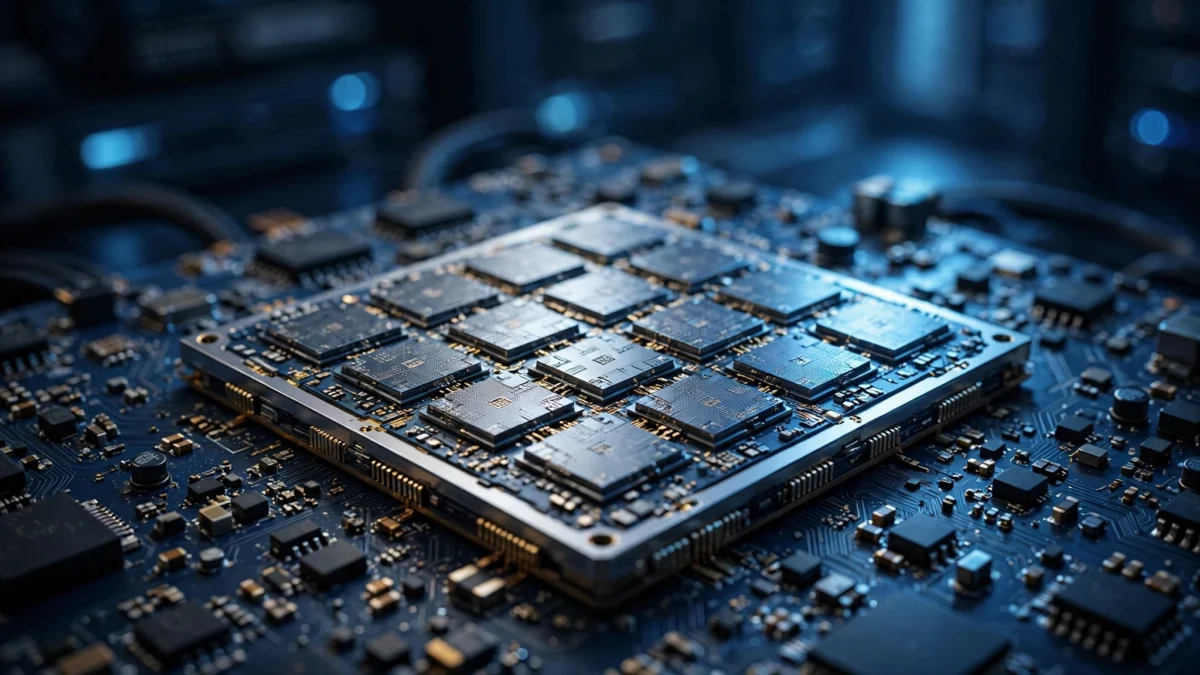
Microsoft has unveiled the Maia 300, the third generation of its in-house artificial-intelligence chip, and said it plans to deploy potentially more than one million of the processors next year as it moves to run the bulk of its AI services on its own silicon, according to Reuters.
The announcement, made on Monday, October 12, 2026, represents the most aggressive step yet by the software giant to reduce its dependence on Nvidia, the dominant supplier of the AI accelerators that power the data centres behind the global AI boom.
According to Reuters, the Maia 300 is the third generation of custom chips Microsoft has designed to handle AI work such as coding and carrying out complex business tasks on a user’s behalf. Its predecessor, the Maia 200, is already running Microsoft’s in-house AI models as well as models from OpenAI delivered through Microsoft’s Azure cloud service.
A chip built for the inference era
The Maia 300 is designed for inference, the process through which a trained AI model responds to requests, rather than the initial training of models. According to the AI Daily Post, which covered the announcement, the chip targets reasoning models and agentic workloads, workloads in which AI systems work through several steps of a task autonomously.
Microsoft expects the chip to deliver about 40 per cent more tokens per megawatt than “leading GPU-based systems,” a comparison the company made without naming the systems it measured against. Tokens are the units of information AI models process or generate, so the claim, if it holds up in production, would mean materially cheaper AI computing per unit of electricity consumed.
At the rack level, Microsoft says a full configuration of 96 Maia 300 accelerators would deliver up to seven times the token throughput of the previous Maia 200, according to the AI Daily Post.
Rani Borkar, president of Azure hardware systems and infrastructure at Microsoft, told Reuters in an interview: “It’s basically delivering more intelligence for every watt, every dollar, and every byte of memory by optimizing across the entire system.”
Technically, the chip takes a different path from Nvidia’s approach. Nvidia’s AI accelerators use one massive computing chip surrounded by high-bandwidth memory chips. Microsoft’s Maia 300 instead uses “chiplets” — specialised pieces of silicon bonded together — built on Taiwan Semiconductor Manufacturing Co’s 2-nanometer technology for key computing functions, according to Reuters. Other chiplets in the design, handling functions such as moving data off the processor and elsewhere inside the system, use cheaper 3-nanometer technology.
The trade-off is power. Reuters reports that Maia 300 racks, containing 96 chips, use about 167 kilowatts of power, compared with about 142 kilowatts for Nvidia’s most recent GB300 AI server racks, which carry 72 of Nvidia’s graphics processing units. The comparison is not like-for-like in chip count, but it underscores how tightly the competition in AI hardware has become a battle over watts as much as over raw speed.
A fast follow, at enormous scale
The speed of Microsoft’s silicon programme is striking. The company only announced the Maia 200 in January of this year, and that chip is already handling production workloads across Microsoft’s AI products, including Microsoft Copilot, GitHub Copilot and Microsoft Foundry, according to the AI Daily Post. In July, Microsoft chief executive Satya Nadella said the Maia 200 delivered 30 per cent better performance per dollar than the latest-generation hardware in the company’s fleet.
Moving to a third generation within the same calendar year signals how aggressively Microsoft wants to compete on custom silicon, not just software.
The deployment plan is equally ambitious. Microsoft said it intends to roll out “multi-gigawatt deployments” of the Maia family starting next year, according to Reuters. Scott Guthrie, the company’s executive vice president of Cloud and AI, said in the announcement: “We will scale our Azure Maia family to multi-gigawatt deployments starting in 2027.”
Reuters reports that Microsoft has said it expects to spend more than $175 billion in capital expenditures this calendar year, much of it on the data-centre buildout that chips like the Maia 300 are destined to fill. The company has not announced customer pricing or exact availability dates for the new chip.
The Maia 300 will not touch a production workload until 2027, according to the AI Daily Post. That timeline gives Microsoft room to keep leaning on outside chipmakers in the near term, while making its long-term goal clear: less dependence on Nvidia, and more control over the hardware running Copilot, GitHub Copilot and Microsoft Foundry.
The wider silicon race
Microsoft is not the only cloud giant designing its own processors. According to the AI Daily Post, Google and Amazon have made similar custom-silicon bets with the Trillium and Trainium chips respectively, and OpenAI is among the AI firms pursuing its own chip designs. The common objective, as Reuters framed it, is loosening the hold of Nvidia on the AI computing market.
Microsoft’s dependence on Nvidia is expensive. The AI Daily Post estimates that Microsoft spent more than $30 billion on Nvidia silicon last year alone. Every percentage point of inference work the company moves onto its own chips changes its negotiating position with Nvidia’s chief executive, Jensen Huang.
For Microsoft, the logic of building its own chips mirrors the logic of its software business: controlling the full stack, from silicon through software, lets the company optimise performance and cost together, and roll out new features without waiting on a third-party hardware roadmap. The chiplet architecture, with different silicon processes for different functions, is the same cost-engineering thinking applied to hardware: pay for the expensive 2-nanometer process only where it matters most.
Yet the numbers Microsoft has published are the company’s own claims, and they come with caveats that matter. The 40 per cent figure compares against unnamed “leading GPU-based systems,” and the 7x throughput figure concerns the complete rack rather than the speed of an individual chip. As the AI Daily Post notes, these should be treated as marketing claims until Azure customers can actually benchmark them against competing hardware.
Analysis: Why It Matters
The Maia 300 announcement is best read not as a chip story but as an economics story. The AI industry’s scarcest resource in 2026 is no longer just talent or data; it is compute, and more precisely, cheap, abundant, reliable compute. Whoever controls the cost per token controls the economics of every AI product built on top.
Microsoft sits at an unusual junction in this market. It is Nvidia’s largest or near-largest customer, and simultaneously Nvidia’s most credible competitor. The Maia 300 makes that dual role explicit: Microsoft will keep buying Nvidia chips for model training and general-purpose work while steering the high-volume, margin-sensitive inference work toward its own silicon. That is a classic supplier-negotiation playbook dressed up as an engineering milestone. Nvidia’s pricing power over its biggest customer shrinks with every workload Microsoft can credibly threaten to move in-house.
There is a second, quieter contest embedded in the announcement: the battle over power. Data centres are hitting physical and political limits on electricity consumption, and several hyperscalers are now signing direct power deals and courting nuclear restarts. In that world, the most valuable metric is not raw speed but tokens per megawatt, which is exactly the headline number Microsoft chose to lead with. The fact that a Maia 300 rack draws 167 kilowatts against Nvidia’s GB300 rack at 142 kilowatts is a reminder that efficiency claims can coexist with absolute power growth. The industry is not using less energy; it is racing to get more intelligence out of every watt while consuming ever more of them.
Third, the announcement sharpens a strategic question for every other cloud customer: how much of the AI infrastructure market ends up vertically integrated? Google’s Trillium and Amazon’s Trainium follow the same logic as Maia. If the three largest cloud providers all run their own silicon for inference, Nvidia’s market does not disappear — training still demands the most powerful general-purpose accelerators, and the AI Daily Post notes Microsoft will continue working with Nvidia and AMD on model training — but it bifurcates. Nvidia keeps the high-end training market; the hyperscalers commoditise inference for themselves. The $30 billion-plus Microsoft reportedly spends annually on Nvidia silicon is the prize at stake in that split, and Maia 300 is Microsoft’s opening bid to keep a growing share of it.
Finally, there is a caution built into the timeline. A chip announced in October 2026 that does not reach production until 2027 lives in the gap between marketing and measurement. Microsoft’s claims are plausible given the trajectory of the Maia programme — the Maia 200 reportedly delivered 30 per cent better performance per dollar in production, which is the kind of real-world validation the new chip’s claims do not yet have. Until independent benchmarks arrive, Maia 300 is a statement of intent backed by a very large capital budget. The $175 billion capex figure is arguably the more important number in the announcement: it says Microsoft can afford to be patient.
None of this diminishes the significance of the moment. A third-generation custom chip in under two years, built on TSMC’s 2-nanometer process, targeting the fastest-growing workload category in AI, is exactly what a company serious about owning its AI economics would do. The question is no longer whether the hyperscalers can build competitive silicon. It is how fast the rest of the market has to move to keep up.
What to Watch Next
- The production timeline. Microsoft says Maia 300 reaches production workloads in 2027. Whether that means early 2027 or late 2027, and whether the rollout hits the “potentially more than one million units” scale Reuters reported, will be the first real test of the announcement.
- Independent benchmarks. Until third parties can test Maia 300 against Nvidia’s GB300 and Google’s Trillium on the same workloads, the 40 per cent efficiency claim and the 7x rack-scale throughput figure remain Microsoft’s numbers, not the industry’s.
- Azure pricing. If Maia 300 genuinely cuts Microsoft’s cost per token, developers and enterprise customers will watch whether those savings flow through to lower API rates and Copilot pricing, or whether they simply widen Microsoft’s margins while Nvidia-powered pricing stays anchored.
- Nvidia’s response. Nvidia’s GB300 is the direct competitor named in the comparisons. How Nvidia answers — on price, on performance, or on the next architecture — will shape whether Maia 300 is a negotiating lever or a genuine inflection point.
- The supply chain. The chip depends on TSMC’s 2-nanometer process for its key compute chiplets. Any constraint at TSMC, or any geopolitical turbulence around Taiwan, becomes a constraint on Microsoft’s AI economics directly.
Sources

About the Author — Abdul Mannan
Related Articles

Microsoft’s Brad Smith Demands Global AI Safety Rules, Says Milk and Washing Machines Face More Regulation
In a BBC interview, Microsoft president Brad Smith called for binding global AI safety rules — mandatory incident…

Satya Nadella Urges AI “Emergency Brake”: Assume Every Advanced Model Is Compromised
Microsoft's chief executive says companies must treat powerful AI models as potential insider threats and build "emergency brakes"…

Amazon in Talks to Acquire AI Chip Startup Decart for About $7 Billion, Wall Street Journal Reports
Amazon is in talks to buy Decart, the AI chip-optimisation startup behind world models Lucy and Oasis, in…