Dhoni Has Left the Field: The Quiet End of Cricket’s Calmest Era

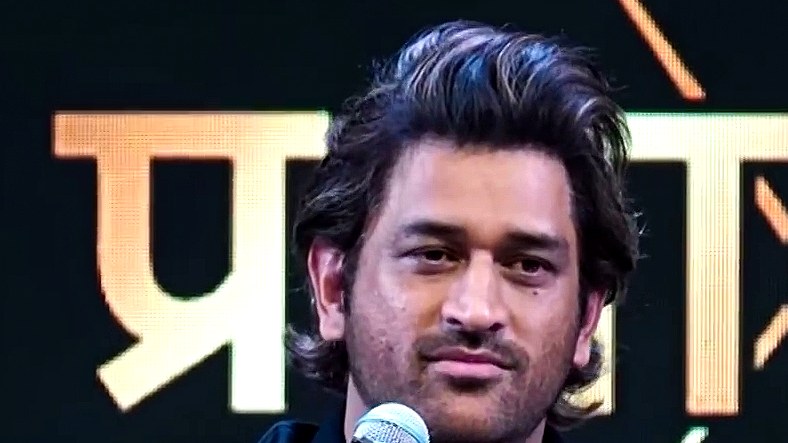
What Does the End of an Era Sound Like?
What does the end of an era sound like? We imagine it should be loud. We imagine trumpets and tears, a packed stadium rising as one, a great man walking a lap of honour with his daughter on his shoulders while the crowd refuses to let him go. That is how we have been taught to picture a farewell. That is how Sachin Tendulkar left us in 2013 at the Wankhede, weeping openly, touching the pitch like a man saying goodbye to a shrine, while a whole nation wept with him and the cameras drank in every tear.
But the end of the Mahendra Singh Dhoni era sounded like nothing at all. It sounded like a single quiet sentence, spoken on an ordinary video call, on an ordinary Saturday, three days before a deadline. “Maybe you should add my name in it.” That was all. No press conference. No farewell speech. No staged final walk. The video call, we are told, shut down at that very moment, as if even the internet could not bear the news. And so, on Tuesday, 17 November 2026, the Chennai Super Kings announced what millions of fans had feared for years and yet could never quite believe: MS Dhoni, the most adored player in the history of the Indian Premier League, has ended his 19-year IPL career. He will not pad up in yellow again. From IPL 2027, he will sit in the dugout instead, as the team’s mentor.
I have been thinking about that sentence all day. “Maybe you should add my name in it.” Not “I am retiring.” Not “I have decided.” Just a gentle suggestion, offered almost as an afterthought, while the managing director read out a list of releases. That is Dhoni. That has always been Dhoni. The man who won India a World Cup with a six and then walked away from the crease as if he had just finished a net session. The man who retired from international cricket in 2020 with an Instagram post at 19:29 on a quiet August evening, four words that broke a billion hearts: “consider me retired.” He has now done it a second time, and again he refused to perform his ending for us. He simply left the stage the way he had always played on it: without noise, without drama, on his own terms.
The Numbers That Will Never Be Repeated
Let me put the numbers before you first, because numbers, cold as they are, tell a story that poetry cannot. Dhoni was bought by Chennai Super Kings for $1.5 million at the inaugural IPL auction in 2008, weeks after he had led a young Indian team to victory in the first T20 World Cup in 2007. He was, from that first day, Chennai’s first Super King. He captained the franchise to five IPL titles, in 2010, 2011, 2018, 2021 and 2023, and to two Champions League titles, in 2010 and 2014. Chennai were the first team to win back-to-back IPL titles, and the first to win the IPL and the Champions League in the same year. He played 278 IPL matches and scored 5,439 runs at an average of 38.30 and a strike rate of 137.45, with 24 half-centuries. He led CSK in 12 of the league’s seasons. For two seasons, 2016 and 2017, when Chennai were suspended from the league, he played for Rising Pune Supergiant, and the exile only deepened the bond: when CSK returned in 2018, he brought them home with a title, as if the two lost years had never happened.
But the numbers, impressive as they are, are not the story. The story is what those numbers cost and what they meant. In 2023 he won his fifth title on a knee so damaged that he could barely run, batting through pain that would have ended most careers, because the team needed him and because that is what he does. In 2024 he handed the captaincy to Ruturaj Gaikwad the day before the season began, and reduced himself, willingly, to a cameo: he faced only 73 balls in 11 innings that season. In 2025 he faced 145 balls in 13 innings, and when Gaikwad was injured mid-season he took the captaincy back once more, because the team asked and he never says no to the team. He scored only 196 runs that season at an average of 24.50, and Chennai finished at the bottom of the league. And then came 2026, the season that never was: a calf strain kept him out of every single game, and he was rarely even seen at the venue on match days. Chennai missed the playoffs for a third straight season and finished eighth. The body had finally said what the man would never say.
And here is the detail that breaks the heart most of all. Dhoni had often said that he wanted to finish his IPL career in front of Chennai’s passionate fans at Chepauk, the ground where the crowd chants his name until the concrete shakes, where every appearance of his at the crease is greeted like a festival. He will now not have such an ending. There will be no last walk to the middle in yellow. No final helicopter shot disappearing into the Chennai night. No lap of honour. The farewell he dreamed of was denied to him by a calf muscle, and he accepted that denial with the same silence with which he accepted everything else. Tell me, reader, how many of us could accept that? How many of us, denied the ending we dreamed of, would not rage against it?
A Sentence on a Video Call
I keep returning to that video call, because I believe it contains the whole man. It was Saturday, 14 November. Three days remained before the retention deadline, ahead of the IPL 2027 auction in Goa on 16 December. Rupa Gurunath, the co-owner of the franchise, was on the call with Dhoni and the team’s managing director, Kasi Viswanathan. Months earlier, Dhoni had admitted to her candidly that he was uncertain whether his body would allow him to play the 2027 season. But the final confirmation came that Saturday, in the most Dhoni way imaginable. Viswanathan was reading out the list of releases. And very quietly, MS said, “Maybe you should add my name in it.” Then the call shut down. “You know what,” Gurunath laughed afterwards, “even the internet could not handle you not being able to play the next season.”
Think about what that sentence really is. It is a man releasing his own name. It is a captain putting himself on the list of the released, the discarded, the let go, and doing it with his own hand, so that nobody else would have to carry the weight of the decision. How many leaders do you know who would do that? How many great men have you seen cling to their chair until they are dragged from it, humiliated, diminished, begging for one more season? Dhoni did the opposite. He freed his franchise before his franchise had to free him. He gave them a clean slate ahead of the auction, and he gave himself the dignity of a door closed by his own hand. That is not a retirement announcement. That is a masterclass in how to leave.
And notice, too, who told the story. Not Dhoni himself. He has said nothing. It was the owners who told us, with love and with grief. N. Srinivasan, the owner of Chennai Super Kings, said in his statement: “There is no CSK without MS Dhoni. For nearly two decades, we have walked and grown alongside each other, through triumphs, setbacks and everything in between. In 2008, I insisted that Dhoni should be part of CSK. It turns out that’s the best decision I took. Not because of all his achievements for the franchise, but for the kind of human he is. Dhoni will always be a part of our identity. This will always be his home.” Read that again. Not because of the achievements, but because of the kind of human he is. When has an owner ever said that about a player? Kasi Viswanathan added, simply: “What MS Dhoni achieved as a cricketer is etched in the memory of every fan.” And Ruturaj Gaikwad, the young captain who now inherits the yellow jersey, penned an emotional tribute of his own. The whole franchise, it seems, is grieving in public, while the man himself remains silent. That silence is the loudest statement of all.
The Calm That Conquered a Noisy Game
But why does this retirement hurt so much? Why are grown men and women, who never met the man, writing tributes as if they had lost a member of their family? The answer, I believe, is that Dhoni was never just a cricketer. He was a rebuke to everything our age has become.
Consider the game he leaves behind. Cricket today is noise. It is noise in every sense: the music between balls, the cheerleaders, the flashing screens, the players screaming at each other, the social media storms, the experts shouting on television, the fans abusing each other online. It is a game that has learned to shout. And into this noise walked a man from Ranchi, born on 7 July 1981, a ticket collector at Kharagpur railway station who had no godfather in cricket, no famous surname, no academy grooming, and he conquered the loudest game on earth by refusing to raise his voice. He became Captain Cool in an age of heat. He finished matches with sixes and then walked off as if nothing had happened. He took the 2011 World Cup final, with India chasing under lights at the Wankhede, and finished it with a six over long-on, prompting Ravi Shastri’s immortal cry, “Dhoni finishes off in style,” and then he simply stood there, bat raised, calm as a lake, while a billion people lost their minds around him.
That calm was not an act. It was a philosophy. Dhoni’s great gift was the ability to separate the result from the process, to play the ball in front of him rather than the occasion around him. The last over, the crowd screaming, the equation impossible, the cameras on his face: none of it entered his mind. He looked at the ball, he looked at the field, he made his calculation, and he executed. Again and again and again, for nineteen years. And because he never panicked, his teams never panicked. That is what leadership actually is. Not speeches. Not slogans. The transfer of calm from one man to ten others in the most pressurised moments of their lives.
History gives us mirrors for men like this, and I reach for them now. Imran Khan, who won Pakistan the World Cup in 1992 and walked away at the summit, never to return. Tendulkar, whose farewell was a national event, a river of tears. But Dhoni’s mirror is different. He is not the hero who leaves in a blaze of glory, and he is not the hero who weeps at the end. He is the rarest kind of hero: the one who knows that the work is done, and simply puts the tools down. There is a dignity in that which our age has almost forgotten. We live in a time when everyone performs everything, when every emotion must be broadcast, when every ending must be a spectacle. Dhoni’s career is a standing argument against all of it. He proved that you can be the biggest star in the biggest league in the world and still refuse to perform yourself.
What He Leaves Behind, and What Comes Next
So what happens now? The franchise has moved quickly, and wisely. Dhoni will join a revamped coaching staff for IPL 2027, alongside the newly appointed head coach Zaheer Khan, with Albie Morkel, Gareth Batty and Sridharan Sriram as assistant coaches, Mohit Sharma as bowling coach and James Foster as fielding coach. The sweeping changes follow three seasons without a playoff appearance, and they make cricketing sense. But let us be honest about what the mentor role really means. A mentor is not a player. A mentor does not walk out at the fall of a wicket with the crowd chanting his name. A mentor sits in the dugout and watches younger men make the mistakes he once made, and hopes they have learned from watching him. It is a lesser role in glory and a greater role in wisdom, and Dhoni, who has always been wiser than he was glorious, is suited to it. The young players of Chennai Super Kings will now have, in their dugout, a man who has won everything there is to win: the 2007 T20 World Cup, the 2011 ODI World Cup, the 2013 Champions Trophy, the only captain in history to hold all three of cricket’s white-ball crowns, five IPL titles, two Champions League titles, 90 Tests and 350 one-day internationals for India. What better teacher could a young cricketer ask for? And yet, I confess, I will miss the sight of him in yellow. The dugout is not the middle. The mentor’s calm is not the finisher’s calm. Something irreplaceable has left the field.
And so I ask you, the reader, directly: what do we do with heroes who refuse to perform their ending? We wanted a farewell. We wanted the lap of honour at Chepauk, the tears, the speech, the fireworks. He gave us a sentence on a video call. Are we disappointed? We should not be. Because in that sentence, he gave us something better than a farewell. He gave us a final lesson, the same lesson he has been teaching for nineteen years: that greatness does not need an audience, that dignity does not need a stage, and that the loudest statement a man can make is sometimes a quiet one. The game will go on. The auction will happen in Goa on 16 December. New players will wear the yellow jersey. The crowds will chant new names. But every time Chennai Super Kings chase a total in the last over, every time a young captain looks to the dugout for reassurance, every time a finisher walks out with the match in the balance, the shadow of number seven will fall across the pitch. Thala. The leader. The man who finished matches, and who has now, finally, finished his own.
The Verdict of Silence
I began by asking what the end of an era sounds like. I can answer that question now. It sounds like a quiet sentence. It sounds like a video call going silent. It sounds like a man from a small town in Ranchi, who once collected tickets at a railway station and ended up collecting the love of a billion people, deciding that enough was enough, and walking away without asking us to watch him go.
History will remember MS Dhoni as the greatest finisher cricket ever produced, as the calmest captain the game ever saw, as the only man to win every white-ball trophy the sport offers. But I hope history remembers something else too. I hope it remembers that he left the way he lived: without noise, without self-pity, without clinging. In an age when everyone shouts, he whispered. In an age when everyone performs, he simply did the work. And in an age when heroes are manufactured by public relations, he remained, to the very end, unmanufactured. A ticket collector who became a king, and a king who walked away like a common man, quietly, on a Saturday afternoon, with a single sentence.
Goodbye, Thala. You did not give us the farewell we wanted. You gave us the farewell we deserved. And that, like everything else you did, was exactly right.
Sources & References
- ESPNcricinfo — “MS Dhoni ends IPL career, joins Chennai Super Kings as mentor” (17 November 2026)
- Reuters — “IPL career over, Dhoni unveiled as Chennai team mentor” (17 November 2026)
- TNT Sports — “India legend MS Dhoni announces retirement from IPL and Chennai Super Kings aged 45” (17 November 2026)
- The Hindu BusinessLine — “MS Dhoni is new mentor of Chennai Super Kings, retires from playing IPL” (17 November 2026)
- SportsTak — “CSK owner reveals how MS Dhoni quietly communicated his IPL retirement news to the franchise” (17 November 2026)
- Sportskeeda — “CSK captain pens emotional tribute as MS Dhoni retires ahead of IPL 2027” (17 November 2026)

About the Author — Abdul Mannan
Related Articles

The Word of the Year Is “Human” — and That Is the Most Frightening News of 2026
Cambridge Dictionary has named 'human' its Word of the Year for 2026 — the oldest word we own,…

Robert Pattinson Is the New James Bond: The Vampire, the Bat, and the Reinvention of 007
Robert Pattinson is the new James Bond. From Twilight to The Batman to 007, his casting repeats a…

The Sea Knocks Three Times: Cyclone Akvan and the Warning Andhra Pradesh Cannot Afford to Ignore
A third cyclone in a month is bearing down on Andhra Pradesh, and it arrives almost to the…