Robert Pattinson Is the New James Bond: The Vampire, the Bat, and the Reinvention of 007

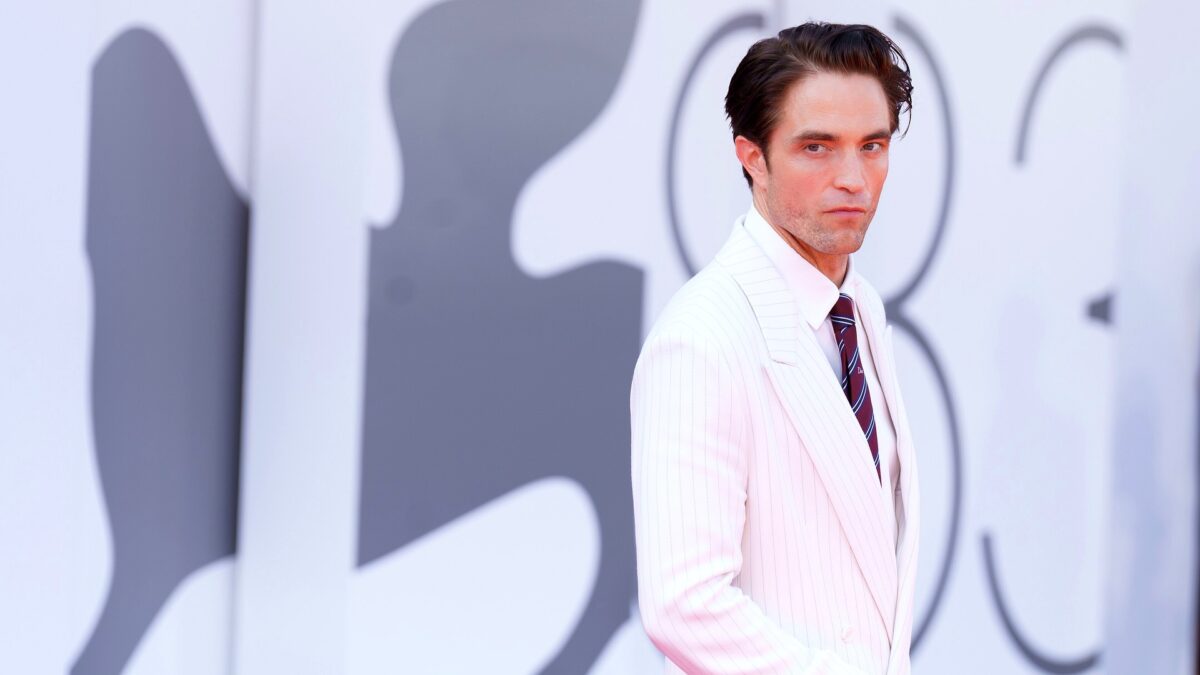
Have you ever watched a man being handed a crown while the crowd booed? That is what happened on Monday, 16 November 2026, when Amazon MGM Studios announced that Robert Pattinson, forty years old, will be the next James Bond. The official 007 account released a short video: Pattinson emerging from darkness in a tuxedo as the old theme played, and then the words the whole world has been waiting five years to read. James Bond will return. And within minutes, the internet did what the internet always does when a new Bond is named. It laughed. It doubted. It declared the franchise dead.
I have seen this film before. Not the new one — the old one, the one that plays out every single time a new man is handed the tuxedo. And if you want to understand why the doubters are wrong, you do not need to look at Pattinson at all. You need to look at history, because history is the only mirror that never lies.
The Booing of the New King
The reaction to Pattinson has been ferocious, and it has been familiar. On Facebook and Instagram and every corner of the internet where film fans gather, the jokes arrived before the applause. Batman playing Bond, they said. Bond playing Batman. Others mourned Henry Cavill, the favourite who never was, and insisted that Cavill should have had the role years ago. Some said Pattinson is too thin, too pale, too strange. Some said he will never escape Twilight, that a generation will always see Edward Cullen first and 007 second. A few, with the cruelty that only strangers online can manage, announced that they would never watch another Bond film.
And yet, reader, I ask you: does any of this sound new to you? Because I remember October 2005. I remember the day Daniel Craig was announced as the sixth Bond, and I remember the storm that followed him. The Daily Mirror printed his photograph beneath the headline “The Name’s Bland … James Bland.” Websites sprang up overnight with names like danielcraigisnotbond.com, and fans threatened to boycott the film before a single frame had been shot. He was too blond, they said. Too short. Too rough. He arrived at his own unveiling press conference by speedboat wearing a life jacket, and the press mocked him for that too, as if a life jacket were a betrayal of the character. They said he could not drive a stick shift. They said he was afraid of guns. They said he had no charisma at all.
And then, on 14 November 2006 — twenty years and two days before Pattinson’s announcement — Casino Royale premiered, and the same crowd that had booed Craig fell silent. The film took nearly $600 million around the world. Craig was nominated for a BAFTA. The blond Bond, the joke Bond, the “James Bland” of the tabloids, went on to play the role for fifteen years across five films, and his Skyfall in 2012 took $1.11 billion and became the highest-grossing Bond film ever made. The men who built websites to hate him quietly let the domain names expire.
This is the first law of Bond, and it has never once been broken: every new 007 is greeted with horror, and every new 007 is eventually defended by the same people who once mocked him. Sean Connery was doubted by Ian Fleming himself, who thought the former milkman and bodybuilder was not what he had envisaged at all. George Lazenby was an unknown model. Roger Moore was too pretty, too much the Saint. Timothy Dalton was too serious. Pierce Brosnan was too much the television star. And now Robert Pattinson is too much the vampire. The script never changes. Only the names do.
So when I read the comments this week — the Cavill loyalists, the Twilight jokes, the confident predictions of disaster — I do not hear the voice of the future. I hear the echo of 2005. And I know how that story ends.
A Boy Who Collected Legends
But let us look at the man himself, because Pattinson’s story is stranger and more remarkable than the jokes allow. Consider what this one actor has already done. As a teenager he played Cedric Diggory in Harry Potter and the Goblet of Fire, the golden boy of Hogwarts. Then he became Edward Cullen in Twilight, the vampire who made a generation of teenagers weep and made Pattinson himself the most famous young man on the planet — and the most mocked. Fame of that kind is a prison. Most actors who enter it never leave. Pattinson did something almost no one expected: he walked away from the blockbusters and spent a decade rebuilding himself in the hardest school in cinema, the small, strange, unforgiving world of independent film.
He made Good Time, playing a desperate bank robber in a performance so raw that critics who had laughed at him went quiet. He made The Lighthouse, a black-and-white fever dream in which he went half-mad on screen opposite Willem Dafoe. He played the cool, unreadable Neil in Christopher Nolan’s Tenet, and then he put on the cowl and became the Batman in 2022, carrying one of the biggest films of the decade on his shoulders. This year alone he has appeared in Nolan’s The Odyssey, in The Drama and Primetime, and next month he will be seen in Denis Villeneuve’s Dune: Part Three — the same director who will now direct him as Bond.
Do you see the pattern? One fan online put it better than any critic could: this man has lived every boy’s childhood dream. Hogwarts. A vampire. Batman. And now Bond. Four legends, one lifetime, one actor. It sounds like a joke until you realise it is the most extraordinary run any actor of his generation has put together. The boy who was once dismissed as a pretty face from a teen romance has collected the crown jewels of popular mythology one by one, and each time the doubters said he could not do it, and each time he did.
That is not luck. That is discipline. Pattinson spent ten years doing the unglamorous work — the small films, the difficult directors, the roles that paid little and demanded everything — precisely so that when a moment like this arrived, no one could honestly say he had not earned it. The vampire grew up. The question is whether the audience has grown up with him.
The Crown Changes Hands
Yet there is a second story beneath the casting, and it is the more important one. For the first time in the history of the franchise, James Bond will not be made by the family that made him. This is the first Bond film under the creative control of Amazon MGM Studios, and that fact matters more than the name of the actor wearing the tuxedo.
Understand what Bond is. Ian Fleming created him in 1953, in the novel Casino Royale, a Cold War fantasy of a British agent who drank, fought and loved his way through a world in which Britain still mattered. In 1961, producers Albert R. Broccoli and Harry Saltzman bought the film rights and built Eon Productions, and from Dr. No in 1962 onwards the series became the longest continually running film franchise in history: twenty-five official films, more than $7 billion at the box office, the fifth-highest-grossing film series ever made. For six decades the Broccoli family guarded it like a crown jewel. Barbara Broccoli and her stepson Michael G. Wilson ran it with a stubbornness that the film industry found almost old-fashioned: no streaming shortcuts, no rushed sequels, no surrender to fashion. Bond came when Bond was ready, and not before.
That era ended in February 2025. Amazon, which had bought MGM in 2022 for $8.5 billion, paid a reported $1 billion more to take full creative control of the franchise, and Broccoli and Wilson stepped back — remaining co-owners, but no longer the guardians at the gate. In March 2025, Amazon appointed Amy Pascal and David Heyman to run the franchise. In June, Denis Villeneuve was announced as the director of the twenty-sixth film. In July, Steven Knight, the creator of Peaky Blinders, was hired to write the script. And now, in November 2026, the first piece of casting under the new order has been revealed.
I do not say this to frighten you. I say it because it is the question that will decide whether this Bond lives or dies. Bond has survived for sixty-four years because he was protected by people who understood that he is not content. He is not a product to be fed into an algorithm. He is an institution — the last great British myth that the whole world still believes in — and institutions survive only when their guardians love them more than they love money. Amazon is the largest retailer and one of the largest technology companies on earth. It did not pay a billion dollars for creative control out of love for Ian Fleming. It paid because Bond is valuable. The question now is whether the new owners understand the difference between owning a myth and understanding it.
There are reasons for hope, and they are serious ones. Villeneuve is the finest blockbuster director of his generation — the man who made Dune and Arrival and Blade Runner 2049, films of enormous scale and enormous intelligence. He does not make noise; he makes atmosphere. Knight, the son of Birmingham’s working-class streets who created Peaky Blinders, writes about power and class and violence with a bluntness that Bond has sometimes lacked. And Pattinson, who will reunite with Villeneuve after Dune: Part Three, is an actor of stillness — he listens on screen, he watches, he waits. A colder, more cerebral Bond is exactly what this pairing promises. If the old Bond was a blunt instrument, this one may be a scalpel.
But hope is not certainty. The history of beloved franchises handed to giant corporations is a graveyard of good intentions, and Bond’s new owners would do well to remember that the character survived precisely because his old guardians said no far more often than they said yes. The tuxedo is not a costume. It is a trust.
Why Bond Refuses to Die
And now I come to the question that matters most, the question nobody in the shouting online asks: why does Bond refuse to die? Why does a character invented in 1953, a fantasy of a vanished empire, still stop the world in 2026?
I believe the answer is simple, and it is the reason this casting matters beyond cinema. We live in an age in which the individual seems smaller every year. Wars are fought by drones. Elections are swayed by algorithms. Our money, our words, our faces are processed by systems so large that no one person can see them whole. The modern world tells us, every day, that you do not matter, that you are data, that history is made by forces beyond your reach.
Bond is the rebellion against that lie. He is one man, alone, in a tuxedo, walking into a room full of enemies with nothing but his nerve and his wits, and the story insists that one man can still change everything. That is a fantasy, of course. It always was. But it is a necessary fantasy, the kind a civilisation tells itself when it fears it has grown too large and too cold to care about the individual. Each generation needs its own face for that fantasy, because each generation’s anxieties are different. Connery’s Bond belonged to the confident sixties. Moore’s belonged to the escapist seventies. Craig’s belonged to the wounded, post-9/11 world — a Bond who bled, who doubted, who carried grief in his eyes. And Pattinson’s Bond will belong to the age of artificial intelligence and streaming empires, an age in which the question is no longer whether a man can save the world, but whether a man can still be real in a world of copies.
That is why the casting of Bond is never just casting. It is a mirror held up to the moment. And it is why the outrage is always so fierce: we are not arguing about an actor. We are arguing about ourselves, about which face we want to see when we look for proof that the individual still counts.
Consider, too, the strange poetry of the timing. Casino Royale premiered on 14 November 2006, and Craig’s doubters were silenced within a week. Twenty years later, almost to the day, the next Bond is announced, and the doubters have returned with the same jokes and the same certainty. History does not repeat itself, the saying goes — but it rhymes. And this rhyme is so perfect that it feels like a verdict already written.
I will make you a prediction, and you may hold me to it. In five years, when Pattinson’s Bond has had his first film — Bond 26, expected to begin production in 2027 for a release the year after — the same voices that mock him today will defend him. When the next actor is announced, they will say that Pattinson was the true Bond, that they knew it all along, that the new man could never measure up. I have watched this happen five times. I am not guessing. I am remembering.
The Name Remains
So let the jokes run their course. Let the memes multiply. Let the Cavill loyalists grieve and the Twilight jokes fly, because none of it will matter when the lights go down and the theme begins. What matters is what has always mattered: a man walks into the frame, the music swells, and for two hours the world believes that one person can still make a difference.
Robert Pattinson has already done the hardest thing any actor can do. He escaped the prison of early fame, he rebuilt himself role by role in the dark, and he earned the right to be taken seriously by people who once laughed at him. The tuxedo is not a reward for that journey. It is the next test of it. And if history is any guide — and history, I have learned, is the only guide worth trusting — the doubters will be wrong again, exactly as they were in 1962, and in 2005, and every time before.
The name is Pattinson. Robert Pattinson. Say it now, while it still sounds strange, because one day soon it will sound inevitable. That is how legends work. The crown does not belong to the man. The man belongs to the crown, for a little while, and then he passes it on — and the name remains, as it always has, and as it always will.
Sources & References
Reuters — “British actor Robert Pattinson named as new James Bond” (16 November 2026), reporting the Amazon MGM Studios announcement, Denis Villeneuve as director, Steven Knight as screenwriter, and Pattinson’s 2026 film slate.
USA Today — “Robert Pattinson named as James Bond actor in next 007 movie” (16 November 2026), on the Instagram announcement, Bond 26 as the first film under Amazon MGM creative control, and Craig’s departure after No Time to Die (2021).
People — “All the Actors Who’ve Played James Bond — and Who’s Up Next”, on Pattinson as the seventh actor in the official Eon series and the actors he beat for the role, including Callum Turner, Jack Lowden, Nicholas Hoult and Josh O’Connor.
Wikipedia — List of James Bond films — twenty-five Eon films, combined gross of $7.8 billion, Amazon MGM gaining full creative control in February 2025, and Amy Pascal and David Heyman appointed producers in March 2025.
Wikipedia — James Bond — Fleming’s creation of the character in 1953, Amazon’s $8.5 billion purchase of MGM in 2022, the reported $1 billion paid for creative control in 2025, and Pattinson named as Craig’s successor in November 2026.
BritBrief — “Casino Royale at 20: How Daniel Craig’s casting left James Bond fans shaken and stirred”, on the 14 October 2005 announcement, the Daily Mirror’s “James Bland” headline, the boycott websites, and Casino Royale’s premiere on 14 November 2006.
Looper — “The Shocking Reaction To Daniel Craig’s Casting As James Bond In Casino Royale”, on the “James Blond” criticism, the Daily Mirror headline, and Craig’s vindication.
Inc. — “The James Bond Franchise Has a New Leading Man”, on the franchise’s history, Skyfall’s $1.11 billion gross, and the Villeneuve–Knight–Pascal–Heyman team behind Bond 26.
Featured image: Robert Pattinson at the Venice Film Festival. Photo: Wikimedia Commons / Colleen Sturtevant (CC BY-SA 4.0).

About the Author — Abdul Mannan
Related Articles

The Sea Knocks Three Times: Cyclone Akvan and the Warning Andhra Pradesh Cannot Afford to Ignore
A third cyclone in a month is bearing down on Andhra Pradesh, and it arrives almost to the…

They Caught a Spaceship Out of the Sky — and the World Cannot Decide Whether to Cheer or Weep
On Saturday 14 November 2026, SpaceX caught a spacecraft that had been to orbit — Ship 42, fresh…

Bahrain at 4 A.M.: The Small Island Caught Between Two Empires — and the Strait the World Cannot Afford to Lose
At 4 a.m. on Sunday, sirens sounded over Manama as Iran claimed a second drone attack on a…