2026 Nobel Prize in Medicine Awarded to Trio Behind Optogenetics, the Light-Control Technique for the Brain

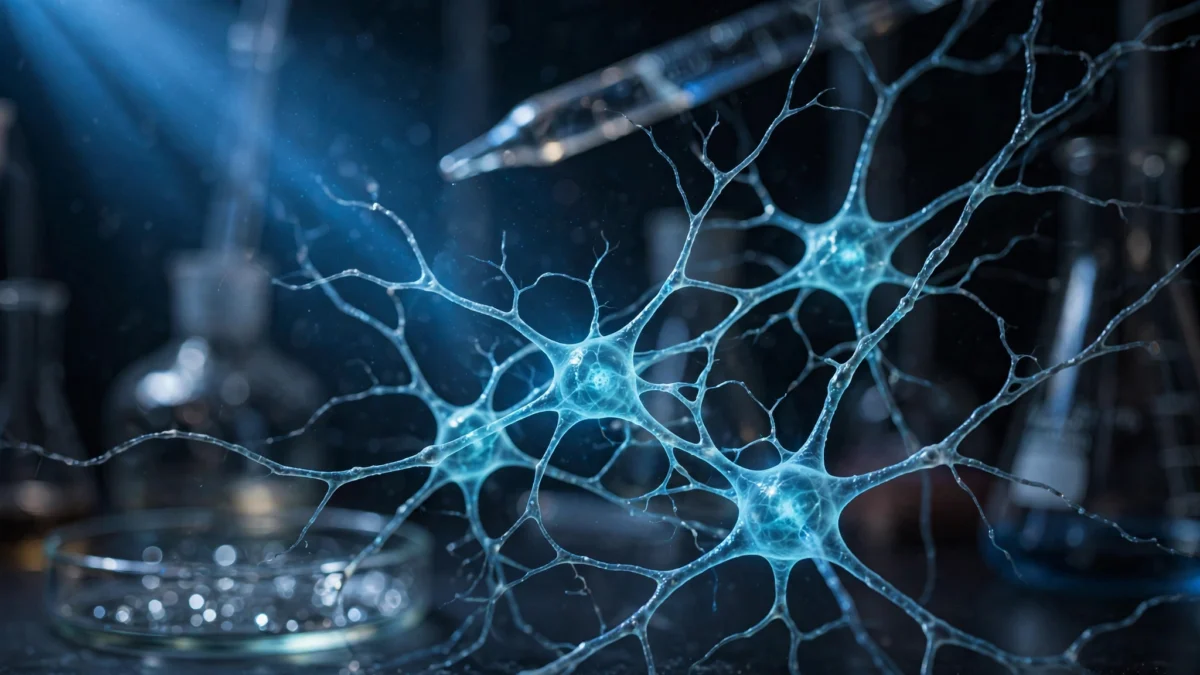
The 2026 Nobel Prize in Physiology or Medicine has been awarded to three scientists — Karl Deisseroth, Peter Hegemann and Georg Nagel — for their discoveries concerning light-gated ion channels and the brain-control technique known as optogenetics, the Nobel Assembly at the Karolinska Institutet in Stockholm announced on Monday.
Optogenetics works as a “light-sensitive switch” that makes it possible to turn the activity of individual nerve cells in a living brain on or off with light alone, according to the committee. The method is now used in laboratories around the world to map which nerve cells are responsible for which functions, and to probe the neural circuits behind memories, feelings and behaviours relevant to neurological and psychiatric disorders.
The prize is shared equally among the three laureates, who will split a prize sum of 12 million Swedish crowns, roughly $1.2 million, the committee said. Deisseroth, 54, an American, is based at Stanford University and the Howard Hughes Medical Institute; Hegemann, 71, at Humboldt University in Berlin; and Nagel, 73, at the University of Würzburg in Germany.
The story of the discovery begins not with the brain but with pond algae. In the early 2000s, Hegemann and Nagel identified channelrhodopsin, a light-responsive protein on the surface of the single-celled green alga Chlamydomonas. Exposed to blue light, the protein opens a channel that admits charged ions, generating an electrical current — an effect that proved transferable to any cell engineered to carry it.
Deisseroth saw the neuroscience application. In a 2005 paper, he spliced the channelrhodopsin gene into nerve cells taken from rats and showed that a brief pulse of blue light was enough to fire them on command. Two years later he demonstrated the technique inside the brains of living mice. That light-activated switch is what the field now calls optogenetics.
“Optogenetics provides opportunities for mapping the brain in a way that we could once only dream of,” said Per Svenningsson, chair of the Nobel Committee for Physiology or Medicine, at the announcement.
The laureates learnt of the award in characteristically human fashion. Deisseroth, who had been working on a paper and had only just gone to bed, missed the committee’s first call at 12:27 a.m. Pacific time, according to Stanford; his wife’s phone rang moments later. Nagel said he was on a terrace in the sun in Italy when the news arrived: “I didn’t expect this, really!”
The medicine prize traditionally opens the annual Nobel announcements, with the physics, chemistry, literature, peace and economic sciences prizes to follow over the coming days.
Analysis: Why It Matters
Optogenetics is arguably the most consequential laboratory tool of the modern neuroscience era, and the committee’s choice says as much about the state of the field as about the laureates themselves. For decades, the brain was a black box that scientists could observe only indirectly; with optogenetics, they gained something closer to a remote control, able to activate or silence precisely defined groups of neurons in a behaving animal and watch the effect. Few methods since the invention of the electrode have changed how brain experiments are designed.
There is also a quieter signal in the timing. The medicine prize usually rewards cures and treatments; this year it honours an enabling technology whose clinical payoff remains, by the laureates’ own admission, largely ahead of them. Nagel himself noted at the announcement that he knows of only one patient who has benefited from optogenetics so far. The committee is betting that the deeper understanding of memory, emotion and disorder circuits made possible by the method will eventually translate into therapies — including for blindness, where light-based approaches to restoring vision are already in clinical trials.
What to watch: whether the prize accelerates commercial and clinical interest in neurotechnology, a sector that has seen a surge of investment in recent years as brain-computer interfaces move from the laboratory toward patients. And in the near term, the rest of Nobel week — the physics prize is announced on Tuesday — will show whether the 2026 committees share this appetite for tools that rewrite what science can measure.
Sources

About the Author — Abdul Mannan
Related Articles

Einstein Probe Catches Hidden X-Ray Glow After Neutron Star Merger
Astronomers have found that a 0.4-second gamma-ray flash from a likely neutron-star merger was followed by nearly ten…

NASA Advances PRIMA Telescope Into Next Phase as First ‘Probe Explorer’ Mission
NASA has cleared its PRIMA far-infrared observatory to enter preliminary design as the first mission in a new…

World Space Week 2026 Begins Today With “Rocket Revolution” Theme in Over 100 Nations
World Space Week 2026 kicks off today, October 4, with the "Rocket Revolution" theme celebrating how reusable rockets…