NASA Advances PRIMA Telescope Into Next Phase as First ‘Probe Explorer’ Mission

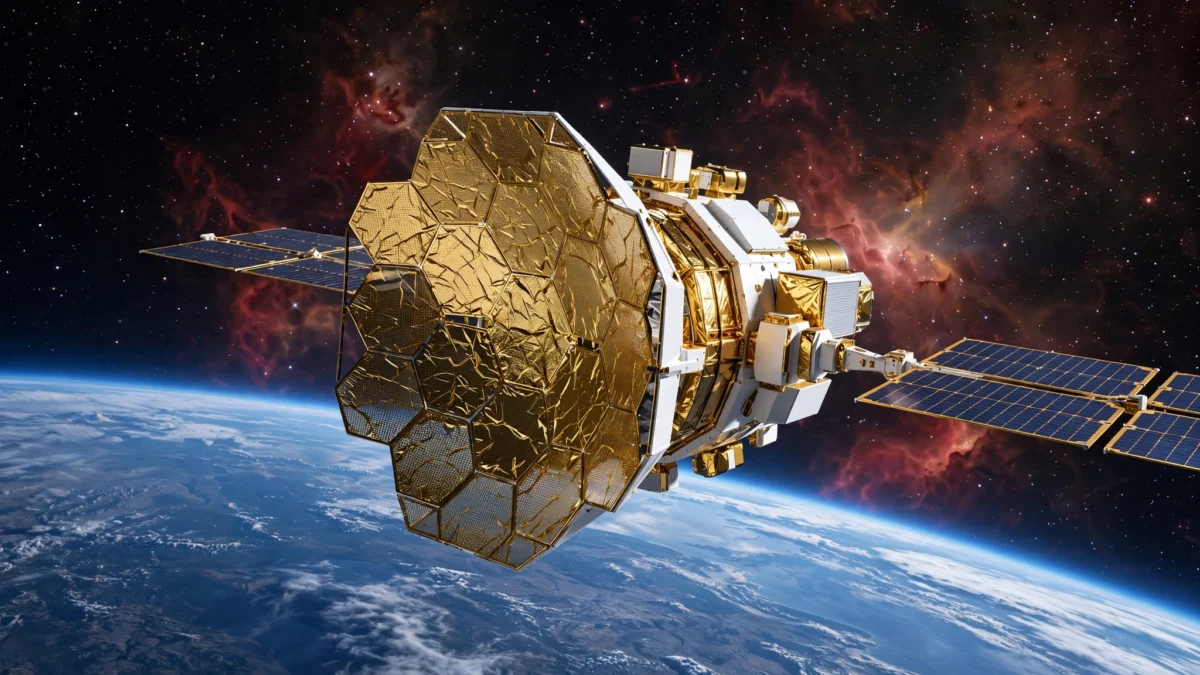
NASA has moved its next major space telescope into preliminary design, selecting the far-infrared PRIMA observatory as the first flight in a brand-new class of mid-cost astrophysics missions called Probe Explorers, according to the agency’s official announcement.
PRIMA — short for the PRobe far-Infrared Mission for Astrophysics — was cleared on September 23 to enter Phase B, the development stage devoted to preliminary design and technology maturation. The mission must still pass a confirmation review of its technical, schedule and cost performance before it can proceed to full implementation, NASA said.
Carrying a 1.8-metre (5.9-foot) telescope tuned to far-infrared wavelengths, the observatory is designed to bridge the observational gap between the James Webb Space Telescope and ground-based radio telescopes. By capturing radiant energy that emerges only in the far-infrared, PRIMA will probe the birth of planets around other stars, the growth of galaxies and their central black holes across cosmic history, and how dust and heavy elements accumulated in the universe over time.
“The PRIMA mission is humanity’s next window into the deep universe. It will unveil the obscure across cosmic time to better understand the formation of planets, stars, black holes, and even how water on Earth came to be,” said Nicky Fox, associate administrator for NASA’s Science Mission Directorate.
If confirmed, the project’s cost is capped at $1.2 billion, excluding launch and other non-project expenses, with a targeted launch in 2033 and a planned five-year science mission. NASA’s Jet Propulsion Laboratory will manage the mission, with contributions from the Goddard and Marshall space flight centers and seven international partner agencies. It would be the first major far-infrared observatory since the European Space Agency’s Herschel mission ended in 2013.
Sources:

About the Author — Abdul Mannan
Related Articles
World Space Week 2026 Begins Today With “Rocket Revolution” Theme in Over 100 Nations
World Space Week 2026 kicks off today, October 4, with the "Rocket Revolution" theme celebrating how reusable rockets…
Scotland’s ‘Lizzie’ Fossil Dethroned: 345-Million-Year-Old ‘Oldest Reptile’ Was a Water-Dweller
Synchrotron X-ray scans reveal Scotland's 345-million-year-old "Lizzie" had internal gills and a fish-like mouth — it was an…
They Have Left the Earth: Google’s Suncatcher and the New Empire of the Sky
Google's Project Suncatcher has carried AI chips into orbit — an escape, or an evasion? A column on…