PTI Long March Enters Second Day as Convoy Rolls From Karak to Kohat; Islamabad Fortifies Entry Points

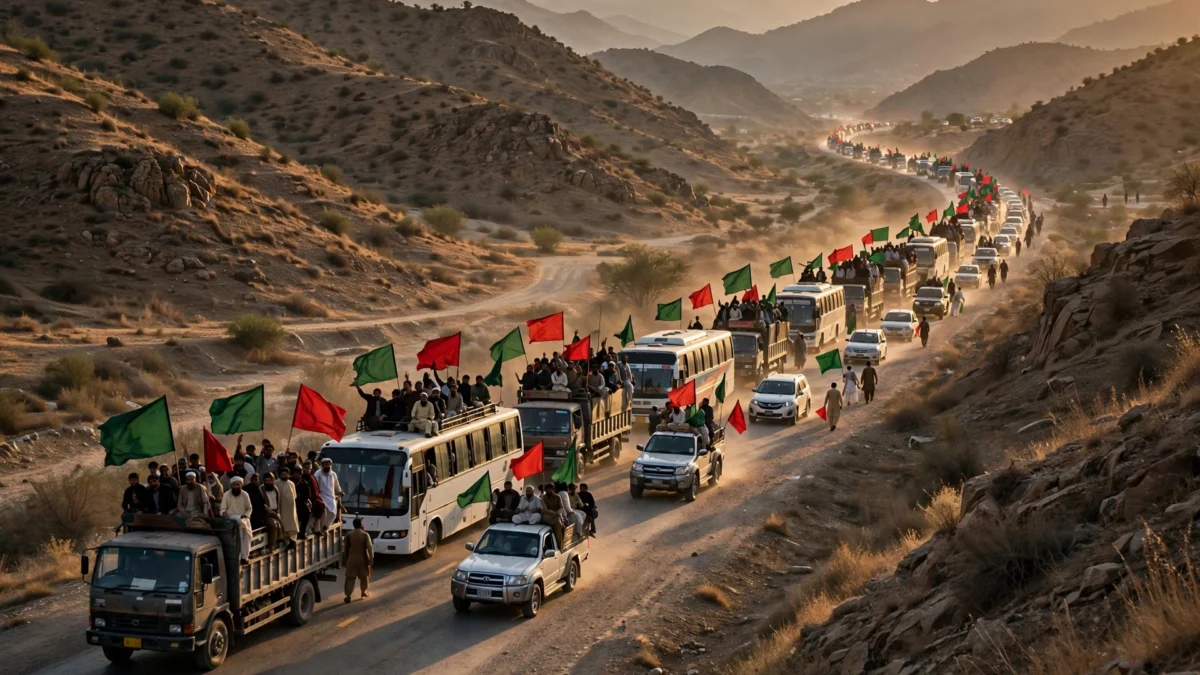
Thousands of supporters of Pakistan’s jailed former prime minister Imran Khan entered the second day of their long march toward Islamabad on Monday, with the caravan led by Khyber Pakhtunkhwa Chief Minister Sohail Afridi moving from its overnight halt near Karak toward Kohat, according to the route plan announced by the chief minister. The development came as authorities hardened the federal capital, erecting container roadblocks at its entrances, TBS News reported.
The march set off on Sunday afternoon from Gandi Chowk in Lakki Marwat after weekend negotiations between the government and the opposition collapsed. Afridi said on X that the caravan would halt for the night near Karak and depart at 12:30pm on Monday for Kohat, where participants would spend the night, the Islamabad Post reported. On Tuesday at noon, supporters from Kohat, Hangu, Kurram and Orakzai are to join the convoy before it moves toward Peshawar for an overnight stay near Mattani. On Wednesday the caravan departs from Budh Bair in Peshawar at 12:30pm and camps near the Charsadda Interchange, after which, Afridi has said, people from “the entire KP” will gather at Khairabad on Thursday, October 8 — the point at which he will announce the next phase of the march.
The federal government’s posture, meanwhile, grew visibly tougher. TBS News reported that roadblocks made of shipping containers had been erected at the entrances to Islamabad and at points inside the city. Adviser to the Prime Minister on Political Affairs Rana Sanaullah warned that the protesters would not be allowed to enter the capital. Federal ministers have gone further, warning that the Centre could impose governor’s rule or an emergency in Khyber Pakhtunkhwa, citing the province’s security situation, according to the Islamabad Post — a threat the PTI has warned would carry dire consequences.
Separately, Daily Soon Times reported that a second convoy led by former KP chief minister Ali Amin Gandapur turned back from Yarik in Dera Ismail Khan because of road blockades and security concerns. Gandapur was reported as saying the decision was taken to protect workers and avoid unnecessary confrontation, urging participants to remain peaceful and avoid clashes with law enforcement agencies.
The march, whose central demand is the release of Khan — imprisoned since 2023 on charges he and his party say are politically motivated — was originally scheduled for September 27 but was postponed after Prime Minister Shehbaz Sharif’s government offered negotiations. Those talks collapsed over the weekend: Interior Minister Mohsin Naqvi announced that “talks have collapsed” and blamed Afridi for sabotaging them, while PTI Secretary General Salman Akram Raja said the deadlock came from the government’s insistence that the province own all federal counterterrorism actions in Khyber Pakhtunkhwa. PPP leader Sherry Rehman, who was part of the government delegation, told Geo News that a draft agreement had been changed four times after being agreed upon, according to BizzBuzz News.
Khan’s rift with Pakistan’s leadership dates to his 2022 ouster by parliament, which he blamed on the military — a charge the army denies. It deepened after his arrest in May 2023 sparked riots in which his supporters attacked military installations, prompting a crackdown in which thousands of PTI supporters were detained and dozens were later sentenced by military courts, Reuters reported. The PTI’s last large-scale protest two years ago ended in deadly clashes with security forces.
Analysis: Why It Matters
A long march is a test of stamina as much as of numbers, and its second day is where that test quietly begins. Day one delivered the spectacle — thousands gathered at Gandi Chowk and a chief minister leading from the front. Day two, the long, hot road from Karak to Kohat, is about whether the caravans from KP’s southern districts actually hold together under Section 144 restrictions, road blockades and police pressure. The reported turn-back of Gandapur’s convoy at Yarik, if confirmed, would suggest the southern leg is the weakest link — and would make the mid-week reinforcements from Kohat, Hangu, Kurram and Orakzai the decisive variable. The real measure of this march will not be Monday’s convoy size but Thursday’s gathering at Khairabad.
The government’s container wall around Islamabad is by now a familiar Pakistani ritual, but the open talk of governor’s rule or an emergency in KP is a sharper escalation. It reframes the standoff from a law-and-order problem into a constitutional one: the Centre is accusing a sitting provincial chief executive of deploying state machinery for a protest against the federation. That is the language of Article 234, not of traffic management — and it gives both sides a reason to keep talking even while they prepare for confrontation.
What to watch next: whether the Kohat and Peshawar legs swell the caravan as planned, whether any fresh back-channel emerges before October 8, and whether the capital’s red zone is actually tested. The last time the PTI marched on Islamabad in force, the outcome was deadly clashes; both camps know it, and both are now betting the other blinks first.
Sources

About the Author — Abdul Mannan
Related Articles
Government-PTI Talks Collapse as Interior Minister Accuses KP Chief Minister of Sabotage
Interior Minister Mohsin Naqvi says the federal government's negotiations with PTI collapsed on Sunday and blamed KP Chief…
Pakistan Summons Indian Envoy Over Killing of Two Civilians in Border Firing
Pakistan's Foreign Office summoned India's chargé d'affaires on Saturday to protest the killing of two Pakistani civilians by…
PTI Long March Launches Today From Lakki Marwat Toward Islamabad
PTI's long march departs Gandi Chowk, Lakki Marwat at 1pm today, led by CM Sohail Afridi, as a…