Saudi-Led Coalition Calls Riyadh Airport Strike a “War Crime” and Vows “Firm” Response as 627 Flights Are Cancelled

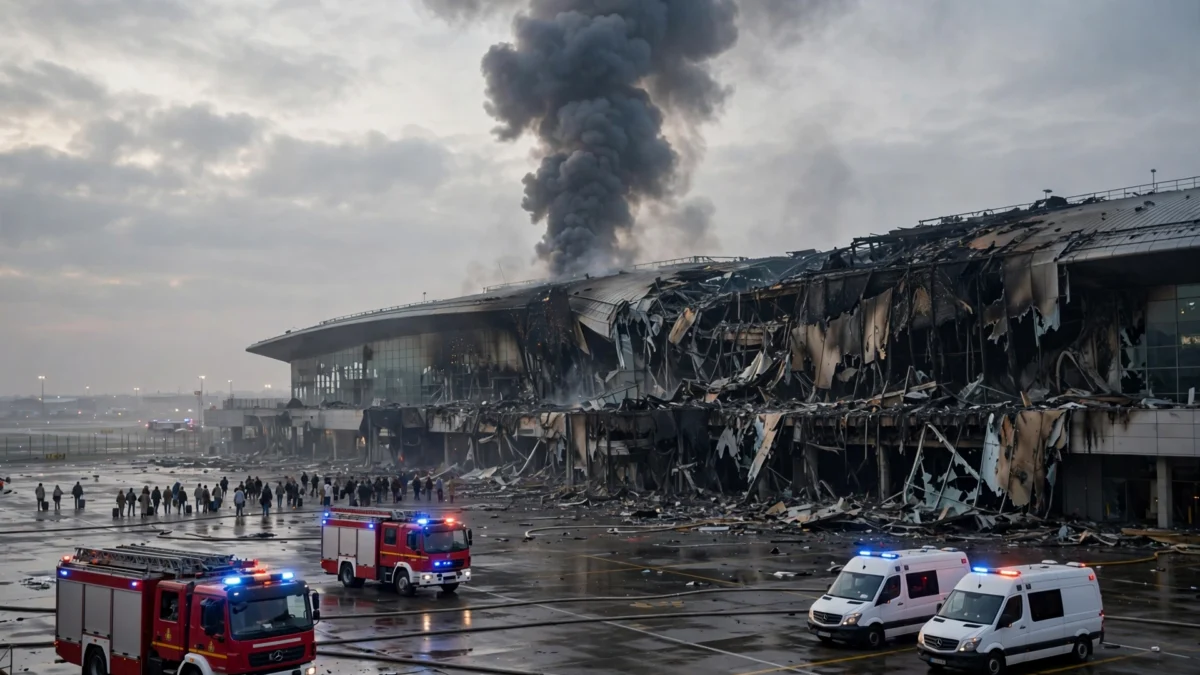
The Saudi-led coalition fighting in Yemen on Sunday formally branded the weekend missile strike on Riyadh’s King Khalid International Airport a war crime and promised a firm military response, as Saudi Arabia absorbed the deadliest attack on its soil in more than a decade.
Major General Turki al-Malki, the coalition’s spokesman, said the Saturday attack — which killed 12 people and wounded 309 at the kingdom’s busiest international airport — was “a cowardly terrorist attack” against a civilian facility, according to statements carried by Saudi and regional media on Sunday. He said the strike “constitutes a full-fledged war crime according to international humanitarian law” and warned that the coalition’s joint forces command “will respond to this terrorist attack firmly and in accordance with international humanitarian law.”
The language marked the sharpest rhetorical escalation yet from Riyadh since the Houthi campaign against Saudi targets intensified this week, and it came as the Saudi military appeared to be preparing the ground — at least in public messaging — for retaliatory strikes against the Iran-backed group in Yemen.
The attack on Saturday afternoon was the third on the Riyadh airport this week and the deadliest assault on the capital of a Gulf Arab state since a US-Israel-Iran war began earlier this year. Missiles landed direct hits on Terminals 3 and 4 of the airport complex, injuring more than 300 people, according to the Wall Street Journal, which cited Saudi officials. Parts of the terminal roof collapsed on travellers inside, and Saudi authorities said several of the wounded remained in critical condition on Sunday.
The kingdom’s General Authority of Civil Aviation said in a statement on Sunday that the dead included four Saudi citizens, two Bangladeshi residents, and one person each from the United States, Egypt, Jordan, Syria, Palestine and Sudan. The 309 wounded included both passengers and airport staff, some of whom were rushed to hospitals by ambulance and helicopter while doctors were called in from other hospitals to handle the surge of patients, Saudi officials told the Journal.
The casualty figures were also confirmed by the Reuters news agency, which reported the aviation authority’s statement on Sunday.
A hub paralysed
The airport remained closed on Sunday while damage was assessed, the civil aviation authority said. All arrivals at the airport were cancelled or delayed across Saturday afternoon, according to flight-tracking website Flightradar24, and at least 627 flights were cancelled on Sunday, CNN reported, citing the tracker. The airport was expected to remain closed until 9 p.m. local time.
One passenger whose flight was diverted told the Wall Street Journal his plane landed in Dammam, on the kingdom’s eastern coast, and that he was taking a taxi back to the capital — a drive of roughly four hours. A separate witness inside the terminal described seeing projectiles streak across the sky before part of a departure-gate ceiling caved in, according to Reuters.
Governments moved quickly to warn their citizens away from the airport. Canada, Germany, Ireland, the United States, the United Kingdom and Spain are among the countries that have issued fresh warnings about Riyadh’s airport, according to the Wall Street Journal and CNN. A new US State Department warning issued on Thursday said American government officials now need special authorization to use the airport; Britain has advised against all but essential travel to parts of the kingdom including Riyadh, and Canada had already recommended that airlines avoid Saudi airspace.
The head of the Houthi media office said after the blast that the group had “shut down” the airport, in a post on the social media platform X, without directly claiming the strike. Earlier in the week, the group had warned commercial airliners to avoid Saudi airspace, declaring it a zone of military operations after Yemen’s Saudi-backed government launched an offensive — code-named “Yemen’s Dawn” — against the group.
Two previous strikes on the same airport this week killed four people, including a Saudia pilot, and heavily damaged a passenger jet, according to Reuters.
UN Special Envoy for Yemen Hans Grundberg called the attacks “a grave escalation” posing a serious threat to regional security, while UN Secretary-General António Guterres condemned the latest strike, saying attacks on civilians and civilian infrastructure violate international law, both in posts on X.
Washington’s open question
The attack has also sharpened the central strategic question hanging over the conflict: whether the United States will join Saudi Arabia in striking the Houthis directly.
President Donald Trump told reporters on Saturday that Washington could join Saudi strikes on the group, saying “We may. We’re going to look at it,” and adding that a decision would be made quickly, according to CNN. He also said he planned to speak with Saudi Crown Prince Mohammed bin Salman, describing the Saudis as “good fighters” and calling the attack “a terrible thing.”
However, the Wall Street Journal reported on Saturday that the kingdom has pressed Washington to intervene directly in the conflict and that the Trump administration has declined — while some Saudi advisers have been pressing their own leaders, who escalated the fight in Yemen this week, to keep the door open to diplomacy with the Houthis, the Journal said, citing people familiar with the matter. US Secretary of State Marco Rubio confirmed that a US citizen was among those killed and condemned the attacks as showing “a blatant disregard for innocent civilian life,” in a post on X.
The Journal also reported that Saudi leaders are growing more worried about the conflict’s impact on the economy and about tight supplies of the missile interceptors needed to fend off the attacks. Geopolitical risk firm Dragonfly, which like the Journal is owned by Dow Jones, said in a note to clients that the kingdom appears to be struggling to intercept the attacks and that they are likely to continue.
Conferences go ahead
Even as missiles flew, Riyadh moved to project business as usual. The organisers of two major Saudi energy and investment conferences said their events will go ahead this month, Reuters reported on Saturday. The World Petroleum Congress, set to host top global oil executives and policymakers from Sunday to Thursday, told delegates it would proceed as planned with foreign leaders and ministers attending, offering the four-hour drive from Dammam as an alternative route into the capital.
The kingdom’s flagship Future Investment Initiative, launched by the crown prince a decade ago, will also proceed as scheduled from October 26 to 29, according to a statement attributed to FII chief executive Maha Al Saud, who said “comprehensive security measures will be in place at Riyadh’s airports, our conference venues and official hotels.” Italian Energy Minister Gilberto Pichetto Fratin said on Friday he would not fly to Riyadh for the International Energy Forum ministerial meeting, held on the congress’s sidelines, and would participate by video link instead, Reuters reported.
The determination to keep the calendar will be tested in the coming days as business executives and travellers weigh the risks of continued strikes — the precise calculus the Houthis appear to be trying to impose.
Analysis: Why It Matters
The coalition’s war-crime framing matters less as a legal instrument than as a signal of where this conflict is heading. International humanitarian law requires distinction between military and civilian targets; airports, as civilian infrastructure, enjoy that protection unless used for military purposes. By invoking the phrase “full-fledged war crime,” Riyadh is doing three things at once: shaming the Houthis in international forums, preparing the legal and rhetorical ground for a heavy retaliatory campaign, and pressuring reluctant allies — above all Washington — to treat this as a shared cause rather than Saudi Arabia’s local problem.
The choice of target is the other signal worth reading. Hitting the kingdom’s flagship international airport three times in a week is not primarily a military act; it is an economic one. Civil aviation, conference tourism and foreign-investor confidence are among the most visible fruits of the crown prince’s economic diversification drive. Every cancelled flight, every minister joining by video link, and every travel warning issued by a Western capital chips at the image of Riyadh as a stable destination for capital. That the kingdom’s flagship investment summit remains on the calendar is both a show of defiance and an admission of what is at stake.
There is also a human dimension that the casualty list reveals. Eight nationalities were among the dead — including Bangladeshi, Egyptian, Jordanian, Syrian, Palestinian and Sudanese nationals — a reminder that the Gulf’s airports are workplaces and transit points for millions of migrant workers, not just the wealthy travellers of conference brochures. Any sustained campaign against Saudi aviation infrastructure will fall hardest on these workers and their families.
The American question remains the conflict’s central variable. The mixed signals — Trump publicly floating US participation while his administration has reportedly declined direct intervention — reflect a familiar tension: Washington’s desire to reassure a major Gulf ally without being drawn into another Middle Eastern war, with US midterm elections less than a month away. The Journal’s reporting that interceptor supplies are running tight adds a practical dimension to the diplomatic one: air defence is a consumable, and each Houthi salvo spends Saudi and allied stocks faster than they can be replenished.
For the region, the trajectory is bleakly familiar: each escalation — the “Yemen’s Dawn” offensive, the airspace warning, the airport strikes, now the war-crime declaration and promised “firm” response — narrows the path back to the relative calm that held for years. The risk is no longer only a Yemen war; it is the possibility that the Strait of Hormuz and the kingdom’s oil infrastructure are drawn back into the centre of a conflict that, until recently, the region’s leaders believed they had contained.
What to Watch Next
- The retaliation: The coalition has promised a “firm” response. Watch whether Saudi strikes stay limited to launch sites and weapons depots inside Yemen or widen to Houthi leadership targets and port infrastructure — the distinction will show how seriously Riyadh takes the war-crime framing.
- The airport reopening: Saudi authorities expect the airport to reopen by 9 p.m. local time on Sunday. Any extension of the closure — or a fourth strike — would deepen the aviation crisis and test the conferences’ contingency plans.
- Washington’s decision: Trump said a decision on joining strikes would come quickly. Watch for any movement of US air or naval assets in the region, and for the readout of his call with the crown prince.
- The interceptor question: Saudi concern over tight interceptor supplies, reported by the Journal, is a quiet vulnerability. Watch for emergency US or allied air-defence resupply announcements.
- The diplomacy track: The Journal reports some Saudi advisers are urging leaders to keep diplomacy with the Houthis open. Watch the UN envoy’s movements and any Gulf or Omani mediation signals for signs this track is alive.
Sources

About the Author — Abdul Mannan
Related Articles
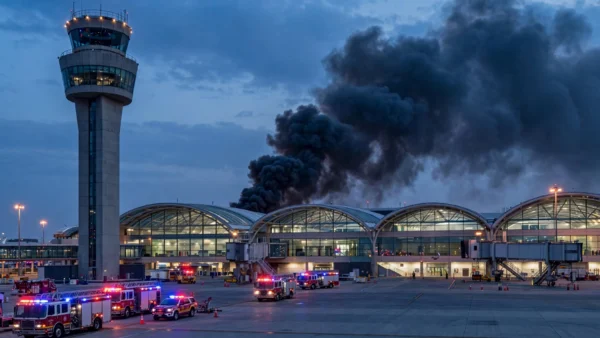
Houthi Missile Strike on Riyadh Airport Kills 12, Wounds 309 in Deadliest Gulf Attack Since Iran War Began
A Saturday missile strike on King Khalid International Airport killed 12 people and wounded 309, the deadliest attack…
Israeli Strikes Kill at Least Five in Gaza on First Anniversary of US-Brokered Ceasefire
Israeli strikes killed at least five Palestinians in Gaza City on Saturday — the first anniversary of the…
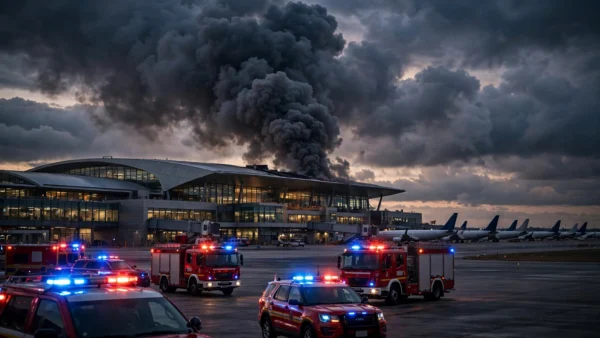
Missile Strike Hits Terminal 3 at Riyadh Airport, Many Wounded, as Saudi-Houthi Conflict Escalates
A missile struck Terminal 3 of King Khalid International Airport in Riyadh on Saturday, wounding many and forcing…