Three Years After October 7: Trump’s Gaza Plan Turns One as Strikes Continue and Disarmament Stalls

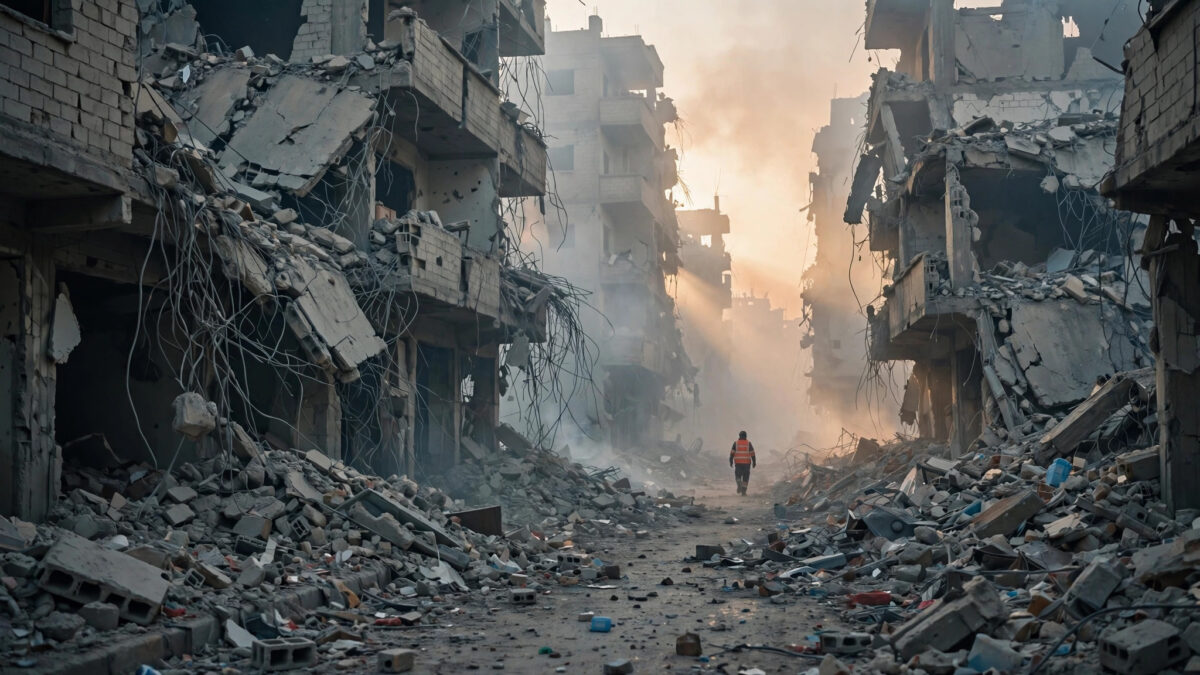
Today marks the third anniversary of the Hamas-led attacks on southern Israel on October 7, 2023, in which about 1,200 people were killed and 251 taken hostage, according to Israeli figures cited by Reuters. Three days from now will mark one year since the US-brokered ceasefire that ended the worst of the fighting. On Tuesday, a day before the anniversary, Israeli strikes killed two Palestinians in the Gaza Strip, health officials said, with one killed near Al Shifa Hospital in Gaza City and another in a separate nearby strike. The Israeli military told Reuters the two strikes targeted militants.
The strikes land in the shadow of a blunt assessment published by Reuters this week: one year on, US President Donald Trump’s 20-point plan to end the Gaza war has stalled, with Israel mounting near-daily attacks and occupying around two-thirds of the shattered enclave where Palestinians face dire conditions.
The first phase of the plan delivered its most urgent promises. A ceasefire took effect in October 2025, and the last remaining hostages seized in the 2023 attacks were released, alongside freedom for hundreds of Palestinian prisoners and detainees held by Israel, according to Reuters. The plan’s early steps included a suspension of all military operations, a partial Israeli withdrawal, the prisoner releases, and a surge in humanitarian aid.
Everything that was supposed to come next has barely moved. The later phases foresaw Hamas disarming and new governance by a Palestinian body overseen by a Trump-led Board of Peace, with Israel gradually withdrawing and handing territory to a temporary International Stabilization Force. None of that has happened on the ground, Reuters reported.
Gaza’s health ministry says at least 1,400 Palestinians have been killed since the October ceasefire, many of them women and children, although it does not disclose militant casualties. Israel says its strikes have targeted Hamas, accusing the group of trying to carry out attacks and rearm in violation of the ceasefire — accusations Hamas denies, saying instead that Israel is undermining the deal. The Israeli military says at least four of its soldiers have been killed by militants in Gaza over the same period.
Palestinian authorities say more than 74,000 people have been killed in Israel’s assault on Gaza, launched after the October 2023 attacks. On Monday, UN Secretary-General Antonio Guterres called for the ceasefire to become permanent ahead of the anniversary, calling the Hamas attack “abhorrent” and saying the truce “brought some relief” but has yet to deliver security, adequate humanitarian assistance or a credible path to recovery and peace. Israel, which still controls most of Gaza, refuses to withdraw its soldiers until Hamas disarmament has been verified; Hamas, for its part, has argued for gradual disarmament rather than immediate surrender of its arsenal.
Analysis: Why It Matters
The anniversary exposes the structural flaw in Trump’s plan rather than a mere delay. The deal was built as a sequence: hostages out and guns paused first, then disarmament, then withdrawal, then reconstruction. But the sequence runs in opposite directions for the two sides — Israel will not withdraw or allow reconstruction before Hamas disarmament is verified, and Hamas will not disarm on terms that amount to surrender. So the ceasefire has become a durable pause rather than a path: phase one worked because everyone wanted the immediate humanitarian gain, and the phases that require one side to give up its leverage first have frozen.
The casualty figure since the truce — more than 1,400 dead, according to Gaza’s health ministry — is the clearest measure of what kind of peace this is. Against the more than 74,000 killed during the war, the ceasefire is an unmistakable improvement; measured against the plan’s own promise that all guns would fall silent, it is a daily contradiction, one that grows sharper each time a strike lands in the run-up to an anniversary.
Three things will decide whether the second year looks any different from the first. First, whether the International Stabilization Force actually deploys and whether a Palestinian civilian administration takes control on the ground — the institutions the plan named as the bridge from ceasefire to settlement, which Reuters notes have not materialised. Second, Israel’s domestic politics: with the government in extended campaign mode, incentives point toward toughness rather than concessions. Third, the approaching winter, which will test a reconstruction effort that has not meaningfully begun while families still live in tents and damaged buildings. None of these trends is moving in the plan’s favour. The ceasefire survives because no one wants to be blamed for breaking it. That is not the same as peace.
Sources

About the Author — Abdul Mannan
Related Articles
Houthis Claim Missile and Drone Strikes on Saudi Airports and Aramco Refinery
The Houthis say they carried out three waves of missile and drone attacks on Saudi targets, including Riyadh's…

Iran’s Oil Minister Mohsen Paknejad Resigns Under US Blockade Pressure; NIOC Chief Hamid Bovard Takes Over
Iran's oil minister Mohsen Paknejad has resigned, state media reported, with the chief of the National Iranian Oil…

Yemeni Government Forces Claim Recapture of Bab el-Mandeb Strait in Saudi-Backed Offensive
Saudi-backed Yemeni government forces say they have retaken key positions at the Bab el-Mandeb Strait from the Houthis,…