Trump Announces Russian Diesel Deal With Putin; Zelenskyy Condemns It as a “Gift” That Will Fund the War

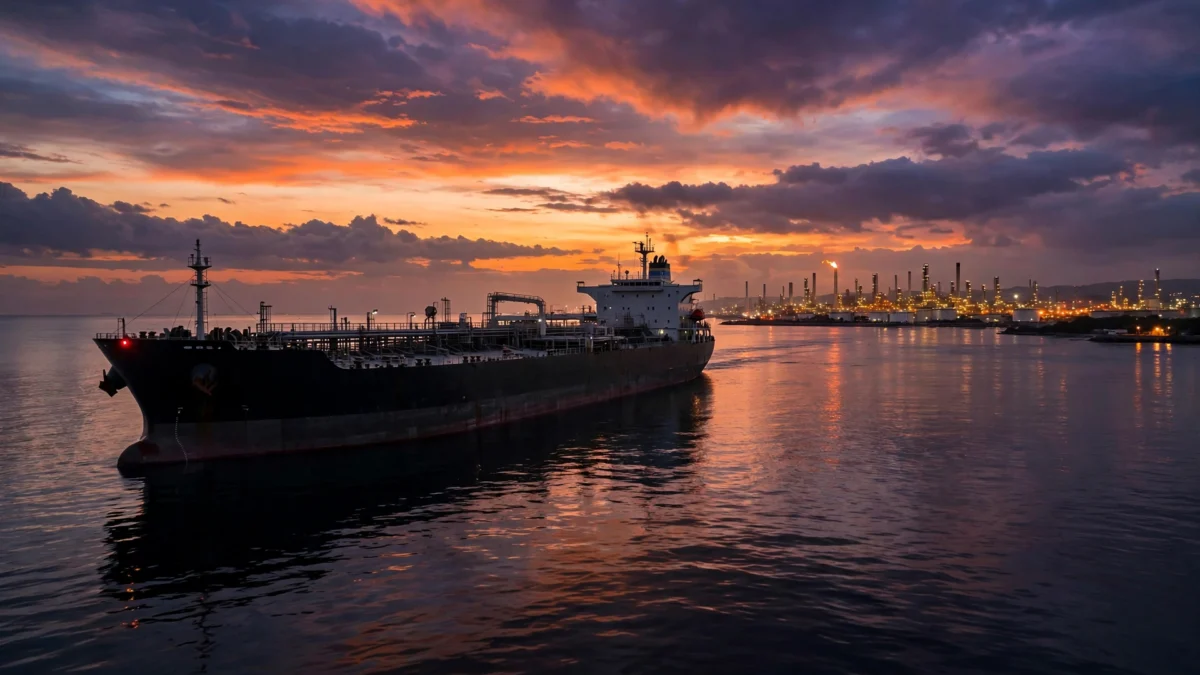
US President Donald Trump announced on Friday that he had reached an agreement with Russian President Vladimir Putin under which Russia will supply up to 4.8 million tonnes of diesel to the United States and global markets, presenting the move as an emergency answer to soaring fuel prices. Ukraine’s president, Volodymyr Zelenskyy, condemned the deal within hours as a gift to Moscow that would prolong the war, setting up one of the sharpest public breaks between Washington and Kyiv in months.
Trump said the arrangement followed a phone call with the Russian leader. Under its terms, Russia would supply 300,000 tonnes of diesel immediately, a further 500,000 tonnes in November, and one million tonnes immediately after that, according to The Times’ account of the president’s Truth Social post. An additional three million tonnes would be delivered “within a short period of time”, a final tranche Trump made conditional on what he called “the condition of their Diesel Refineries”.
The president framed the announcement as a direct strike on fuel costs. “Between our TOTAL CONTROL of the Strait of Hormuz, and this great announcement on Russian Energy, Diesel Prices for Americans and, indeed, the World, will be COMING DOWN, IN RECORD NUMBERS, AND FAST!” Trump wrote, according to The Times. Reuters reported that Trump said securing lower prices for Americans “is my Greatest Priority”.
The announcement arrived with real policy machinery behind it. The Treasury Department said it was “immediately issuing a temporary general license to allow the supply of Russian diesel to the global market”, with the move coming at the president’s direction, according to MarketWatch. The license is the legal mechanism that makes the trade possible under the sanctions regime imposed on Russian energy exports.
Moscow moved quickly to confirm the arrangement. Kirill Dmitriev, Putin’s special envoy, said the two leaders had had “a successful call”, adding that “Russia-US energy and economic co-operation will continue and benefit global markets and the world”, according to The Times. Putin said in a statement that he was ready to supply oil to the US and global markets in the belief it would help the global economy, and that the two leaders had also discussed resolving the conflicts in Ukraine and Iran, according to The Sun.
Zelenskyy’s response was swift and unsparing. “Gifts to Putin will not bring peace or any benefit to the civilised world,” he wrote on X. “Russia will ‘repay’ the diesel with further terror and perfidy. Allowing Russia to sell petroleum products is an investment in a war that must be ended, not prolonged. What is needed is real de-escalation with Russia on a reciprocal basis,” he said, according to Reuters.
Speaking to reporters later on WhatsApp, Zelenskyy said the accord would hand Moscow additional funds to wage war and would undermine efforts to work toward a settlement, Reuters reported. He dismissed the deal, which was announced while a Ukrainian delegation was in the United States to discuss how to seek a resolution of the war, as “a weak decision on the part of strong partners”. “I believe our team is simply being used as a front,” he said. “And that is certainly not fair, nor is it how partners should treat each other.”
In a separate interview with Axios, reported by The Sun, Zelenskyy went further, calling Trump’s move “not fair and not honest” and saying the agreement looked like “a happy birthday present for Putin” — a remark that captured the sense of betrayal in Kyiv at the timing of the announcement.
The timing was the sharpest part of the sting. The deal was unveiled on the same day Ukrainian officials were sitting down with US envoys Steve Witkoff and Jared Kushner in Miami for a two-day working session aimed at building a unified peace proposal — talks reported this week by Reuters. Zelenskyy’s accusation that his team was being “used as a front” turned a fuel-price announcement into a crisis of confidence in the negotiation process itself.
Criticism came from inside the United States as well. Michael McFaul, the former US ambassador to Russia, said the president had “not only cut off US military assistance to Ukraine, but he is now providing Putin with new money to build more Russian rockets and drones to kill Ukrainians”, calling the decision “absolutely deplorable”, according to MarketWatch.
Markets gave the announcement a mixed reception. US-traded West Texas Intermediate and Brent crude futures each settled Friday with a gain of 0.4 percent, while ultralow-sulfur diesel, also known as heating oil, fell 3 percent, MarketWatch reported. One strategist told the outlet that tapping Russia to boost diesel supplies ahead of the midterm elections might prove “too little, too late” — physical cargoes move far more slowly than announcements.
The backdrop makes the reversal striking. Russian energy exports have faced major US sanctions since Putin’s full-scale invasion of Ukraine began in 2022, and just three weeks ago Trump signed into law a new Russia sanctions bill named after the late Republican Senator Lindsey Graham, according to MarketWatch. The administration is now carving a diesel-sized exception into the very sanctions wall it recently reinforced.
Fuel prices have been climbing for months. The Sun reported that the price of fuel had spiked with the Iran war, and earlier this month the administration was pressing European allies to release emergency diesel stocks to ease global prices, according to Reuters. With midterm elections scheduled for November 3, energy costs have become one of the most politically charged issues in the country — and, by Trump’s own account, his “Greatest Priority”.
Analysis: Why It Matters
This is not really a story about diesel. It is a story about what happens when sanctions policy, election calendars and peace negotiations collide — and about who pays the price for the collision.
Start with the sanctions whiplash, because it is the most consequential part. Three weeks ago, the White House signed the Graham sanctions bill into law — a signal to Moscow, to markets and to allies that economic pressure on Russia was tightening. Now the Treasury is issuing a general license that punches a diesel-shaped hole in that pressure. Whatever the economic merits, the message to the Kremlin is unmistakable: American sanctions are negotiable in real time, and loudly announced pressure can be quietly unwound when domestic politics demand it. That weakens not just this sanctions regime but the credibility of the next threat of one.
Then there is the calendar, which is doing more work here than any energy analysis. Trump has now twice in two days used the calendar as doctrine: on Thursday he pledged no strikes on Iran before the November 3 midterms, and on Friday he announced a Russian fuel deal explicitly pitched at lowering prices for Americans. Fuel costs are among voters’ top economic anxieties, and the White House plainly intends to fight the midterms at the petrol pump. The strategist’s “too little, too late” verdict deserves attention, though: cargoes take weeks to sail, refineries take longer to retool, and the 500,000-tonne November tranche may not move a single price at a single American filling station before November 3. The political value of the deal is the announcement itself — and announcements do not burn in engines.
The third dimension is the Miami collision, and it may be the most damaging. Announcing a revenue lifeline to Moscow on the very day Ukrainian negotiators were sitting with Witkoff and Kushner is the reason Zelenskyy’s “used as a front” charge landed with such force. Either the sequencing was deliberate — a pressure tactic on Kyiv, dangled in front of its own delegation — or it was careless stagecraft by a White House running two Russia tracks at once. Neither reading reassures Ukraine, and neither reassures the European allies who have spent the week being asked to hold the line on sanctions. Trust is the currency of negotiations, and this deal spent a large amount of it in a single evening.
Fourth, read the fine print Trump himself included: the final three million tonnes depend on “the condition of their Diesel Refineries”. That clause is doing quiet, enormous work. On Thursday — the day before the announcement — Ukraine struck the Omsk refinery, Russia’s largest, some 2,500 kilometres inside Russian territory, in the latest of a campaign systematically degrading Russian refining capacity. Kyiv therefore holds a direct lever over the deal’s biggest tranche: every successful strike on a Russian refinery shrinks the volumes Moscow can plausibly deliver. Ukraine was never consulted on this agreement, but it may end up with a veto over its largest component — written into the deal by Trump’s own conditionality.
Finally, the instrument matters more than the headline. A Truth Social post is theatre; a Treasury general license is machinery. The license’s scope, duration, volume caps and renewal terms will decide whether this is a one-off pressure release ahead of an election or the beginning of a sanctions rollback conducted by administrative license rather than legislation. Watch the Treasury fine print, not the social media post. If the license is narrow and short, Friday was a blip. If it is broad and renewable, Friday was a turning point — and the Graham bill, signed three weeks earlier, becomes a monument to a pressure campaign the administration has already started dismantling.
What to watch next
First, the license itself — its published terms will reveal how far the carve-out goes. Second, whether the first 300,000 tonnes actually ship, and to which ports. Third, how the Ukrainian delegation in Miami responds when talks resume — Zelenskyy’s fury suggests Kyiv will now negotiate with one eye on Washington’s side deals. And fourth, the reaction of European allies, who were pressed earlier this month to release their own emergency diesel stocks and will not miss the irony of Washington now buying Russian fuel.
Sources

About the Author — Abdul Mannan
Related Articles
Trump Picks Katie Zacharia as New White House Press Secretary, Ending Weeks-Long Search After Leavitt’s Exit
President Donald Trump has chosen conservative commentator and former Homeland Security spokeswoman Katie Zacharia as the next White…
Isaias Strengthens Into a Category 3 Major Hurricane as Landfall Nears on the Florida Panhandle
Hurricane Isaias strengthened into a Category 3 major hurricane with 120 mph winds on Friday as it bore…
Judge Reopens Christa Pike’s Challenge to Tennessee’s Lethal Injection Protocol After Botched Execution
A Nashville chancery judge has reopened Christa Pike's dismissed challenge to Tennessee's lethal-injection protocol, ruling she demonstrated "extreme,…