Trump Rules Out New Iran Strikes Before Midterms as Oil Prices and Tanker Attacks Escalate

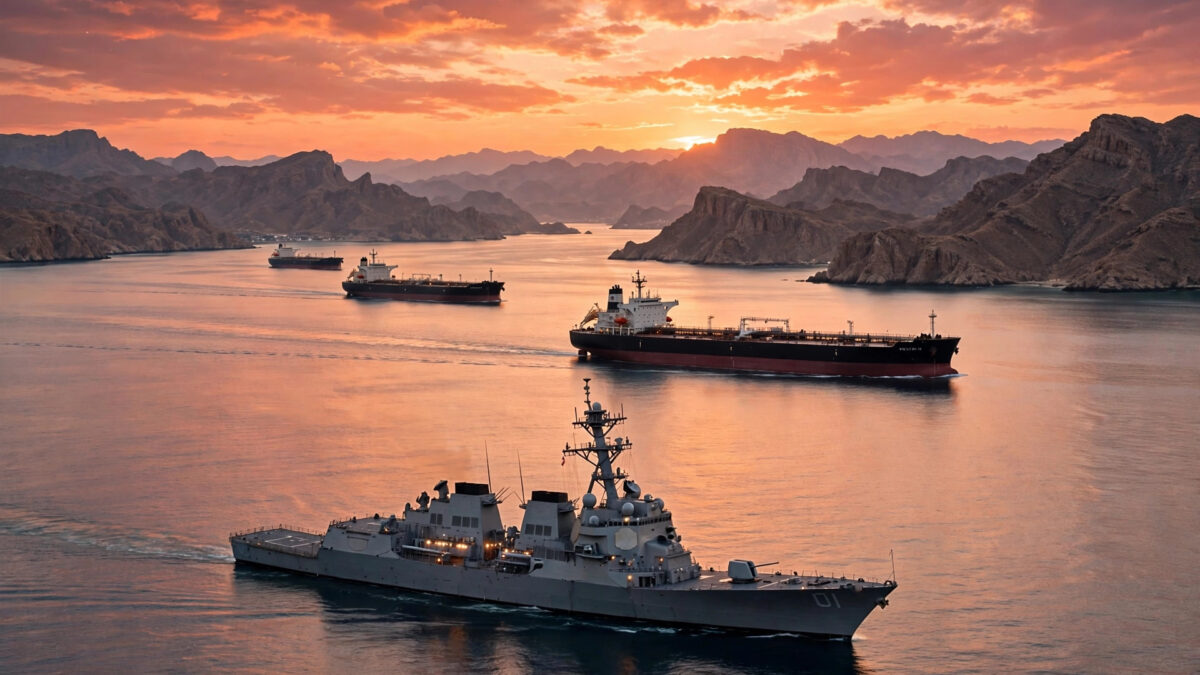
President Donald Trump announced on Thursday that the United States will not launch new military strikes against Iran before the November 3 midterm elections, a public pledge that followed a day of alarming reports about looming American military action and sent a measure of calm through oil markets that had been rattled by the prospect of renewed fighting.
Writing on his Truth Social platform on October 8, Trump said the administration was “having productive discussions” with Tehran, and declared that the United States “will not be attacking Iran at any time prior to the Midterm Elections to be held in the United States on November 3rd.” He added, in capital letters, his familiar red line: “IRAN WILL NOT HAVE A NUCLEAR WEAPON!”
The president’s message arrived less than 24 hours after The Atlantic reported that the White House had directed the Pentagon to draw up options for limited strikes on Iran that could be carried out before the midterms, and after Axios reported, citing American officials, that the Pentagon had instructed U.S. Central Command to complete preparations for a possible renewed military campaign. Neither report indicated that a final decision had been made or that an attack date had been set, but the prospect of fresh strikes less than a month before election day jolted energy markets: crude prices jumped on Thursday and stocks fell, according to USA Today.
Trump insisted the existing pressure campaign would continue unabated. “The Blockade will remain in full force and effect,” he wrote, asserting that oil was flowing through the Strait of Hormuz “in Record Numbers of Barrels” — 22 million barrels the previous night alone, he claimed, “with not one barrel coming from, or going to, Iran.” That figure is disputed: the U.S. government has argued that transit through the strait is back at prewar levels, while independent analysts say otherwise, USA Today reported.
The pledge marked a striking turn from Trump’s tone just a day earlier. At a campaign rally in San Antonio, Texas, on Wednesday, the president said he “no longer wants” a deal with Tehran, suggesting Iran would offer “anything to stop” the war but that he was uninterested in negotiations. By Thursday he was describing the discussions as productive. The White House, for its part, has kept the door open in both directions: a White House official told The Hill on Thursday that the “commander-in-chief has all options available at any time,” and that the United States is in a strong position with control of the Strait of Hormuz and the Iranian economy collapsing.
Economic pressure was also stepped up on a parallel track on Thursday. The Treasury Department announced additional sanctions against 17 vessels it alleged were part of a “shadow fleet” Iran has used to move its oil around the world, evading existing American sanctions. According to the department, those ships transported millions of barrels of oil and petrochemical products to buyers across south and east Asia. “Treasury is targeting any source of the regime’s illicit revenue, as well as its sanctions evasion schemes to move funds,” the department said in its statement, CNN reported.
The backdrop to Trump’s announcement is a rapidly intensifying contest at sea. Iran has ramped up its attacks on commercial tankers transiting the Strait of Hormuz in recent weeks, according to the Wall Street Journal, and the campaign has been spreading beyond the strait itself: an attack on an oil tanker north of Qatar — deep inside the Persian Gulf — raised fears among traders that Tehran’s strikes on shipping are widening. Data analytics firm Kpler reported that just seven commodity vessels passed through the strait on Tuesday, the lowest total since July 23, with crude crossing the waterway down 27 percent from a wartime high the week before to at least 10.1 million barrels a day — roughly 74 percent of its pre-war level.
The New York Post reported that oil prices jumped as much as 5 percent on Thursday as Iranian attacks disrupted tanker traffic, pushing Treasury yields higher and stocks lower. Gasoline prices remain a central political fact of the moment: the national average is hovering around $4.36 a gallon, according to the American Automobile Association, stubbornly above the $4 mark as Americans head toward the polls with affordability at the top of their concerns.
The war with Iran is now in its eighth month, and it has become a visible political liability for Trump and the Republican Party ahead of the midterms. Voters are questioning whether the president is breaking his long-standing pledge to avoid new “forever wars,” the Journal reported, and some vulnerable Republican candidates — including Senate hopefuls in Maine and Michigan, Newsmax reported — have distanced themselves from the conflict, with some calling for an end to the fighting and for measures such as suspending the federal gasoline tax to relieve pump prices.
Trump himself has seemed to acknowledge the pressure. “Guys come up to me and say, ‘I wish you didn’t do the war in Iran. Now gasoline is up,'” he said last month, according to Radarr Africa. On Tuesday, speaking at a new shipyard in Maryland, he struck a harsher note: Iran was a “mess,” he said, “but we still have to finish it off.” At a rally in Texas the same week, Vice President JD Vance challenged Iran to strike “San Diego or Los Angeles,” promising a “horror show” in Iran in response, Newsmax reported.
The president has repeatedly suggested that the war’s trajectory is tied to the electoral calendar. He has said he expects the conflict to end immediately after the election, which will determine control of Congress, USA Today noted. Last month he told reporters that oil prices would tumble “right after the election,” and he has described a “big decision” he faces on how to conclude the war.
Analysis: Why It Matters
A sitting American president publicly attaching a military timeline to an election date is the kind of sentence that would once have been unthinkable to utter — and yet here it is, in writing, on a social media platform: no American strikes on Iran “at any time prior to the Midterm Elections.” The pledge is remarkable less for what it promises than for the political machinery it reveals. The timing of war, in this rendering, is not decided by strategy alone but announced as a function of the vote.
Start with the speed of the reversal. On Wednesday, Trump told a Texas rally he no longer even wanted a deal with Iran. By Thursday, negotiations were “productive.” These are not the words of a policy changing overnight; they are signals aimed at different audiences on different days. Wednesday’s message was for the rally crowd and for Tehran — toughness, maximum leverage, no desperation. Thursday’s was for the markets, the gas pump, and the anxious Republicans in Maine and Michigan — reassurance that nothing explosive happens before November 3. Both can be true at once in the language of coercive diplomacy, but the whiplash tells its own story: this war is now being managed as much for domestic consumption as for battlefield outcomes.
The trigger for Thursday’s post is not hard to find. Oil prices jumped; stocks slid. The Atlantic’s reporting on strike options and Axios’s account of CENTCOM’s preparations created, within hours, the exact market panic the administration had been trying to avoid — the one in which every rumor of bombing sends crude spiking and takes gasoline prices with it. Trump’s post was, in that sense, an emergency valve: a public commitment designed to douse a fire his own administration’s planning had lit. The episode exposes how thin the margin has become between military signaling and market panic. When a White House official tells reporters that the commander-in-chief “has all options available at any time,” the markets hear a threat; when the president then rules out attacks, they hear relief. Neither statement settles the question; together, they keep the question permanently priced in.
Then there is the matter of the numbers. Trump’s claim of 22 million barrels transiting the Strait of Hormuz in a single night, with none touching Iran, is the kind of statistic that invites scrutiny rather than confidence. The flow figures through the strait are actively disputed — Washington says volumes are back at prewar levels; independent analysts say otherwise. Kpler’s data, showing just seven commodity vessels on Tuesday and crude volumes at 74 percent of pre-war levels, paints a far less triumphant picture. When the basic facts of the blockade are contested, the blockade’s “success” becomes as much narrative as reality. That matters because the entire argument for patience — that pressure is working, that Tehran is collapsing — rests on numbers like these.
The political layer is the one Trump can least afford to misread. The war was supposed to be over by now; instead it is in its eighth month, gasoline sits above $4 a gallon, and the voters telling him “I wish you didn’t do the war in Iran” are the same voters who believed him when he promised no more forever wars. Republicans in the toughest Senate races are already creating distance. Calls to suspend the federal gasoline tax are a tell: when your own party is proposing emergency relief from the side effects of your war, the war has a calendar problem. Trump’s pledge can be read, plainly, as an attempt to defuse that problem — to take the war off the ballot by freezing it for 26 days.
But notice carefully what was not ruled out. Nothing about November 4. Nothing about the day after the votes are counted. Trump has said he faces a “big decision” on how to finish the war, and his team has said all options remain on the table. The Atlantic reported that more substantial military action after the midterms was under consideration. The Treasury’s shadow-fleet sanctions announced Thursday fit the same pattern: pressure that tightens regardless of the calendar. In other words, the pledge is a pause button, not an off switch — and Tehran knows it. The regime’s incentive may well be to hold out until the elections, using elevated oil prices and war fatigue as leverage, as the White House itself believes, according to earlier reporting. A 26-day freeze changes nothing about that calculation; it arguably confirms it.
There is one more audience worth naming: Israel. Thursday’s pledge also rules out American attacks before Israel’s October 27 election, Newsmax noted. The two electoral calendars — American and Israeli — now sit side by side in the war’s timeline, and Washington’s freedom of action is bounded by both. That is a striking measure of how entangled this conflict has become with democratic politics on multiple shores.
What to watch next:
- The tanker war at sea. Iran’s attacks on commercial vessels are intensifying and spreading beyond the Strait of Hormuz into the Persian Gulf. Every strike risks a new oil-price spike — and every spike tests Trump’s pledge.
- The post-midterm decision. November 4 is the real date in this story. Watch for signals — CENTCOM movements, carrier positions, White House language — about whether “the big decision” arrives the week after the vote.
- Gasoline prices. With the national average near $4.36, the war’s domestic cost is the metric that could force Trump’s hand faster than any battlefield development. Sustained high prices could make the freeze harder to lift — or harder to keep.
- Israel’s October 27 election. Washington’s pledge covers Israel’s vote too. What Jerusalem does, and what Washington permits after both elections, will shape the war’s next phase.
Sources
Wall Street Journal: Trump Says U.S. Won’t Resume Strikes on Iran Before Midterms
CNN: Trump says he will not attack Iran before the midterm election
USA Today: Trump rules out new strikes on Iran before the midterms
Newsmax: Trump Rules Out Iran Attacks Before Midterm Elections
New York Post (Reuters): Oil prices jump 5% as Iranian attacks disrupt tanker traffic

About the Author — Abdul Mannan
Related Articles
Pentagon Confirms Fort Hood Shooter’s Firing-Squad Execution Will Be Livestreamed on December 3
The Pentagon has confirmed that the December 3 firing-squad execution of Fort Hood shooter Nidal Hasan will be…
Isaias Strengthens Toward Category 3 as Gulf Coast Orders Evacuations and Oil Majors Shut In Platforms
Hurricane Isaias surged toward major-hurricane strength on Thursday, triggering mandatory evacuations in Florida, a quarter of Gulf oil…
Texas Executes Jamaal Howard in Nation’s First Lethal Injection Since Tennessee’s Botched Attempt on Christa Pike
Texas executed Jamaal Howard on Wednesday evening — the first lethal injection in America since Tennessee's botched attempt…