US Threatens to Suspend Ukraine Intelligence Sharing and Weapons Purchases if Refinery Strikes Continue

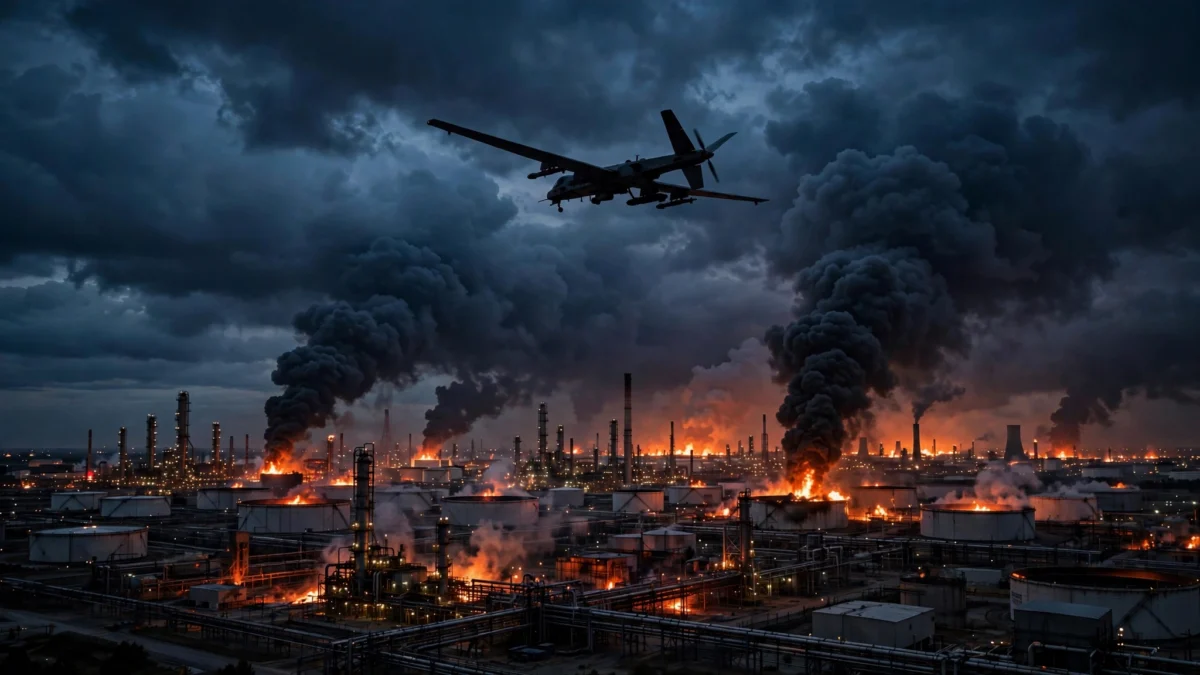
The United States has warned Ukraine and its European allies that Washington could suspend intelligence sharing with Kyiv and halt the mechanism through which Europe buys American weapons for Ukraine if Ukrainian forces do not stop their long-range strikes on Russian oil refineries, according to reporting published on Sunday.
The Financial Times first reported the warning, citing European officials who said they had received calls from American officials or had been briefed on the calls. CNN subsequently confirmed the pressure campaign with two European officials, who said the warnings were delivered over the weekend by the State Department and the Pentagon, including direct communications from the United States military to Ukrainian commanders.
According to the reports, the American message included a threat to cut off intelligence sharing and to suspend the Prioritised Ukraine Requirements List, known as PURL — the arrangement under which European countries purchase American-made weapons and transfer them to Ukraine.
The practical stakes are immediate and concrete. Intelligence supplied by Washington helps Ukraine defend against Russian ballistic missile attacks by providing information on the locations of missile launchers and on the direction and timing of incoming strikes. Suspending the PURL mechanism would have its most damaging effect on deliveries of Patriot interceptor missiles, which Ukraine is already running dangerously short of as Russia expands its missile and drone attacks across the country, according to CNN.
An official who received a call from an American defence official described the breadth of the campaign, saying Washington was calling Kyiv and European capitals alike. A European official told CNN the warning was a "sad day" for Kyiv and its allies, describing both intelligence sharing and weapons purchases as vital to Ukraine.
A European official added that NATO had not yet seen any change to the PURL programme over the weekend, suggesting the threat remained a warning rather than an executed decision. The White House did not immediately respond to requests for comment, and the Kyiv Independent reported that the White House declined to confirm or comment on the calls.
A weekend of dramatic reversals
The warnings arrived in the shadow of President Donald Trump's surprise announcement on Sunday that Russia and Ukraine had agreed to an "energy ceasefire" effective immediately, halting attacks on each other's energy infrastructure. In a post on Truth Social, Trump wrote that the ceasefire was effective immediately and that both parties had agreed, urging them not to break it.
Ukrainian President Volodymyr Zelensky said the announcement was news to him. "If President Trump negotiated this with Putin – please share the details with us when exactly the ceasefire begins to take effect. We will comply with it," Zelensky wrote on X, adding that Ukraine had long declared its willingness to halt long-range drone strikes on Russian oil refineries provided Russia stopped attacking Ukrainian power stations, heating plants and water facilities with real guarantees of compliance. Neither the Ukrainian side nor the Russian side confirmed that such an agreement had been reached, according to The Times. The Kyiv Independent reported that Russia struck Kharkiv's power plant after Trump's announcement.
The pressure campaign also followed Trump's Friday announcement of a diesel supply deal with Russian President Vladimir Putin, made after a 90-minute telephone call that the Kremlin described as very friendly. Trump said Russia would immediately release 300,000 tonnes of diesel fuel to American and global markets, followed by 500,000 tonnes in November, then one million tonnes, and a further three million tonnes within a short period of time. Russia's government partially lifted its ban on diesel exports on Saturday, Reuters reported. The Kremlin confirmed its willingness to supply oil and petroleum products to the US and global markets, and Russia's deputy prime minister for energy said the volume could reach three million tonnes a month, Le Monde reported.
Trump presented the deal as a win for American consumers ahead of the November 3 midterm elections, describing the country's farmers and truckers as his greatest priority. The announcement came as the administration lifted sanctions on Russian fuel that had been designed to deprive Moscow of revenue for its war against Ukraine.
The deal alarmed Kyiv and European allies. Zelensky warned that the proceeds would flow toward Russia's war effort and said his team felt it was being used as a smokescreen. Retired General Philip Breedlove, a former NATO supreme allied commander in Europe, told Fox News Digital that Washington was cutting a deal with "the enemy" and warned that the money would fuel Putin's continued attacks on Ukraine.
Republican Senator Thom Tillis said Trump "may be" breaking the 2022 law banning Russian oil imports. Tillis joined six other senators — Senate Foreign Relations Committee ranking member Jeanne Shaheen, Republicans Susan Collins, Lisa Murkowski and John Curtis, and Democrats Richard Blumenthal and Ron Wyden — in a statement saying the decision ran directly counter to the law and urging the administration to reverse course. Tillis noted that the Senate sanctions bill named after the late Senator Lindsey Graham had passed with 86 votes, calling it the universal position of the chamber. Trump faces an October 18 deadline on whether to penalise major buyers of Russian oil.
The weekend's drama played out while American, Ukrainian and European negotiators held six hours of talks in Miami on Friday aimed at agreeing a unified proposal to end the war in the coming weeks, before winter, according to Reuters. The American delegation included envoys Steve Witkoff and Jared Kushner, alongside representatives from Europe and NATO. The negotiators discussed a post-war package for Ukraine that would include security guarantees from the US and Europe, a post-war economic plan, a pathway to European Union accession for Kyiv, and "some ideas" on territory. Putin said after his call with Trump that an immediate resumption of peace talks was unlikely, citing Ukrainian drone attacks on Moscow.
The threatened intelligence cutoff has a precedent. In March 2025, the Trump administration suspended intelligence sharing with Ukraine after a contentious Oval Office meeting between Trump and Zelensky, restoring it only after Ukraine accepted a proposed American ceasefire following talks in Saudi Arabia.
Trump has long blamed rising diesel prices on the war and demanded that both sides stop attacking energy facilities. CNN reported that a US official previously said Ukraine's continued refinery strikes were part of what led Trump to strike the diesel deal. On Saturday, Trump suggested Ukraine should get a new leader, telling reporters it was time for the country to get a new president.
Analysis: Why It Matters
The leverage has been turned around. For years, Washington's pressure was aimed at Moscow — sanctions, export controls, price caps. This weekend the leverage points at Kyiv instead. Ukraine's long-range drone campaign against Russian refineries is arguably its most effective asymmetric weapon of the past year, degrading the fuel revenues that finance Russia's war. The American threat reframes that weapon as a liability to be bargained away rather than an asset to be protected. That is a strategic reversal, and it deserves to be named plainly.
The calendar explains the urgency. With midterm elections 22 days away and polling showing Trump's approval at record lows, diesel prices are the politics. A deal that promises cheaper fuel at the pump is worth more in the next three weeks than any argument about who gains leverage in a war three thousand miles away. Every paragraph of this pressure campaign reads better through a petrol pump than through a battlefield map — and that is precisely why European officials are alarmed rather than reassured.
The symmetry is false. The ceasefire formula, described to Axios by a White House official as "refinery for refinery," asks Ukraine to stop hitting Russia's dozens of refineries while placing no obligation on Russia to stop attacking Ukraine's power stations, heating plants and water facilities as winter approaches. The weekend supplied the counter-example on cue: while Washington warned Kyiv against energy strikes, Russia struck a power plant in Kharkiv. Trading refineries for refineries is not trading like for like when one side's energy infrastructure is a military target and the other's is a civilian lifeline.
Allies are being managed by ultimatum. Warning European capitals that the very mechanism through which they buy American weapons for Ukraine could be frozen puts NATO governments in an impossible position: they are being told to restrain the country they are arming, using the arms pipeline as the leash. The European official who called it a "sad day" was describing more than a bad weekend — it was a description of what conditional alliance support now looks like.
The escalation ladder has a trapdoor. If Kyiv calls the bluff and the strikes continue, Washington must either follow through — degrading Ukraine's air defences on the eve of winter, when Patriot interceptors are already scarce — or back down, teaching Moscow that American threats are priced in. Either outcome reshapes the diplomacy before the Miami framework ever reaches Putin's desk. And Moscow, which has already said an immediate resumption of peace talks is unlikely, has no incentive to help Washington out of the corner.
What to Watch Next
- Whether Ukraine conducts any further deep strikes on Russian energy infrastructure this week — and how Washington responds if it does.
- The October 18 deadline for Trump's decision on whether to penalise major buyers of Russian oil, now loaded with the bipartisan Senate statement.
- Whether the unified proposal emerging from the Miami talks reaches Moscow, and whether Putin's "unlikely" hardens into a refusal.
- The status of the PURL pipeline: any European confirmation of disruption to weapons deliveries, particularly Patriot interceptors.
- Whether European capitals publicly push back on the pressure campaign, as Zelensky did with the surprise ceasefire announcement.
Sources
- CNN — US threatens to suspend intel sharing, weapons purchases if Ukraine continues Russia energy strikes (Jim Sciutto; two European officials)
- Reuters — US threatens to block arms for Ukraine over refinery attacks, FT reports (Oct 11)
- Reuters — US-Ukraine-European negotiators meet in Miami (Oct 10)
- Fox News — Trump Russia deal could fuel Putin's war, ex-NATO commander warns
- The Times — Trump's Russia-Ukraine truce is 'news to me', says Zelensky
- Le Monde — Trump and Putin sign diesel deal, angering Ukraine and its allies

About the Author — Abdul Mannan
Related Articles
Ukraine Reports Russian Strikes on Energy Sites After Trump’s “Energy Ceasefire” Announcement
Hours after President Trump declared an "effective immediately" energy ceasefire between Russia and Ukraine, Kyiv reported strikes on…
Trump Declares ‘Effective Immediately’ Energy Ceasefire Between Russia and Ukraine; Zelensky Says It Was “News for Me”
Donald Trump has announced that Russia and Ukraine have agreed an immediate "energy ceasefire", but Ukrainian President Volodymyr…

Pope Leo XIV to Undergo Lung Surgery This Week After Doctors Find Small Early-Stage Nodule
Pope Leo XIV told pilgrims in St. Peter's Square that doctors found a small, localized nodule in his…