The King Returns: Jensen Huang’s Eleven-Day Exile and the Trillion-Dollar Verdict of the Market

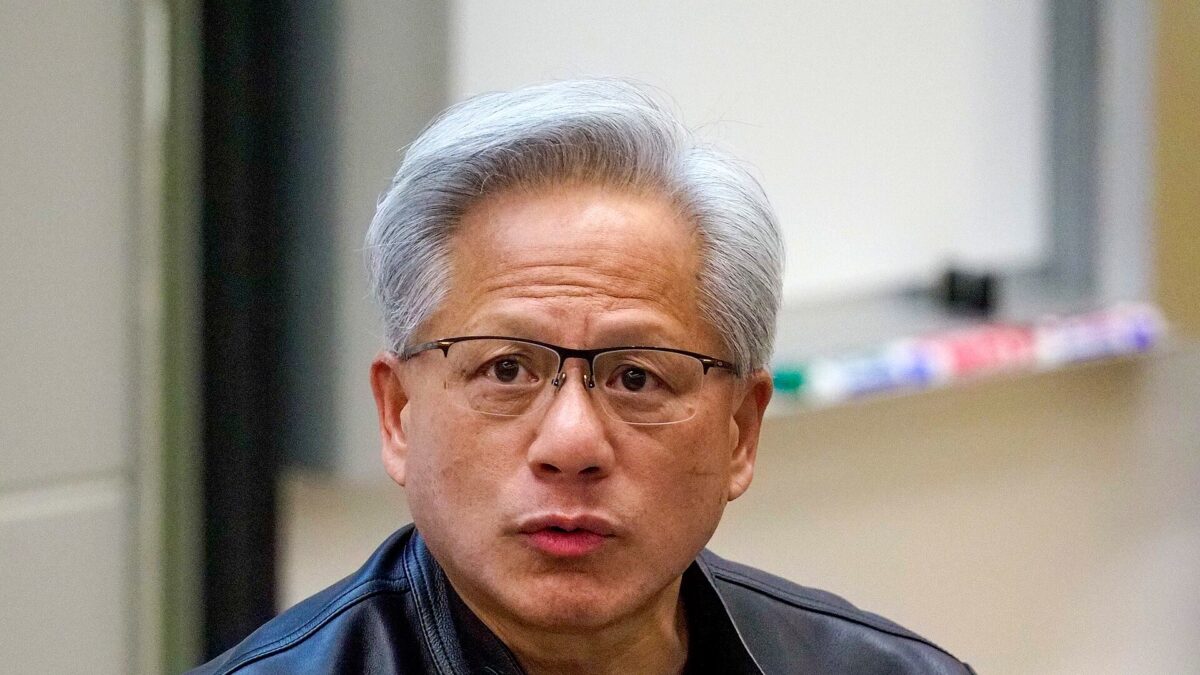
Have you ever watched a king fall, and then watched the very hands that pushed him return to lift him back onto the throne, all within eleven days? That is not a story from a history book. That is what happened this week, in broad daylight, on the floor of the American stock market, before the eyes of the whole world.
On Monday morning, 23 November 2026, Nvidia announced that Jensen Huang was back. Back as chief executive. Back as president. Back on the board. The same board that had accepted his resignation eleven days earlier, the same chairman who had told the world only last week that the board did not intend to reinstate him, now voted unanimously to bring him home. And the market, that great restless crowd of our age, answered with a roar nobody had heard in twenty-three years. Nvidia shares rose more than thirty-one per cent in a single day. Roughly a trillion dollars of value, an amount larger than the entire economy of most nations on earth, appeared on the company’s books before lunch.
I have spent my life reading history, and I tell you plainly: I have seen this scene before. Only the costumes have changed.
Eleven Days That Shook the Chipmaker of the World
Let us first set down, without embroidery, what actually happened. On 12 November, Jensen Huang, sixty-three years old, the man who co-founded Nvidia in 1993 and built it from a small graphics-chip company into the engine room of the artificial intelligence age, resigned. The cause was not a failed product. It was not a lost market. It was the oldest story in the book of power: revelations of at least two extramarital affairs, one with a woman the American government suspects of working for Chinese intelligence, and another with a direct subordinate inside his own company.
The woman at the centre of the storm is Alice Huang, an executive at Megaspeed, a Singapore-based data-centre company that buys Nvidia’s chips and now stands under investigation for allegedly funnelling those chips, against American rules, into China. Beijing denies the allegation. Washington does not. The affair, the company said, raised questions no board could ignore: had the chief executive of the most strategically important company in America shared corporate secrets, or worse, national secrets, in a private relationship?
The fall was swift and total. The board accepted the resignation. The chairman, Harvey C. Jones, told investors on the earnings call that the board had unanimously accepted it and did not intend to reinstate Huang. The company retained the executive search firm Heidrick and Struggles to find a permanent replacement. The chief financial officer, Colette Kress, stepped in as interim chief executive. The share price, which had touched a fifty-two-week low on the very day of the resignation, kept sliding. In the week that followed, Nvidia suffered its worst stretch since the financial crisis of 2008. By Friday, 20 November, the stock had fallen fourteen per cent in a day to trade as low as 125 dollars a share, and a company that had been worth nearly 5.8 trillion dollars in early October, the first company in history ever to be worth five trillion, had lost close to two trillion dollars of value in a little over a month.
Eleven days ago, I wrote on this very website of the fallen king of chips. I called it a fall. I was wrong about one thing only: I believed the fall was final. History, it turns out, had other plans.
The Senate Said Never. The Emperor Said Otherwise.
Here is where the story stops being a corporate scandal and becomes something far older, and far more revealing about the age we live in.
The board did not change its mind on its own. It changed its mind because the most powerful man in the world told it to. President Donald Trump, who had said publicly last week that he wanted Huang back in the top job, spoke to the board directly and indirectly. He spoke to Huang himself on Sunday night. On Monday morning, as the announcement went out, the President wrote on Truth Social that the board had made the “correct and proper decision” and that the country needed Huang’s leadership at Nvidia “in order to ensure the Success and Prosperity of not only the Company, but the American Economy”. He added that the Attorney General did not possess evidence that Huang had engaged in any unlawful conduct. In an interview with CNBC, Trump said he had been “represented” at the board’s discussion, and called the Nvidia co-founder a “national treasure”.
Read that phrase again, reader. A national treasure. Not a chief executive. Not a founder. A national treasure.
When a president calls a businessman a national treasure, the line between the state and the corporation has not merely blurred. It has been erased in public, with pride. And the board, which had consulted what it called “senior levels of the United States government” before voting, announced that it was confident Huang’s return posed no national security risk. The same board that had described his behaviour, only days earlier, as lacking candour, now declared itself satisfied with his candour and his ability to lead. The same chairman who had said never, now said unanimous.
And it was not only the President. In the days between the fall and the return, a petition for Huang’s reinstatement was signed by some of the most powerful names in technology: Elon Musk of Tesla and SpaceX, Tim Sweeney of Epic Games, Garry Tan of Y Combinator, Amjad Masad of Replit, Travis Kalanick. In open letters, in phone calls, in group chats, the allies of the fallen king made their case: the ouster had been hasty, the man was indispensable, the company could not survive without him.
I ask you, the reader, to sit with that word. Indispensable. A company worth four trillion dollars, with tens of thousands of employees, with the most advanced technology on earth, and its own board, its own shareholders, its own president, all agreed on one thing: without this one man, it cannot go on. That is not a business judgement. That is a confession.
A Trillion Dollars Before Lunch
The market delivered its own verdict, and it delivered it in the only language markets speak: money, in amounts so large they cease to feel real.
Nvidia’s shares surged more than thirty-one per cent in premarket trading, opened around thirty per cent higher, and closed the day at 165.05 dollars, up 39.52 dollars, or 31.48 per cent, on the previous close of 125.53 dollars. It was the stock’s best one-day percentage gain in more than twenty-three years. At the open, the shares had risen as much as thirty-four per cent, adding a little more than one trillion dollars to the company’s market value in a matter of minutes, carrying it back above four trillion dollars. The Nasdaq Composite, the index of American technology, jumped 6.4 per cent in a single day.
Understand what that number means. One trillion dollars is more than the annual output of all but a dozen countries on earth. It appeared, in hours, because one man walked back into one office. The market did not reward a new product. It did not reward a discovery. It rewarded a return.
And here is the detail that should make every thoughtful reader pause. On 17 November, in the middle of this storm, Nvidia reported quarterly revenue of 115.8 billion dollars, with earnings per share of 2.68 dollars. The business itself, the factories, the engineers, the chips, the customers, never stopped. The company earned more money in three months than most nations earn in a year, and still its value collapsed, because the market was not valuing the company. It was valuing the man. When the man left, two trillion dollars left with him. When the man returned, one trillion came back. The lesson is written in numbers too large to ignore.
On Nvidia’s own Facebook page, the announcement drew seventy-seven thousand likes and more than five thousand comments within hours, a flood of celebration, fury, jokes and accusations, supporters calling the return essential, critics calling it a surrender to political pressure and a mockery of corporate governance. The crowd, as ever, was divided. But the money was not. The money had already voted.
The Questions That Did Not Go Away
But do not mistake a return for a resolution. A throne restored is not a case closed, and the questions that drove Huang from office are still standing in the room, waiting to be answered.
The Securities and Exchange Commission is investigating whether the company’s disclosures to investors misled them. A committee of independent directors is investigating whether Huang shared corporate or national-security information during his relationship with Alice Huang, and that inquiry will continue even now that he is back. The board has created a new National Security and Export Control Committee and has begun a search for a chief compliance officer who will report directly to the board’s governance committee, a quiet admission that something in the old arrangements failed.
The political shadow has not lifted either. On 20 November, Democratic lawmakers opened a probe into whether Nvidia influenced a Commerce Department investigation into Megaspeed. The Commerce Department’s Bureau of Industry and Security had already published a regulation on 16 November addressing remote access to advanced artificial intelligence chips and servers, a rule aimed squarely at the channels through which American chips are suspected of reaching China. Huang himself is scheduled for a closed-door interview with three House committees on 1 December, and will testify publicly before the Senate Banking Committee on 3 December. The man has returned to his office, but he has not returned to peace. He returns to a witness chair.
And there is the matter of the second affair, the one with a direct subordinate, the one that draws less ink than the spy story but should trouble any honest conscience just as much. A chief executive and a subordinate are never two equal adults making a private choice. One holds the other’s career in his hands. Every modern company on earth claims to understand this. Nvidia’s board understood it well enough to accept a resignation over it. Then it understood, eleven days later, that it did not matter after all.
When the Man Becomes the Institution
Now I come to the mirror, because that is where my columns have always done their real work. Reader, you have seen this story before, even if you have never heard the name Jensen Huang.
In the old Rome, the Senate could make and unmake emperors, and often did. But there came a point, again and again, when the Senate discovered that the legions would not obey the Senate. They would obey only their general. The general could be exiled, disgraced, declared an enemy of the state, and still the soldiers would march for him, because the soldiers belonged to the man and not to Rome. The historians called it the crisis of the Republic. What it really was, was the moment an institution admitted that it had become a fiction, and that the man was the reality.
Napoleon returned from Elba in 1815, and the king sent an army to arrest him. The soldiers sent to stop him joined him instead, regiment after regiment, until he walked into Paris without firing a shot. The Hundred Days began not with a battle, but with a realisation: the man was the institution, and the institution without the man was an empty uniform.
And in my own country’s history, I have written of the East India Company, a trading company that became a state, until the state could no longer tell where the company ended and the empire began. Nvidia is the East India Company of our century, except that its cargo is not tea or cotton. Its cargo is the chips on which every army, every intelligence service, every economy of the future will run. The President of the United States did not intervene in Nvidia’s boardroom as a favour to a friend. He intervened because the American state has decided that it cannot afford to lose the man who makes the machines on which its power rests. When the state and the company need each other that desperately, the rules that govern ordinary men, boards, scandals, resignations, stop applying. The national treasure is above the rules. That is the whole story, told honestly.
So I ask you directly, as I have asked you in column after column: who governs whom? Does the board govern the company, or does the founder govern the board? Does the law govern the powerful, or does power govern the law? Does the market reward virtue, or does it reward only victory? On Monday, the market answered all three questions in a single day, and the answer should frighten anyone who believes institutions matter more than individuals.
What History Whispers to the Crowd
There is one more parallel, and it is the one I cannot leave unspoken. Athens, in its hour of danger, recalled Alcibiades from exile, the brilliant, faithless general it had condemned, because the city needed his genius more than it needed its own judgement. Alcibiades saved Athens in battle after battle. And Athens, having forgiven everything, discovered too late that a city which forgives everything has surrendered the right to judge anything. The genius served the city until the day the genius served only himself, and by then there was no institution left strong enough to stop him.
Jensen Huang told President Trump on Sunday night, “I’m gonna work harder than I’ve ever worked.” I do not doubt his sincerity. A man given back his kingdom will always promise to be worthy of it. But hard work was never the question. The question is whether a company, a market, and a nation can be healthy when they all depend on one man’s shoulders, and whether the forgiveness granted this week was mercy, or surrender.
The market has spoken, and the market is a poor moral philosopher. It cheered on Monday, as crowds have always cheered when the hero returns. But the crowd in the arena cheered for the gladiator too, right up until the day the gladiator turned his sword on Rome. Institutions are not built in a day of triumph. They are built in the eleven days when nobody is watching, when a board says no and means it, when a president refuses to make a telephone call, when a market accepts a loss rather than a surrender.
Nvidia got its king back. The king got his throne back. The market got its trillion dollars back. Everyone, it seems, got what they wanted. Everyone except the idea that no man, however brilliant, however necessary, however beloved by presidents and markets alike, is bigger than the institution he serves. That idea was deposed on Monday, and no board in the world has voted to reinstate it.
History will record 23 November 2026 as the day the world’s most important company proved it cannot live without one man. History will also record what that means, though it may take longer than eleven days to say it plainly. I have said it today. Remember it when the next scandal comes, and the next board says never, and the next president picks up the telephone. The pattern is set now. The throne is not the company’s. The throne is the man’s. And a throne that belongs to a man, rather than to an institution, is not a throne at all. It is a borrowed chair, and the debt always comes due.
Sources & References
- Reuters — “Nvidia reinstates Jensen Huang as CEO”, 23 November 2026
- The Wall Street Journal — “Nvidia Board Reinstates Jensen Huang as CEO”, 23 November 2026
- CNN — “Nvidia board reinstates Jensen Huang as CEO”, 23 November 2026
- Barron’s — “Jensen Huang Is Back at Nvidia With Trump’s Support. But the Trouble Isn’t Over”, 23 November 2026
- TechCrunch — “Nvidia reverses course and brings Jensen Huang back as CEO”, 23 November 2026
- TipRanks — “Nvidia’s (NVDA) Market Cap Adds $1 Trillion on News Jensen Huang Is Back as CEO”, 23 November 2026
- NVIDIA (official announcement) — “NVIDIA announced the immediate reinstatement of Jensen Huang”, 23 November 2026

About the Author — Abdul Mannan
Related Articles

Twelve Thousand Souls Walked Into the Manchester Night — and the City Remembered 2017
On Sunday night, 12,000 people fled Manchester's Co-op Live arena as an unknown substance filled the air. No…
Antalya’s Silence: When the World Could Not Even Name the Fire Burning It
In Antalya, nearly 200 nations spent two weeks trying to save the planet — and walked out unable…

Miley Cyrus Marries Maxx Morando: The Girl Who Grew Up in Front of the World Finally Chooses Herself
Miley Cyrus married Maxx Morando in Palm Springs on 21 November 2026. This is not a celebrity story…