Antalya’s Silence: When the World Could Not Even Name the Fire Burning It

What do you call a fire that no one in the room is allowed to name?
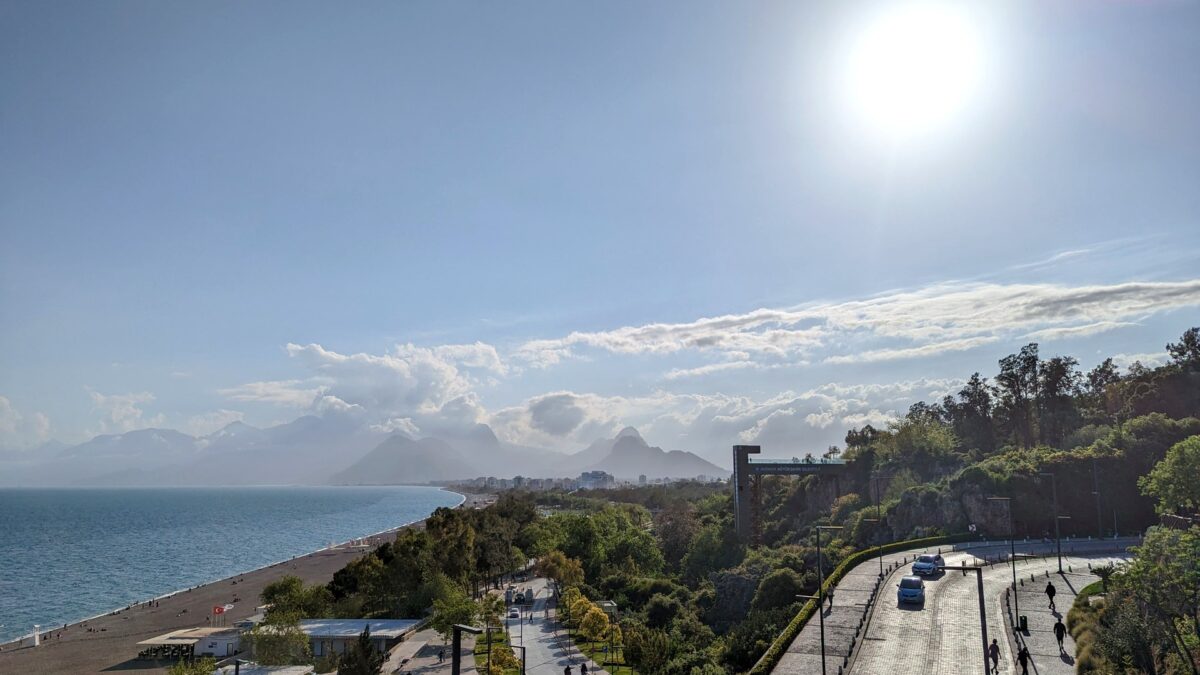
On Sunday, in the Turkish city of Antalya, nearly two hundred nations gathered to save the planet from burning, and after two weeks of talking, after forty-four hours of overtime, after the longest climate conference in the history of these summits, they walked out of the hall having failed to agree on a single document that even mentions the thing that is burning it. The word was fossil fuels. Oil. Coal. Gas. The delegates could not bring themselves to write it down. And so the COP31 climate summit collapsed, not with an explosion, but with a silence, and that silence, dear reader, is the loudest sound of our time.
I have sat with this news for hours, and I keep returning to one question. How does a civilisation look directly at the cause of its own destruction, hold it in its hands, name it in the morning, and then by evening pretend it does not exist? The first draft of the COP31 agreement, published on Monday, called for an “immediate transition away from fossil fuels in energy systems”. By the final draft, every mention had been stripped out. The word had been deleted the way a censor deletes a name from a history book, as if deleting the word could delete the fire. More than a hundred countries fought to keep it in. It was not enough. The oil states would not allow it. And the world, which had come to Antalya to be saved, went home unsaved.
History, I have always believed, does not repeat itself as tragedy alone. It repeats itself as a mirror. Hold it up to Antalya, and you will see faces you already know.
The Word That Died in the Room
Let me tell you plainly what happened, because the facts themselves are an indictment. The COP31 climate conference in Antalya, Turkey, collapsed on Sunday, 22 November 2026, as countries failed to agree on an overarching deal after more than two weeks of contentious negotiations. The breaking point was the very cause of climate change itself: fossil fuels. The annual United Nations climate talks stretched deep into overtime over the weekend and now hold the dubious honour of being the longest COP in history, and the first major breakdown since COP15 in Copenhagen in 2009.
At the final meeting intended to approve the so-called Antalya Pact, it became clear there would not be the necessary consensus between the more than 190 countries at the talks to adopt the deal. These did not include the United States, which, under President Donald Trump, has pulled out of international climate action. The European Union, Panama, the Marshall Islands and Norway were among those that rejected the text. Darragh O’Brien, Ireland’s climate minister, who was helping lead negotiations for the European Union, said the bloc would not endorse a deal “that does not even mention fossil fuels”. The European climate chief, Wopke Hoekstra, said that when the world is heading for an overshoot of 1.5 degrees, the EU could not tolerate an agreement that does not mention fossil fuels. “That is not acceptable,” he told reporters after walking out of the talks. “We do that with a heavy heart with many other countries, but we simply cannot accept this.”
COP31 President Murat Kurum acknowledged that support was not there to gavel through the pact. “We have done our utmost,” he said, “but it is clear that there are parties in this hall who oppose this text. We recognize that there is no consensus on this document.” And with those words, the summit ended. No deal. No pact. No promise. Only the sound of delegates booking later flights home, and the sea outside Antalya continuing its slow, patient rise.
Think about that for a moment. Nearly two hundred governments. Two weeks. The finest scientists on Earth warning them. The poorest nations on Earth begging them. And they could not agree to write down two words. You cannot solve a fossil fuel crisis, as the negotiations veteran Harjeet Singh said in Antalya, by pretending we do not need to phase out fossil fuels. Yet pretending is precisely what the final text did. It merely “recalled” a deal made three years ago in Dubai, which included a pledge that the world would “transition away” from fossil fuels, without naming them at all. A memory, not a commitment. A ghost of a promise, offered in place of a promise itself.
A History Written in Smoke
Reader, I ask you to step back with me, because Antalya is not only a climate story. It is a story about power, and power has always behaved in exactly this way. When the East India Company came to our shores, it did not arrive with an army and a declaration of conquest. It arrived with a ledger, a licence, and a promise of trade. It asked only to be allowed to do business. And the rulers of the day, dazzled by profit and divided by rivalry, allowed it. By the time the ledgers had become laws and the traders had become masters, it was too late to ask where sovereignty had gone. The Company did not conquer India in a single battle. It conquered it in a thousand small permissions, each one reasonable, each one profitable, each one fatal.
Ask yourself: what is a fossil fuel company, in our century, if not a new East India Company? It too arrives with a ledger and a promise. It too speaks the language of jobs, of growth, of energy security, of national interest. It too has its courtiers and its apologists in every capital. And it too has learned the oldest lesson of empire: you do not need to defeat your opponents in open battle if you can simply buy the silence of the room where decisions are made. In Antalya, no army was needed. No veto was even formally cast. The word was simply removed, draft by draft, until the agreement agreed to nothing, and the companies kept their empire.
And what of the Mir Jafars and Mir Sadiqs of our age? History remembers them as the men who opened the gates of their own cities for a price. At Plassey, treachery wore the uniform of an ally. At Seringapatam, the betrayal came from inside the fortress, and Tipu Sultan fell not because his enemy was stronger but because his own house had been sold. I do not invoke these names lightly. I invoke them because treachery today rarely wears a uniform at all. It wears a suit. It sits at a negotiating table. It speaks of “realism” and “balance” and “phased approaches”, and while it speaks, the seas rise over the islands whose delegates are sitting in the very same room, begging for their survival.
The Marshall Islands, a low-lying island state whose people face the erasure of their entire homeland, said in Antalya that it “had been let down on all sides”. A negotiator for the country said: “We will not compromise our future to benefit fossil fuel interests.” Hear that sentence again, slowly. A nation that may cease to exist looked at the richest powers on Earth and refused to sell its future. It is the island states, the smallest and poorest, who showed the courage that the great powers could not find. And that, too, is history repeating itself. It is always the weakest who remember honour, and always the strongest who forget it first.
Who Walked Out, and Who Held the Door Shut
The collapse was not an accident. It was a choice, made by identifiable hands. On one side stood the European Union and the United Kingdom, Panama, Belize, Vanuatu, the Marshall Islands and Norway, who refused to sign a text designed, in the words of Ireland’s minister, to “greenwash fossil fuels”. Miatta Fahnbulleh, the UK energy secretary, called the failure “immensely disappointing” and said the draft “moves us backwards on the science”. The Greens in the European Parliament said plainly that no deal is better than a bad deal, and that Europe had stood up to “the bullying of oil and gas producers”. Whatever you think of these governments, on this day they did something rare in modern politics: they walked out of a room rather than sign a lie.
On the other side stood Saudi Arabia and the other oil-producing countries, who opposed any stronger commitment on fossil fuels. Russia said it could not agree to any mention of fossil fuel in the text at all. China and Pakistan were among the nations which said they could accept the proposed agreement. And the United States, the largest historical emitter of all, was not even in the room in any meaningful sense, having withdrawn from international climate action under President Trump. The world’s greatest power chose absence. The world’s richest industry chose obstruction. And the world’s most vulnerable people were left to carry the consequences of both.
There is a bitter honesty in this line-up that we should not look away from. The countries that profit most from the fire were the ones who forbade the naming of it. The countries that suffer most from the fire were the ones who demanded it be named. And the countries in the middle, the great trading nations and the rising economies, were asked to choose between the two and mostly chose the comfort of a text that said nothing. This is not a failure of diplomacy. Diplomacy is the art of finding words everyone can live with. This was a failure of courage: the discovery that there are rooms in which the truth itself cannot get a visa.
The Numbers the Text Refused to Carry
Let us set down the numbers, because numbers do not flatter and they do not lie. Burning fossil fuels like oil, gas and coal makes up roughly 73 per cent of global emissions. Three quarters of the poison in the sky comes from one source, and the summit convened to fight that poison could not bring itself to name the source. This is the first United Nations climate summit where there has been scientific consensus that the world will surpass the key global warming threshold. Countries agreed in Paris in 2015 to limit climate change to 1.5 degrees Celsius above pre-industrial levels, but the planet has essentially reached that limit already. The final draft in Antalya contained, for the first time, a formal acknowledgement that warming will exceed 1.5 degrees. It acknowledged the disaster, and then refused to name its cause. It is as if a doctor told a patient he was dying, and then refused to mention the disease.
The United Nations has found that even a best-case scenario of 1.7 or 1.8 degrees Celsius would require cutting emissions immediately, reducing them by 45 per cent by 2035. That, scientists say, would require dramatically cutting fossil fuel use. There is no path to that number that does not run through the oil well, the gas field and the coal mine. Yet the text offered only a vague emphasis on carbon capture technologies, which the WWF warned are no substitute for cutting emissions, and a proposal to speed up electric cars and heat pumps, with a goal of electricity providing 35 per cent of global energy use by 2035, up from 22 per cent today. These are good things. They are also, on their own, a fraction of what the science demands, like bailing out a sinking ship with a teacup while refusing to plug the hole.
Then there is the money, the other great silence of Antalya. Developing nations’ estimated climate finance needs run to between 5.1 trillion and 6.8 trillion dollars through 2030. The draft called for adaptation finance to at least triple by 2035, a target developing nations criticised for lacking a clear baseline, and the fight over tripling adaptation finance to support vulnerable countries was one of the two great disagreements that sank the summit. The WWF put it bluntly: the lack of progress on adaptation finance will have real-world consequences for the lives and livelihoods of the planet’s most vulnerable communities. I think of my own country, Pakistan, where the floods of 2022 drowned a third of the land and affected 33 million people, a catastrophe made worse by a warming world that Pakistan did almost nothing to cause. Who pays for that? In Antalya, the answer was: no one, not yet, not in writing. The victims were asked to wait. The polluters were not asked to pay. The ledger, as ever, was balanced on the backs of the poor.
The Longest COP and the Shortest Memory
There is a cruel irony in the record books. COP31 is now the longest-ever United Nations climate change conference, running two days past its official close, and the first major breakdown since Copenhagen in 2009. Seventeen years ago in Copenhagen, the world also gathered with hope and left with disappointment. The difference is this: in 2009, the science still offered us a margin. In 2026, there is no margin left. The planet has already arrived at the threshold the Paris Agreement was written to keep us from crossing. We have spent seventeen years negotiating about whether to name the fire, while the fire has spent seventeen years spreading.
And yet the memory of Dubai is still fresh, and it condemns Antalya all the more. At COP28 in Dubai in 2023, countries agreed to an unprecedented call to “transition away from fossil fuels”. It was the first time the words had ever appeared in a COP decision, and the world celebrated it as a turning point. Since then, that promise has neither been repeated nor built upon, as oil-producing nations balk at any reference to the driving force of the climate crisis. Think of what that means. The world made a promise, and then spent three years learning how to unmake it, draft by draft, until the promise existed only as a memory, “recalled” but never renewed. A promise recalled is not a promise kept. It is a promise buried with honours.
Activists in Antalya held signs that read “shame” on Friday, 20 November, as the talks staggered into overtime. I think of those young people standing outside the halls with cardboard and markers, and I think of the delegates inside with their briefing books and their red lines, and I wonder which group history will remember. Mohamed Adow, director of the energy think tank Power Shift Africa, called COP31 “the worst ever COP” and said its collapse “needs to be a wake up call for the world”. He is right. But wake-up calls only work on those who are asleep. The tragedy of Antalya is not that the negotiators were asleep. It is that many of them were wide awake, and chose the fire anyway, because the fire pays.
What Antalya Proved About Power
Now I come to the question that matters most, the question I have been circling since the news broke. What did Antalya actually prove? It proved, first, that the COP process itself is broken in a specific and fixable way. The process works by consensus, which means any single determined blocker, or any small club of blockers, can hold the entire planet hostage. A system designed to protect the smallest nations from being overruled has become a system that allows the richest industry on Earth to overrule everyone. The WWF has called for a dialogue on strengthening the UNFCCC, and it is right to do so, because multilateralism remains our best chance of solving this global challenge. But multilateralism cannot mean that the arsonist gets a veto over the fire brigade.
It proved, second, that the age of American climate leadership is over, at least for now. When the largest historical emitter walks away from the table, the table does not collapse, but it loses its centre of gravity. Others must fill the space, and in Antalya they could not. Europe tried, and Europe walked out rather than sign a lie, which is honourable but is not the same as winning. The lesson is hard: in a world without American leadership, the coalition of the willing must become a coalition of the determined, large enough and disciplined enough that no petrostate can hold it hostage again.
It proved, third, something stranger and more hopeful. The transition away from fossil fuels is happening regardless of what the United Nations agreements say. That is not my claim. It is the claim of Chris Bowen, the Australian minister who ran the negotiations in Antalya, who told the press after the agreement failed: “The transition away from fossil fuels in the real world is inevitable. It’s happening at speed and it’s irreversible.” Solar panels are now the cheapest source of electricity in human history. Electric vehicles are outselling petrol cars in market after market. The economics have turned, and no communique can turn them back. The oil states won the text in Antalya. They are losing the world outside it. Their victory is real, and it is also temporary, and the tragedy is only the time it costs us, time measured in floods and fires and harvests that will not come back.
The Fire Does Not Wait for Permission
So where does this leave us, you and I, ordinary people reading the news of a faraway summit in a Turkish coastal city? It leaves us with a choice that Antalya could not make for us. We can treat the collapse as a distant diplomatic failure, another headline to scroll past, or we can recognise it for what it is: the moment the world admitted, in public, that its governments cannot yet do what survival requires, and that survival will therefore have to be demanded from below, by citizens, by cities, by businesses, by courts, by voters, by all of us.
The engagement across all sectors of society in the Global Action Agenda at COP31 showed that solutions exist and that momentum from communities, cities and businesses is real despite what happened in the negotiating rooms. The WWF said the shortfall in Antalya is a real setback, but it has not stopped climate action, and it will not. I believe that, and I also believe something harder: that the gap between what governments promise and what the planet needs will now be closed, if it is closed at all, by people who refuse to wait for permission. The islander who will not sell his future. The farmer who plants for a climate that has already changed. The young person holding a sign that says “shame”. The voter who asks, of every candidate, one simple question: will you name the fire?
History will judge Antalya harshly, and it should. But history will judge us too, all of us who watched it happen. The East India Company was not defeated by the men who made the best speeches about it. It was defeated when ordinary people, over generations, refused to accept its rule as natural. Tipu Sultan fell, but the memory of his resistance outlived the empire that killed him, and it still shames every collaborator who opened a gate for a price. The empires of oil will fall the same way, not in a single summit, but in a thousand refusals, in courtrooms and marketplaces and ballot boxes, in every place where someone decides that the truth is worth more than the profit.
The world could not name the fire in Antalya. But the fire has a name, and you know it, and I know it, and the children who will inherit this burning planet know it. Oil. Coal. Gas. Say it plainly. Say it loudly. Say it until the rooms where decisions are made can no longer pretend they did not hear it. The summit collapsed. The truth did not. The truth is still standing outside the hall, in the rising sea and the burning forest and the flooded field, waiting for us to do what the delegates could not. The climate will not wait for governments to find their courage. So we must find it first, and lend it to them, whether they want it or not.
Sources & References
CNN — “Global climate summit collapses as countries fail to agree on moving away from fossil fuels”, 22 November 2026.
NPR / WNCW (Associated Press) — “Climate change talks fall apart in final hours over fossil fuels”, 22 November 2026.
WWF — “COP31 runs into overtime and fails to meet the moment for a world at 1.5°C”, 22 November 2026.
The Times — “Cop31 talks collapse after UK and EU reject proposal”, 22 November 2026.
Inter Press Service / Global Issues — “COP31 Cover Deal Collapses as EU and Others Reject Draft Over Fossil Fuel Omission”, 22 November 2026.
Greens/EFA — “No deal at COP31 over fights on phasing out fossil fuels”, 22 November 2026.

About the Author — Abdul Mannan
Related Articles

Miley Cyrus Marries Maxx Morando: The Girl Who Grew Up in Front of the World Finally Chooses Herself
Miley Cyrus married Maxx Morando in Palm Springs on 21 November 2026. This is not a celebrity story…

The Week the World’s Money Panicked: Nine Trillion Dollars Gone and the AI Dream on Trial
Nine trillion dollars vanished in a week. The Nasdaq suffered its worst week since 2020, Nvidia lost $2.2…
The Pentagon Opened the UFO Vault Again — and the Real Story Is What It Still Will Not Say
On 20 November 2026 the Pentagon released its eighth batch of declassified UFO files: 43 records, three military…