Ann Widdecombe’s Murder ‘Politically and Ideologically Motivated’ and ‘Inextricably Linked’ to Farage Terror Plot, Court Hears

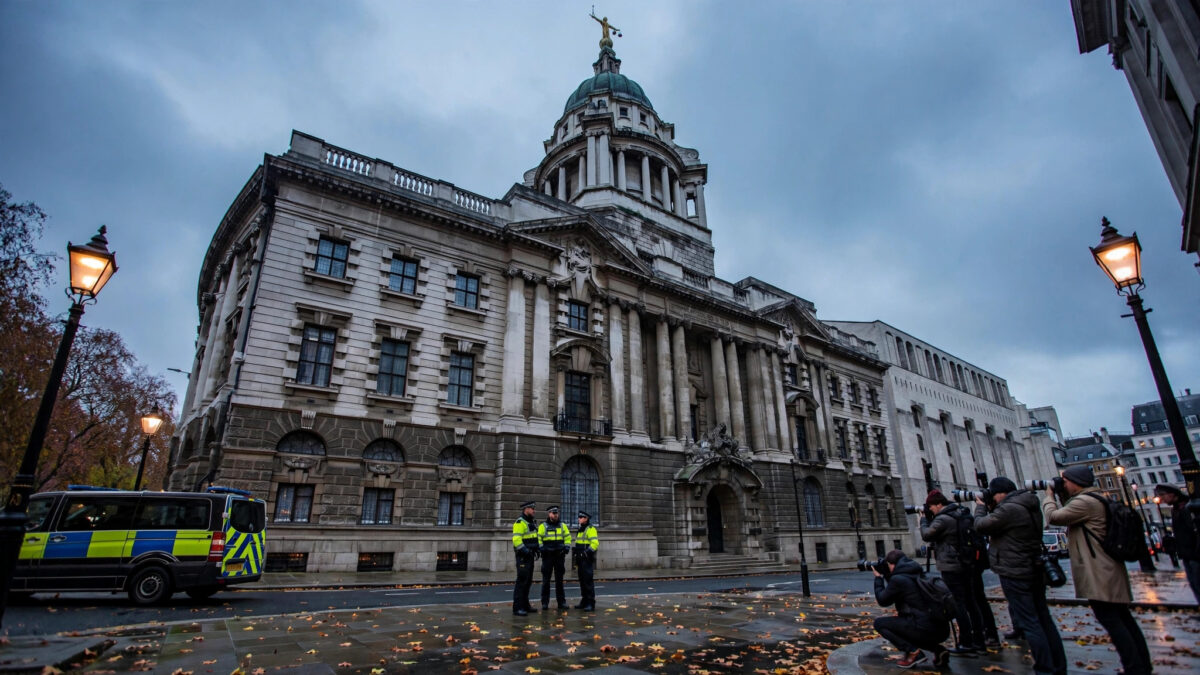
The prosecution has told the Old Bailey that the alleged murder of Ann Widdecombe was “politically and ideologically motivated” and formed part of a single course of conduct with a suspected terrorist plot against the home of Reform UK leader Nigel Farage. The two charges facing the accused man, Joshua Kerry, have now been formally joined into one case, with a five-week trial set for June next year.
Kerry, 28, from Rotherham in South Yorkshire, appeared at London’s Central Criminal Court on Friday afternoon by video-link from Belmarsh prison, according to Sky News. Wearing a grey prison-issue tracksuit and glasses, he sat with his arms folded and his legs crossed as the charges against him were officially combined.
Jonathan Polnay KC, prosecuting, told the court that the alleged murder of the 78-year-old former Conservative minister and Reform UK spokeswoman was “inextricably linked” to the wider activity of which Kerry is accused, and that the two matters represented “a single course of conduct” with a “terrorist connection”, The Times reported.
Kerry is charged with one count of murder, relating to the death of Widdecombe at her home in Haytor on Dartmoor, Devon, on July 8, 2026, and one count of engaging in conduct in preparation of acts of terrorism between May 31, 2024, and July 8 this year. He was charged with her murder on July 20, and charged with the terrorism offence last week after a counter-terrorism investigation, The Times reported.
Mrs Justice Cheema-Grubb agreed to the prosecution’s request to join the two charges into a single trial. She set a five-week trial to begin on June 8 next year, with Kerry next due in court on January 29. Nicholas Lumley KC, defending, told the court that Kerry was likely to contest all the charges against him, Sky News reported. Kerry was remanded in custody.
The prosecution’s case: a “continuum of conduct”
The core of Friday’s hearing was the prosecution’s argument that the two charges cannot be understood separately. Mr Polnay told the Old Bailey that analysis of Kerry’s phone demonstrated an “extreme left-wing and/or anti-establishment mindset” and a “particular hostility” towards Reform UK, the party led by Nigel Farage for which Widdecombe served as a spokeswoman, The Times reported.
“We say it is politically and ideologically motivated,” Mr Polnay said of Widdecombe’s murder, according to The Times. He said her killing “represented a continuum of conduct and is inextricably linked” to the alleged terrorism preparations.
The prosecution alleges that between May 31, 2024, and July 8, 2026, Kerry researched “politicians and other prominent figures” and their home addresses, including those of both Widdecombe and Farage, Sky News reported. The Times reported that the alleged conduct included an attempt to gain entry to Farage’s home some 15 months before Widdecombe’s death.
Mr Farage’s partner, Laure Ferrari, returned home on April 20 last year to find a damaged wooden doorframe inside the unlocked porch door, with part of it hanging off, and a bottle of lighter fluid left in the porch, the court heard, according to Sky News. Prosecutors allege that Kerry travelled to Farage’s home in south London on April 19, 2025, and tried to break into it.
The Sun reported that investigators uncovered a list of names Kerry was alleged to have researched online, including Conservative leader Kemi Badenoch and Reform MPs Richard Tice, Lee Anderson and Robert Jenrick — alongside what the newspaper described as online reconnaissance of “prominent people and institutions”. The Times and Sky News accounts of the hearing confirmed the broader allegation of online research of political targets, with the Sun providing the specific names. Mr Polnay told the court that Kerry had carried out “online reconnaissance on prominent people and institutions” roughly two years before the killing, according to The Sun.
On the murder charge itself, Mr Polnay said it was the prosecution’s case that Kerry drove nearly 265 miles from his home in Rotherham to Widdecombe’s property in rural Devon on July 8, carrying a hammer, and struck her 21 times, The Times reported. The court heard that Kerry had driven there in a red Vauxhall Corsa, spent approximately two minutes at the address, and then drove away, according to Sky News. He was arrested by police on July 11.
Who was Ann Widdecombe?
Ann Widdecombe, who died aged 78, was one of the most recognisable figures of Britain’s political right for more than three decades. She served as the Conservative MP for Maidstone and the Weald in Kent for 23 years and held ministerial office under Sir John Major’s government in the 1990s, including a high-profile tenure as a Home Office minister.
Known for her formidable debating performances and uncompromising views, she later became a household name well beyond politics, appearing on mainstream entertainment programmes and becoming a staple of broadcast debate. She joined Reform UK in 2019 and served as one of the party’s most senior spokeswomen, acting as its justice spokeswoman. Her body was found at her home on July 9, the day after prosecutors say she was killed.
The prosecution’s claim that her killing was “politically and ideologically motivated” — a phrase also reported by Sky News — means the trial is expected to hear extensive evidence about Kerry’s alleged views and how, in the prosecution’s case, they connected two very different victims: a 78-year-old former minister at home in Devon, and the leader of one of Britain’s most prominent political parties in London.
Reform UK at the centre of the case
The hearing underscored how central Reform UK is to the prosecution’s case. Both alleged victims are closely associated with the party: Widdecombe was its justice spokeswoman, and Farage its leader. Mr Polnay told the court that Kerry held a “particular hostility” towards Reform, The Times reported.
The party has been a focal point of some of the most heated political debate in Britain in recent years, and its leader’s security has long been a concern. The Times previously reported that Farage receives more than 300 threats a month — a figure cited when Kerry was first charged with the terrorism offence. The allegation that an accused murderer conducted online research into the home addresses of Farage and other serving politicians will intensify an already live debate in Westminster about the safety of public figures.
When Kerry was charged with the terrorism offence last week, Home Secretary Shabana Mahmood described the allegations as “extremely concerning” and said that “an attack on anyone in politics is an attack on us all”, pledging a parliamentary update on the protection of public life. Friday’s hearing puts that pledge in a new context: the case now formally alleges that one of the highest-profile political killings in modern British history was terrorism-adjacent.
The investigation
The charges followed what counter-terrorism detectives described as an intensive and complex investigation. Detective Assistant Commissioner Vicki Evans previously said the inquiry had been “hugely intensive and complex”, a characterisation made when the terrorism charge was brought.
That investigation examined Kerry’s activities over more than two years — from May 31, 2024, to the date of Widdecombe’s death. According to the prosecution, the alleged conduct included not only the online research of targets and the visit to Farage’s home in April 2025, but extended to the drive to Devon on July 8 this year. The prosecution’s position, accepted by the court for the purposes of joining the charges, is that all of it constitutes one continuous course of conduct.
The January 29 hearing is expected to be the next significant milestone, likely dealing with case management and possibly pleas. A full five-week trial beginning in June next year means the case will be in the public eye for much of the coming year, with reporting of the evidence expected to be extensive given the stature of the alleged victims and the political sensitivity of the allegations.
Analysis: Why It Matters
The decision to join these two charges into a single trial is one of the most consequential steps the prosecution could take, and it tells us a great deal about how the state sees this case. By arguing that the murder of Ann Widdecombe and the alleged plot against Nigel Farage are “inextricably linked” — a single, politically motivated course of conduct — prosecutors are asking a future jury to understand the killing not as an isolated act of violence against one 78-year-old woman, but as the culmination of a two-year pattern of hostile intent directed at a political movement. That is a far larger claim, and it is also a far heavier burden: everything the prosecution alleges about Kerry’s mindset, his research, and his movements over those two years must now cohere into a story the jury can believe. If it does, the case becomes a landmark prosecution of alleged far-left political violence in modern Britain; if it does not, the defence will have ample material to argue that the state has fused two tragedies into a theory.
That is the second point worth dwelling on. Public debate about political extremism in Britain has, for understandable reasons, been dominated for two decades by Islamist terrorism and, more recently, by far-right and incel-adjacent violence. An alleged case of politically motivated murder attributed by prosecutors to an “extreme left-wing and/or anti-establishment mindset” is comparatively rare in the British courts, and it will test whether the institutions built to counter extremism — Prevent, counter-terrorism policing, the political rhetoric about protecting public life — are genuinely ideology-neutral in practice. The Home Secretary’s own words, that an attack on anyone in politics is an attack on us all, will be measured against how this case is handled, resourced and discussed.
Third, there is the reconnaissance list. Even before a jury has heard a word of evidence, the allegation that a murder suspect had researched the home addresses of the leaders and MPs of Britain’s main opposition and governing-adjacent parties — Kemi Badenoch, Richard Tice, Lee Anderson, Robert Jenrick, alongside Farage and Widdecombe — reads as a warning about the breadth of targeting in an era when politicians’ movements, homes and families are more exposed than at any time in the digital age. Farage’s reported 300-plus threats a month are not an anomaly; MPs across parties have described an escalating climate of intimidation, and the security arrangements for public figures are already one of Westminster’s most quietly anxious subjects. This case is likely to force that conversation into the open, and to accelerate it.
Fourth, the calendar matters. A trial set for June next year, with a preliminary hearing in January, means the most sensitive evidence in this case — the full account of what Kerry is alleged to have believed, planned and done — will be aired at length in the summer of 2027, well after the immediate shock of the case has faded and in a political climate no one can yet predict. The defence’s indication that all charges will be contested means there will be no quick guilty plea to spare the victims’ families a long ordeal; a five-week trial suggests the evidence, particularly the digital material from Kerry’s phone, is voluminous.
There is also a subtle but important legal dimension. Charges under section 5 of the Terrorism Act 2006 carry severe sentences, and applying them to conduct that culminated in a murder already carrying a life sentence is as much about narrative as punishment: it allows the state to present the case, from the opening moments of the trial, as terrorism-adjacent. The defence will almost certainly attack that framing, and the battle over whether the jury is allowed to see the murder through the lens of ideology may be the decisive legal fight of the trial before the evidence is even heard.
Finally, it is worth noting what Friday’s hearing did not contain: any finding of guilt, and any evidence tested by cross-examination. Everything reported from the Old Bailey is the prosecution’s case as outlined by its barrister. The presumption of innocence remains, the trial is eight months away, and the detailed claims about phone analysis, reconnaissance lists and motive have yet to face the defence’s answer. But the shape of the case is now set, and it is one that will dominate Britain’s political and legal conversation for the year ahead.
What to watch next
The January hearing. When Kerry next appears in court on January 29, the case is likely to move towards pleas and trial preparation. Any indication of the defence’s strategy — particularly its response to the joinder and the terrorism framing — will be the first real test of the prosecution’s case.
The public-life protection review. The Home Secretary promised Parliament an update on the protection of people in public life when the terrorism charge was brought. With the case now formally alleging a politically motivated murder linked to a terror plot, that review carries far more weight, and its findings will be closely watched by MPs and their security teams.
Whether the investigation widens. Counter-terrorism inquiries of this scale rarely end with a single defendant in every respect; any further arrests, searches or charges would signal that the police see a network rather than a lone actor.
The trial itself. A five-week trial beginning June 8 next year will bring the full prosecution evidence — the phone analysis, the alleged reconnaissance, the movements on July 8 — into open court for the first time. The reporting of that evidence will be one of the defining news events of 2027.
Sources
- The Times — Ann Widdecombe suspect Joshua Kerry was ‘hostile to Reform UK’ (court report, October 9, 2026)
- Classic FM / Sky News — Ann Widdecombe murder ‘politically and ideologically motivated’, court hears (October 9, 2026)
- The Sun — Ann Widdecombe’s killing ‘inextricably linked to Farage firebombing’ (court report, October 9, 2026)

About the Author — Abdul Mannan
Related Articles
Britain Renames 187-Year-Old Jerusalem Consulate “UK Mission” in Last-Minute Compromise With Israel
Britain and Israel struck a last-minute deal to keep the 187-year-old Jerusalem mission open under a new name,…

Labour Holds Starmer’s Old Seat as Green Leader Polanski Falls Short in Holborn and St Pancras By-Election
Labour's Sagal Abdi-Wali has won the Holborn and St Pancras by-election with a majority of 3,364 over Green…

Bank of England Puts a Hedgehog on the Fiver: Wildlife to Replace Churchill and Historic Figures on New Banknotes
The Bank of England has announced a European hedgehog will replace Winston Churchill on the £5 note, with…