The Week the World’s Money Panicked: Nine Trillion Dollars Gone and the AI Dream on Trial

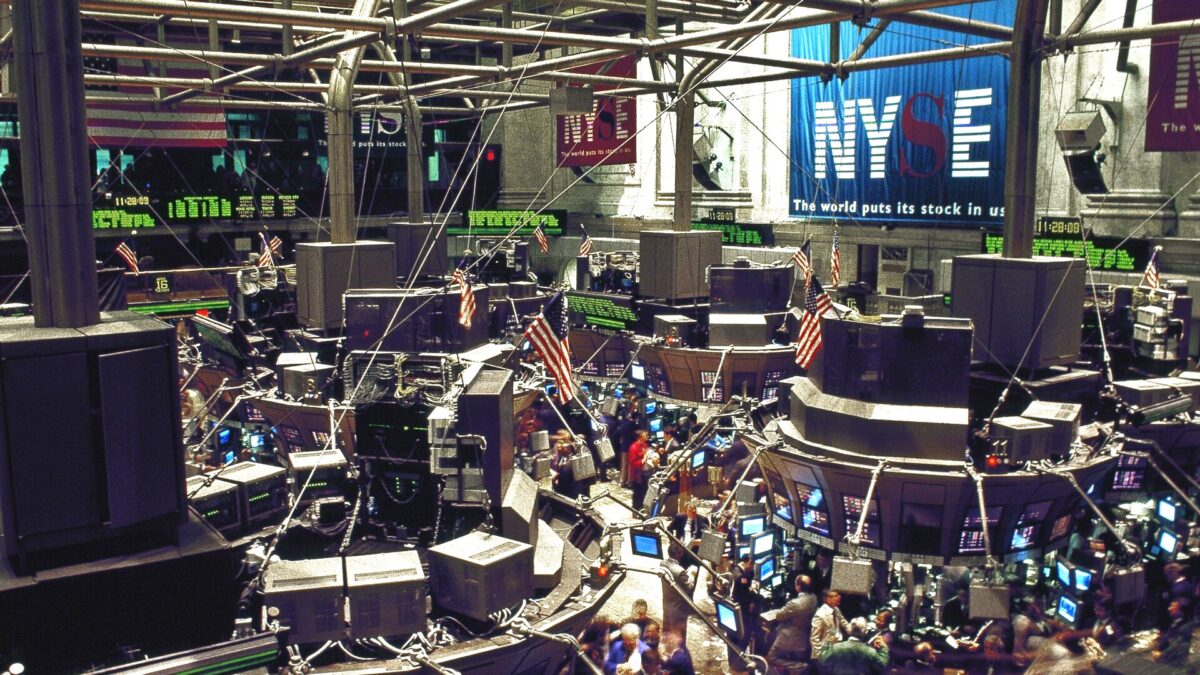
Nine trillion dollars. Say the number aloud, slowly, and let it sit in the room with you for a moment. Nine trillion dollars — gone. Not spent. Not stolen. Not invested in some great enterprise of mankind. Simply gone, evaporated from the ledgers of the world in a matter of weeks, with the worst of it in a single brutal week that ended on Friday, 20 November 2026. And I ask you, as one citizen of this shrinking, frightened world to another: if nine trillion dollars can vanish in the time it takes to brew your morning tea and read the headlines, what exactly was it ever made of?
Do not mistake me. I am not writing to frighten you, and I am certainly not writing to mock the people who lost money, because among them are pension funds, and small savers, and ordinary families whose retirements are tied to numbers flickering on screens they will never see. I am writing because history has a habit it never breaks: it warns us, loudly, in advance, and we — clever, modern, sophisticated we — cover our ears and call the warning old-fashioned. This week, history stopped warning and started collecting.
On Friday, the Nasdaq Composite fell 5.3 per cent in a single day. For the week it lost 10 per cent — its worst week since the pandemic panic of March 2020, worse even than the tariff shock of spring 2025. The S&P 500 fell 3.7 per cent on Friday alone, closing at 6,910.39, its seventh consecutive losing session, and it now sits more than 10 per cent below its October record — officially, in the cold language of the market, in correction territory. The Dow Jones lost 1.9 per cent. The PHLX Semiconductor index, the beating heart of the artificial intelligence trade, collapsed 17.13 per cent in the week, its worst week in ten years of data. In Tokyo, the Nikkei fell 5.1 per cent on Friday. In Seoul, the Kospi fell 5.2 per cent. In Taipei, the Taiex fell 6.2 per cent in a day and 17.5 per cent in the week — its biggest weekly fall since 1990. The MSCI World index fell for a seventh straight session, its longest losing run since 2023, and emerging markets have now fallen more than 20 per cent from their June high, which is to say they are in a bear market. Nearly nine trillion dollars has been wiped from the value of world stocks since they peaked in August, according to Reuters. Read that sentence again. Nine trillion. Since August.
And here is the detail that should stop you in your tracks: when the panic came, there was nowhere to hide. Gold, the shelter of the ages, the metal men have trusted since the Pharaohs, fell about 9 per cent in the week to around $3,527 an ounce, touching $3,503 at its lowest — its weakest since September 2025 and some 35 per cent below the $5,450 peak it reached in January. Silver fell harder still, around 14 per cent. Bitcoin, the digital gold of a younger generation, broke below $60,000 for the first time since July, and some $2 billion of leveraged bets were liquidated in a single day. When stocks, gold and bitcoin all fall together, the old hands on Wall Street have a name for it. They call it a liquidity flush. It means people are not moving their money to safety. It means they are selling whatever they can sell, because they need the cash.
The King Who Fell From His Own Throne
Every crash needs a face, and this one found its face in the unlikeliest of places: Nvidia, the company that had become the very symbol of the artificial intelligence age, the most valuable enterprise on earth, the chipmaker without which the whole glittering AI dream could not run at all.
Only eight days earlier, on 12 November, its founder and chief executive Jensen Huang resigned, and the market — that supposedly rational machine — did what markets always do when a legend walks out of the room: it panicked first and asked questions later. The chief financial officer, Colette Kress, took over as interim chief executive. Days later the company reported revenue of $115.84 billion against expectations of $109.10 billion, and guided to around $130 billion for the next quarter. It beat the numbers. It beat them handsomely. And the shares fell anyway. That is the first lesson of this week, and I beg you to remember it: when a bubble begins to deflate, even good news is not good enough, because the prices were never built on the news. They were built on the story.
Then came Friday, and with it the report that turned a sell-off into a rout. Reuters reported, citing two people briefed on the matter, that enforcement staff at the United States Securities and Exchange Commission are examining potential accounting issues at Nvidia. The Wall Street Journal had reported days earlier, on 17 November, that the SEC was probing the company, but Reuters was the first to report that the focus of the inquiry is accounting. Let me be precise here, because precision is a moral duty when reputations and livelihoods are at stake: neither the SEC nor Nvidia has confirmed the report. The SEC declined to comment. What exactly is being examined, and when any inquiry began, has not been established. An investigation is not evidence of wrongdoing, and investigations often close without any enforcement action at all. But the market did not wait for the footnotes. Nvidia fell about 14 per cent on Friday — its largest single-day fall in nearly two years — closing at $125.53. For the week it lost 23 per cent. It has now lost 47.5 per cent from its all-time high of 6 October, shedding more than $2.2 trillion of market value. Two point two trillion dollars. A sum larger than the entire economy of most nations on earth, gone from a single company in six weeks.
Two questions sit at the centre of the scrutiny, and you should know them both, because they are the questions that will decide whether this is a storm or a reckoning. The first concerns geography. Last year Nvidia began reporting its revenue by the location of the customer’s headquarters rather than the billing address, a change that removed Singapore from its geographic breakdown — even though sales booked there had at one point approached half of the company’s global revenue, according to the Financial Times, cited by Reuters. Singapore-based Megaspeed, once a large Nvidia customer, is under investigation over alleged shipments of AI chips to China. The second question is what the industry calls circular financing: the deals in which chipmakers help their customers pay for chips and data centres through investments and guarantees, which critics say makes it harder to judge how real the revenue truly is. On Thursday, California’s attorney general said he had served Nvidia a subpoena asking whether advanced chips or confidential information reached China and whether investors were misled. None of this proves wrongdoing. All of it demands answers. And in a market built on trust, the demand for answers is itself the crisis.
The IPO That Was Supposed to Save the Party
If Nvidia was the fallen king, then Anthropic was supposed to be the coronation. On Thursday, 19 November, the maker of the Claude AI assistant completed the largest initial public offering in history. It priced 980 million shares at $83, above its projected $70 to $78 range, and raised $81.3 billion. The shares opened at $111.50 and closed their first day at $97.17, briefly valuing the laboratory above $2 trillion. The financial press, drunk on its own adjectives, called it a triumph, a vindication, proof that the AI boom was alive and well.
It lasted one day.
On Friday, Anthropic fell about 9 per cent, closing near $89, and at one point during the session it touched $83.05 — five cents above the price at which it had listed the day before. The entire debut gain, the entire celebration, the entire $2 trillion valuation, very nearly erased in a single session. The Nasdaq, which had gained almost 19 per cent through early October, is now down almost 2 per cent for the year. The party did not merely end. It ended so fast that the guests were still holding their glasses when the lights came on.
Ask yourself what that means. The biggest IPO in the history of capitalism could not hold its own price for forty-eight hours. If the market will not pay $83 for the future on the second day, what was it paying $111 for on the first? The answer is the oldest answer in finance: it was paying for the story, for the fear of missing out, for the terror of being the only person in the room who did not believe. And when the story cracked, there was nothing underneath it except the arithmetic. I have seen this film before. You have too, even if you do not know it yet.
When Even the Safe Havens Ran for Cover
There is a detail in this crash that the headline writers have mostly missed, and it is the detail that frightens the serious people most. In a normal panic, money runs to safety. It runs to gold. It runs to government bonds. It runs to the dollar. This time, gold fell with everything else. That is not normal. That is the signature of forced selling — of investors who must raise cash to meet margin calls and cover losses elsewhere, and so sell the good assets along with the bad, because the good assets are the only ones anyone will buy.
The dollar, it is true, rose to a nineteen-month high, and the benchmark ten-year Treasury yield recorded its biggest weekly fall since April 2025, dropping 17 basis points as investors sought the safety of American government debt. But that is cold comfort when the metal that has sheltered human wealth for five thousand years has lost a third of its value since January. Copper, the metal of data centres and electrification, is heading for its steepest weekly fall since April 2025. Oil, which has driven so much of this year’s inflation, sat in a tight $90 to $94 range, a coiled spring nobody wants to touch. And the VIX, Wall Street’s fear gauge, jumped by about a third on Friday to its highest since late March, as investors rushed to buy protection against swings they can no longer predict.
Behind the numbers sits a list of causes that any honest observer must name plainly. Persistent inflation has pushed markets toward high odds that the Federal Reserve will raise interest rates again in December, increasing borrowing costs and compressing the valuations of companies whose profits live mostly in a distant future. High oil prices, growing corporate debt and weakening consumer purchasing power have been grinding away at confidence since early October. The midterm hammering of President Donald Trump’s Republican Party has cast doubt over how many American data centres will actually get built. And underneath it all, the slow, corrosive question that no amount of marketing can answer forever: how much of the AI boom is real demand, and how much is an industry selling shovels to itself?
History Is Not Repeating Itself. It Is Rhyming.
Now I come to the part of this column that matters most, because numbers without memory are only noise. I have spent my life reading history, and I tell you plainly: history is not repeating itself this week. It is rhyming. And the rhyme is so exact that it should chill you.
In October 1929, the Dow Jones fell roughly 25 per cent in two days, and went on to lose 89 per cent from its peak. The men who jumped from windows were not the villains of that story; they were the believers, the ones who had borrowed money to buy a future that did not exist. In October 1987, on a single day the world now calls Black Monday, the Dow fell 22.6 per cent — the largest one-day percentage fall in its history — and the machines that were supposed to protect investors, the new computerised trading systems, made everything worse by selling faster than any human could think. In 2000, the Nasdaq, drunk on the internet, fell 78 per cent from its peak, and companies that had been valued in the billions vanished so completely that their names are now trivia questions. In 2008, the S&P 500 fell 57 per cent, and the whole edifice of mortgage-backed cleverness collapsed because, in the end, somebody had to live in the houses. In March 2020, the S&P lost a third of its value in a month, the fastest bear market in history. And in 2022, the S&P fell 19.4 per cent and the Nasdaq 33 per cent, as inflation returned like a ghost everyone had declared dead.
Do you see the pattern? Every single time, the boom invents a reason why this time is different. In 1929 it was the radio and the automobile. In 2000 it was the internet. In 2008 it was financial engineering. In 2026 it is artificial intelligence. And every single time, the bust proves that the technology was real and the prices were not. The radio was real. The internet was real. Artificial intelligence is real. What was never real was the belief that a real technology entitles its owners to any price, forever, without profits, without questions, without end.
The market is not a machine. It is a mirror. It reflects, with terrible fidelity, what we are. In a boom it reflects our greed, our impatience, our terror of being left behind. In a bust it reflects our fear, our fury, our sudden discovery that the emperor was wearing borrowed clothes. The mirror does not lie. We lie to the mirror, and then blame it for the reflection.
What the Crash Is Really About
Look closer at the numbers, and a subtler truth emerges — one that the panic merchants will not tell you, because it does not sell. This crash is not the whole market dying. It is one story dying, and the money moving, in a great shuffling of feet, toward another.
Consider this: the median stock in the S&P 500 is up almost 7 per cent in 2026, according to Reuters. The index itself is up barely 2 per cent. The difference is the handful of AI giants that carried the whole edifice on their shoulders and are now dragging it down. The S&P value index — the unfashionable companies, the ones that make things, pay dividends and trade at prices a human being can understand — is up 8 per cent this year, while the growth index is down 2 per cent. Value is on track to beat growth for the first time since 2022, the year inflation sent Wall Street into its worst slump since the 2008 financial crisis. Investors are not fleeing the market. They are fleeing the story. They are fleeing the handful of names that accounted for most of the market’s gains for much of 2026, and they are running toward bonds and toward cheaper, plainer, more honest businesses.
That is why I will not call this a tragedy, and why I will not join the chorus of doom. A tragedy is when something precious is destroyed. What is being destroyed here is an illusion: the illusion that a company can be worth any price if its story is exciting enough, that revenue can be conjured by lending your customers the money to buy your own products, that a chief executive is a king and a share price is a verdict on the future of civilisation. The technology remains. The data centres remain. The chips remain. What is dying is the fantasy. And the death of a fantasy, painful as it is, is the beginning of honesty.
What Happens Now
I will not insult your intelligence by pretending to know what happens next, because no one knows, and the people who claim to know are selling something. But I will tell you what to watch, because the signs are there for anyone willing to look.
Watch the Federal Reserve in December. If it raises rates into a falling market, the pain deepens; if it holds, the market will read it as mercy and rally on relief rather than on reason. Watch Nvidia, and whether the SEC inquiry — reported, not confirmed — produces answers or silence, because the answers will decide whether the accounting questions are a footnote or a chapter. Watch Anthropic, and whether a company that raised $81.3 billion can show the world a path to profit rather than a path to more fundraising. Watch the earnings of the cloud giants, and whether their customers are buying intelligence or buying a story about intelligence. And watch the ordinary economy — the jobs, the wages, the prices at the market — because in the end, every financial storm is judged not by the traders who caused it but by the families who must live through it.
The honest truth is that a correction of 10 per cent is not a catastrophe. Markets have survived far worse, and they will survive this. The S&P 500 has fallen 10 per cent or more dozens of times in its history and recovered every single time. What matters is not the size of the fall but the honesty of the recovery. A market that falls because it was too expensive and rises again because it has become honest is a healthy market. A market that is propped up by new stories before the old ones are examined is a patient being sent home with the fever still burning.
The Verdict
So here is my verdict, and I offer it to you not as a financial adviser — I am not one, and you should never take investment advice from a columnist — but as a fellow citizen of a world that has once again mistaken the map for the territory.
Nine trillion dollars did not vanish this week. Nine trillion dollars of belief vanished. Belief that prices only go up. Belief that a story is the same thing as a business. Belief that the future can be bought on credit and the bill will never arrive. The money was never really there; only the belief was. And belief, unlike money, cannot be printed, borrowed or bailed out. It must be earned, slowly, by people who build things that work, sell them for more than they cost, and tell the truth about both.
History will record this week as a footnote or as a turning point, and the difference will be decided not by the traders but by the rest of us. If we learn the lesson — that no technology, however miraculous, repeals the laws of arithmetic — then this crash will have been a painful, necessary correction, a fever breaking. If we do not learn it, if we demand a new story before the old one has been buried, then we will be back here again, sooner than we think, counting a larger number, in a redder sea, asking the same questions with fewer answers left.
The market has spoken its verdict on the AI dream. The dream itself is not dead; dreams do not die in a week. But the dream is now on trial, and the trial will be conducted not in press releases or product launches but in balance sheets, in court filings, in interest-rate decisions and in the quiet, daily choices of millions of ordinary people deciding what their money is truly worth. I ask you one last time: when the screens turn red and the numbers fall, do you panic — or do you finally see clearly? The answer to that question is the only investment that has never lost its value. It is called judgement. And unlike nine trillion dollars, it cannot vanish in a week, because it was never for sale.
Sources & References
Reuters — Nasdaq plunges 5% a day after Anthropic debut, but investors still believe in AI
Reuters — AI tech rout prompts US investors to rush into value stocks
Reuters — The snowballing selloff in global markets
Global Terminal — Markets This Week: Chips Sink 17%, Nasdaq 10%, Gold 9%, Bitcoin 14%
FXStreet — Gold testing $3,500, Bitcoin crashed to $58,800? Brutal, but expected

About the Author — Abdul Mannan
Related Articles
The Pentagon Opened the UFO Vault Again — and the Real Story Is What It Still Will Not Say
On 20 November 2026 the Pentagon released its eighth batch of declassified UFO files: 43 records, three military…
Britain Knocks on Europe’s Door Again: The 100,000 Young People Who May Undo Brexit
She was twelve when Britain voted to leave the EU — too young to vote, old enough to…

Justice, Nine Years Late: The World Court Finally Calls the Rohingya Atrocity by Its True Name — Genocide
On 19 November 2026, the International Court of Justice ruled that Myanmar committed genocide against the Rohingya —…