The Earth Has Stopped Whispering: 2026 and the Warning We Can No Longer Ignore

What does a planet have to do to be heard?
It has melted its glaciers before our eyes. It has boiled its oceans. It has set its forests alight and drowned its valleys, and still we ask for more evidence. On Sunday, 9 November 2026, as nearly two hundred nations gathered in Antalya, Türkiye, for the COP31 climate summit, the World Meteorological Organization placed its latest report on the table like a verdict handed down in open court. The year 2026, it said, will be one of the four warmest years ever recorded. The last four years are the four warmest years in human history. The last twelve years are the twelve warmest. Read that sentence again, slowly, because it is not a statistic. It is an accusation.
Between January and September of this year, the average temperature of the surface of the Earth stood about 1.47 degrees Celsius above the world our grandparents were born into, the pre-industrial average of 1850 to 1900. The figure carries a margin of error of 0.13 degrees, and the WMO warns plainly that the final number for the full year will probably be higher, because a vast El Niño, strengthening in the Pacific since August, is expected to become the strongest on record by December. The heat it is releasing will carry into 2027. This is not a spike. This is a staircase, and every step is higher than the last.
I have spent my life writing about the affairs of men, about parliaments and palaces, about treaties and betrayals. But there are moments when history stops being a story about men and becomes a story about the ground beneath their feet. This is such a moment. The thermometer does not belong to any party. It does not vote. It does not negotiate. And it has now told us, in numbers no honest person can dispute, that the world we inherited is being remade before our eyes, and that the remaking is accelerating.
The Numbers That Ended the Argument
There was a time, not long ago, when the climate debate was a debate. One side warned, the other side doubted, and the public was invited to choose between them as if truth were a matter of taste. That time is over. The WMO report is built on nine internationally recognised temperature datasets, and the picture they paint together admits no rival interpretation.
The warmest year ever recorded remains 2024, at 1.55 degrees above the pre-industrial average, the first calendar year in which the world crossed the 1.5-degree line that the Paris Agreement drew in the sand. The year 2023 stood at 1.46 degrees. The year 2025 stood at 1.43 degrees. And now 2026 arrives at 1.47 degrees for its first nine months, with the warmest months still to be counted. The European Copernicus service, working from its own data, calls it virtually certain that 2026 will be the second calendar year ever to pass 1.5 degrees, and gives it an eighty per cent chance of ranking second only to 2024. The four-year average from 2023 to 2026 is itself expected to exceed 1.5 degrees. The line we swore never to cross has been crossed, and then crossed again, and we are now arguing about how far past it we are willing to walk.
Look deeper, beneath the temperature, and the report grows darker still. The concentration of carbon dioxide in the atmosphere has risen from about 278 parts per million in 1750, before the age of coal and oil, to about 426.8 parts per million in 2025, an increase of fifty-three per cent. Methane has risen by a hundred and sixty-seven per cent over the same period. Nitrous oxide by twenty-six per cent. These are not the numbers of a planet in balance. They are the numbers of a planet being loaded, year after year, with heat it cannot shed.
And the heat is accumulating faster than ever. The Earth’s energy imbalance, the difference between the sunlight the planet absorbs and the heat it radiates back into space, reached its highest observed value since monitoring began in 1960, and the preliminary figures for the first seven months of 2026 suggest another record high. The ocean, which absorbs ninety per cent of this excess heat, is on track for its tenth successive year of record warmth. The sea level is the highest ever recorded, with June, July and August of this year setting the highest values since the satellite era began in 1993. The glaciers lost more than four hundred gigatons of ice in 2025 alone, enough to fill five Olympic swimming pools every single second of the year, and 2025 was the fourth consecutive year in which all nineteen glaciated regions of the world lost ice at once. The water stored on land, in groundwater and soil and rivers and snow, has been declining since 2014. In 2025, forty-two per cent of the assessed global area held below-normal water, against a long-term average of twenty-five per cent.
Antarctic sea ice reached its third-lowest annual maximum since satellites began watching in 1979. The Arctic maximum was the lowest, or the second lowest, ever recorded. I ask you, reader, to consider what these numbers mean in plain language. The white of the poles is shrinking. The blue of the oceans is rising. The green of the land is drying. The planet is changing its colours before our eyes, and the report that says so was not written by activists or poets. It was written by the weather services of the world.
El Niño: The Amplifier of a Fever
If the warming of the planet is a fever, then El Niño is the hand that presses harder on the forehead. The WMO’s Secretary-General, Celeste Saulo, put it with a bluntness rare in official language. “El Niño and indeed the state of the global climate in 2026 gives new meaning to the phrase off the charts,” she said. “El Niño doesn’t add new heat to the planet. It releases heat from the ocean, which is the warmest ever measured. There is simply more heat available to release.”
Think about that image. The ocean is a reservoir, and for decades it has been quietly absorbing the heat we refused to feel. Now the reservoir is full, and El Niño is the mechanism by which that stored heat is poured back into the air we breathe. The current event, intensifying since August, is forecast to continue into early 2027, and El Niño typically raises the global average by a further tenth or two-tenths of a degree, with its greatest effect felt in the year after it develops. Which means the worst of this event may still be ahead of us, in a year we have not yet lived.
The United Nations Secretary-General, António Guterres, did not mince his words either. “We have entered a new age of climate extremes,” he said. “A supersized El Niño is colliding with a planet already superheated by manmade climate change. Climate records keep falling. The human costs keep rising. And those least responsible are suffering first and worst.” That last sentence is the moral heart of the whole report, and I will return to it, because it is the sentence that turns a scientific document into a judgement on our civilisation.
The health consequences alone have now forced the World Health Organization to act in a way it never has before. For the first time, the WHO has classified the anticipated health impacts of this El Niño as a health emergency. Heat, drought and heavy rainfall are driving heat-related illness and death, wildfire smoke and poisoned air, malnutrition and hunger, and the spread of water-borne and mosquito-borne diseases such as cholera, malaria and dengue. The report warns that El Niño will act as a risk multiplier for agriculture, above all where food is already scarce and farming depends on the rain. A risk multiplier. Not a new risk, but an old one made heavier, sharper, crueller.
The Human Ledger
Numbers, however terrible, can be skimmed. Lives cannot. So let me set down what the year 2026 has already done to the people living in it, as the WMO’s own report records it.
In Europe, the heatwaves, drought and wildfires of this year led to more than thirty thousand excess deaths, according to preliminary estimates, with national temperature records broken in at least eight countries. Thirty thousand people. Not in a war. Not in a plague. In the summer. In cities with hospitals and ambulances and air conditioning, the heat killed thirty thousand people, and the fires that followed consumed farms, forests, homes and harvests, and choked the transport and energy systems of a continent that believed itself insulated from such things.
In India, in a single heatwave in April, an estimated one hundred and forty-six and a half million people were exposed to extreme heat. One hundred and forty-six million. That is a number larger than the population of most nations on Earth, exposed to heat that the human body was not built to endure, in a single month, in a single country. And in Nepal, in late August, a Himalayan glacier collapsed and the flash flood that followed killed more than thirteen hundred people and struck a blow to the economy of one of the poorest nations on earth. A glacier, an ancient river of ice that had stood for millennia, came down in a single season, and more than a thousand people died because of it.
These are the entries in the ledger for one year, and they are not the whole ledger. Tropical cyclones brought devastation and loss of life to many countries. Hundreds of millions of people were exposed to unbearable heat. And behind every figure stands a family that buried someone, a farmer who watched a crop die, a mother who carried water further than the day before.
I write these words from Pakistan, and I cannot write them without remembering the floods of 2022, when a third of my country stood under water, when thirty-three million people were affected, when nearly seventeen hundred people died, and when the World Bank and the United Nations put the damage and losses at more than thirty billion dollars. Pakistan emits a tiny fraction of the world’s greenhouse gases. It paid one of the largest prices. That is what Guterres meant when he said those least responsible are suffering first and worst. It is not a slogan. It is the geography of injustice, drawn on a map of the world in floodwater and fire.
The Warnings We Buried
And here is the part that should shame us most. None of this is a surprise. We were warned, and warned, and warned again, and each warning was filed away like a letter never answered.
In 1972, the Club of Rome published The Limits to Growth, a study by scientists at the Massachusetts Institute of Technology which warned that if the world continued to consume and pollute without limit, it would overshoot the carrying capacity of the planet within a century. The book was mocked as doomsaying. The mockery was easier than the medicine.
In June 1988, a NASA scientist named James Hansen sat before the United States Senate and told the most powerful nation on earth that global warming had already begun, and that he could say so with ninety-nine per cent confidence. The summer of 1988 was itself one of the hottest on record in America. The testimony made headlines around the world. And then the world went back to business.
In 1992, the nations of the earth gathered in Rio de Janeiro and signed the United Nations Framework Convention on Climate Change, a treaty that acknowledged the danger in black and white. In 2015, they gathered in Paris and promised to hold warming well below two degrees, and to pursue efforts to limit it to one and a half. One hundred and ninety-six parties signed that promise. And in 2024, nine years later, the world crossed the one and a half degree line for a full calendar year, and in 2026 it is about to do so for a second time.
History has a name for those who warn and are not heard. The Greeks called her Cassandra, the princess of Troy who was given the gift of prophecy and the curse that no one would believe her. The scriptures tell of Noah, who built his ark while his neighbours laughed, and laughed, until the rain began. We have turned our own Cassandras into footnotes and our own Noahs into cartoons, and now the rain is falling and the ark is not ready.
There is a hard truth at the centre of this story, and it is this. The science did not fail. The warnings did not fail. What failed was the politics of delay, the comfortable doctrine that tomorrow would be a better time to act, the habit of treating a planetary emergency as one item among many on a crowded agenda. Every year of delay was a year in which the ocean grew warmer, the glaciers grew thinner, and the margin for error grew smaller. We are now living in the margin we refused to protect.
Antalya: The Summit That Cannot Afford Another Speech
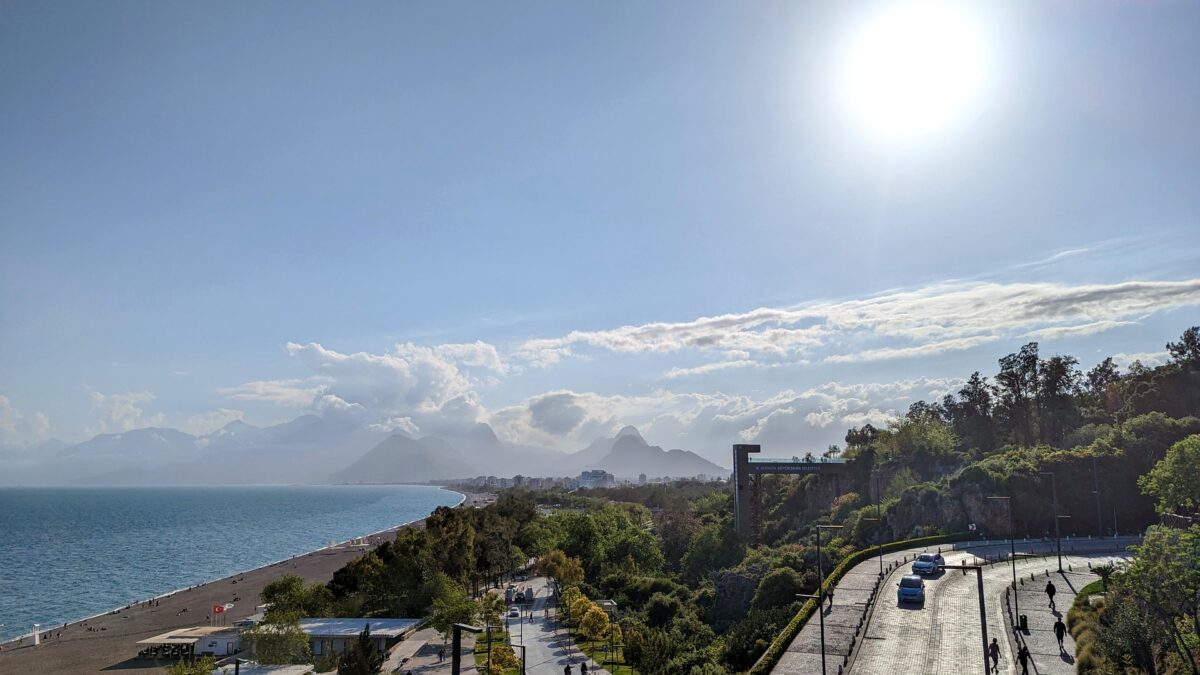
And so the nations have gathered again, this time in Antalya, on the Mediterranean coast of Türkiye, where the Konyaaltı beach curves beneath the Beydağları mountains and the sea is the colour of a postcard. The thirty-first Conference of the Parties, COP31, opened on 9 November and runs until 20 November, under the presidency of Türkiye’s environment minister, Murat Kurum, with Australia’s Chris Bowen steering the formal negotiations. The World Leaders’ Summit convenes on 11 and 12 November. The theme chosen by the presidency is “Towards a Sustainable, Resilient and Equitable Future.” A fine phrase. The question is whether it will be a promise or an epitaph.
The signs from the opening day were not encouraging. The opening ceremony began an hour and a half late, because negotiators had argued deep into the night over whether climate finance would even appear on the formal agenda. Think about that. On the day the WMO announced that the planet is hotter than ever, that the sea is higher than ever, and that the ocean is warmer than ever, the delegates in Antalya spent the night arguing about whether money for the victims would be allowed onto the list of things to discuss.
The agenda, as adopted, covers adaptation, climate finance, a just transition mechanism, the second Global Stocktake, carbon markets and trade. The presidency’s voluntary action agenda pushes for electricity to reach thirty-five per cent of final energy demand by 2035, up from about twenty-three per cent today, and for the growth of global waste to be halved. At COP29, the developed nations agreed to lead efforts to mobilise at least three hundred billion dollars a year for developing countries by 2035, with a broader goal of one point three trillion dollars a year from all sources. The question in Antalya is whether those promises will become pipelines of money, or remain what so many climate promises have become, numbers on paper that never reach the people drowning in the flood.
But there is one fact about this summit that tells you more than any speech will. The phase-out of fossil fuels, the transition away from coal, oil and gas that was agreed in Dubai in 2023, is not a formal negotiating item on the COP31 agenda. The cause of the disease is not on the agenda. The doctors have gathered to treat the fever, and the poison itself is not to be discussed. That is the honest measure of where the politics of climate stands in 2026.
Nor does the world arrive in Antalya united. The United States, the largest historical emitter of greenhouse gases, withdrew from the Paris Agreement, with the withdrawal taking effect on 27 January 2026. The European Union arrives advocating faster implementation while ruling out new financing pledges at this summit. And for the first time, a COP must confront the energy appetite of artificial intelligence and data centres, a new and ravenous consumer of electricity whose growth threatens to swallow the gains of the clean energy transition. The summit’s own agenda admits the question. Whether it can answer it is another matter.
Who Pays, and Who Is Paid
Let me return to Guterres’s sentence, because it is the sentence that will decide whether COP31 matters or not. Those least responsible are suffering first and worst. This is not an abstraction. It is the farmer in the Sahel whose rains no longer come. It is the fisherman in the Pacific whose island is disappearing beneath his feet. It is the family in the floodplains of Pakistan and Bangladesh, the slum dweller of Karachi and Dhaka who cannot afford an air conditioner when the heat reaches fifty degrees, the mother in the Horn of Africa who walks further each year for water that grows scarcer.
The rich world built its wealth by burning coal and oil for two centuries, and the bill for that burning is now being presented to people who never shared in the wealth. That is the central moral fact of the climate crisis, and every negotiation that evades it is a negotiation that has failed before it begins. The three hundred billion dollars a year promised at COP29 is not charity. It is a debt. The one point three trillion dollars sought from all sources is not generosity. It is restitution. And the loss and damage fund, which the vulnerable nations fought so long to create, is not a favour. It is the recognition that someone’s home, someone’s harvest, someone’s coastline has been taken, and that the taker must pay.
There is, to be fair, a glimmer of progress in the report itself. The number of countries reporting multi-hazard early warning systems has risen from fifty-six in 2015 to a hundred and thirty-six in 2025. Early warnings save lives. They do not stop the flood, but they tell people to run before it comes. That is something. It is also, if we are honest, a measure of our retreat. We have become better at warning people about disasters we refused to prevent. We have built a magnificent system for announcing the catastrophe, and a pitiful one for stopping it.
The Verdict of the Thermometer
So what is to be done? I will not offer you a list of ten easy steps, because this crisis will not be solved by lists. I will offer you instead the lesson that history teaches to every generation that faces a danger larger than itself.
In 1857, when the people of the subcontinent rose against the East India Company, they rose because they understood that a power which takes and takes, and gives nothing back, must eventually be confronted, not accommodated. The Company, like the fossil fuel age, promised prosperity and delivered extraction. It dressed its appetite in the language of progress. And it fell, not because its armies were weak, but because its moral account was bankrupt. The empires of extraction always fall the same way. They do not fall when they run out of power. They fall when the people they have used finally see the arrangement for what it is.
The fossil fuel age is an empire of extraction, and the planet is its colony. It has taken the coal from the ground, the oil from the sea, the gas from the rock, and it has left the smoke in the sky for the poor to breathe. It has enriched a few and endangered everyone. And like every empire before it, it will not surrender its privileges willingly. It will ask for more time. It will promise a transition that never quite arrives. It will fund the doubt, and delay the decision, and insist that the medicine is worse than the disease, right up until the moment the disease can no longer be denied.
That moment has arrived. The WMO has told us so, in numbers that no longer admit of argument. The sea is at its highest. The ocean is at its warmest. The ice is at its thinnest. The air is at its most laden. The year is among the hottest ever measured, and the El Niño gathering in the Pacific promises that the next year will test us further still. The final, complete report will come in March 2027, and it will tell us what we already know.
The leaders gathered in Antalya have two weeks. Two weeks to decide whether the promises of Paris will be honoured or abandoned, whether the finance will flow or stall, whether the transition will accelerate or drift. The world leaders arrive on 11 November. The world is watching, and the world is sweating.
But this is not only a story about leaders. It is a story about us, about the reader and the writer, about the choices we make in our homes and our streets and our votes. The thermometer does not negotiate, and it does not wait. It records. It remembers. And one day, when the history of this century is written, it will not ask what we said in Antalya. It will ask what we did after Antalya. The Earth has stopped whispering. It is shouting now. The only question left is whether we are still listening.
Sources & References
- World Meteorological Organization — 2026 set to be one of the 4 hottest years on record (WMO State of the Climate Update 2026, 9 November 2026)
- ReliefWeb / United Nations — State of the climate in 2026 gives new meaning to phrase “off the charts”
- Le Monde — ‘A supersized El Niño is colliding with a planet already superheated’: 2026 will be among hottest years on record
- BBVA — Countdown to COP31 in Antalya: “The Stakes Are Not Abstract”
- MSI International — COP31 Agenda: negotiation items, Action Agenda and the 35 by 35 pledge
- Eurasia Business News — COP31 Opens in Turkey: Clean Energy, Climate Finance and U.S. Withdrawal Shape Antalya Summit
- Wikimedia Commons — View of Konyaaltı Beach and Beydağları Mountains, Antalya (FingerWiki, CC BY-SA 4.0)

About the Author — Abdul Mannan
Related Articles
Abu Dhabi’s Table: Dayton or Munich? The Two Days That Will Decide Ukraine’s Fate
Three delegations sit down in Abu Dhabi on 10–11 November 2026 to talk about ending Europe's bloodiest war…
Thirty-One Summits Later, the Earth Is Still Waiting: What COP31 in Antalya Must Finally Answer
On 9 November 2026, nearly 200 nations gathered in Antalya for COP31 — the thirty-first climate summit in…
The Strait of Fire: Hormuz, Qeshm and the Week the World Held Its Breath
In seven days: two rounds of American strikes on Qeshm Island, a cargo ship disabled in the Gulf…