How Much Does a Country Cost? The $366 Million Question Over America’s Midterms

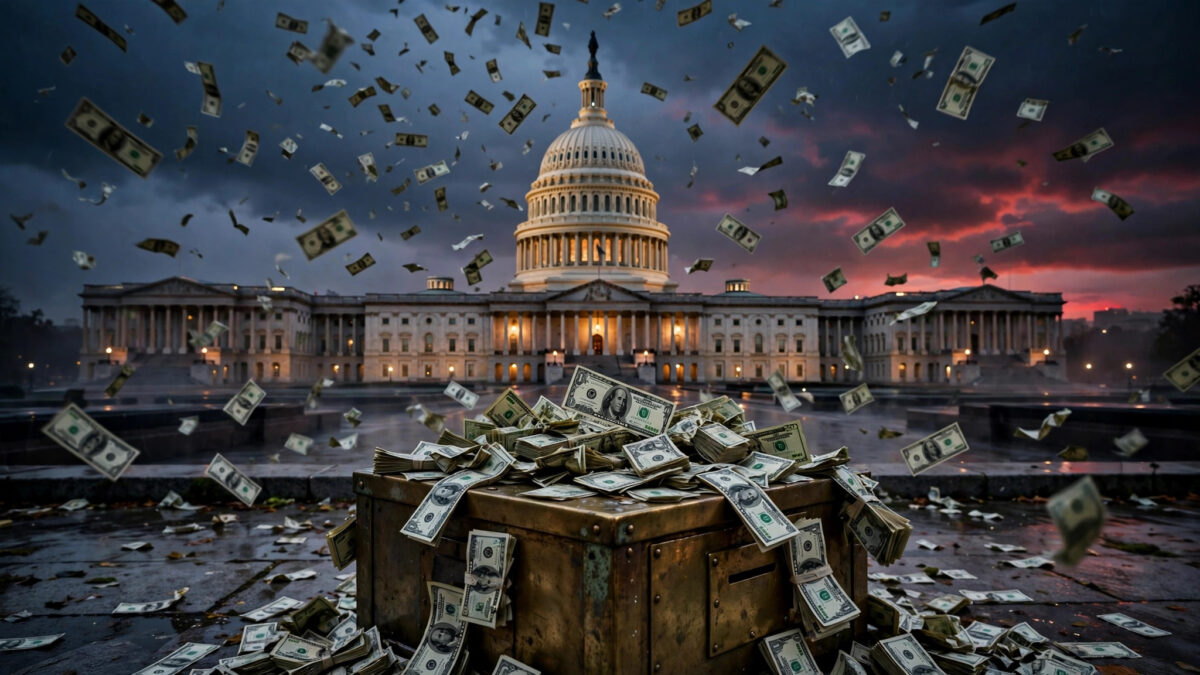
How much does a country cost?
I ask you this question not as a journalist, and not as a moralist, but as a student of history — because history has already priced the answer for us, and the figure now sits on the public record. Three hundred and sixty-six million dollars. That is what Elon Musk, the richest man on earth, has spent so far trying to decide who will govern the United States after the November midterm elections. The number comes from federal campaign filings, confirmed by his own super PAC’s spokesman. It is not rumour. It is arithmetic.
And yet, when I first read it, my mind did not travel to Washington at all. It travelled, uninvited, to Plassey — to a mango grove on the banks of the Bhagirathi river in 1757, where a kingdom was sold at a price history still refuses to forget. Empires, it seems, are always being bought. Only the currency changes.
A Price Tag on the Republic
Let me put the facts before you plainly, so that no one can accuse me of exaggeration. Reuters, reporting on Federal Election Commission disclosures, found that Musk has spent roughly $366 million during the election cycle that began on 1 January 2025, with at least $276 million of it arriving since July. That makes him, according to the campaign-finance records, likely the single largest political donor in the entire midterm season.
The breakdown, confirmed by Andrew Romeo, spokesman for Musk’s own political operation, the America PAC, reads like the budget of a small war ministry: $158 million to the Senate Leadership Fund, the super PAC aligned with Senate Majority Leader John Thune; $20 million to the Congressional Leadership Fund, its House counterpart; $76 million into his own America PAC; $10 million to a Texas PAC backing Attorney General Ken Paxton; and millions more to Republican governors and attorneys general. His America PAC alone spent $76.7 million in the third quarter of this year — $35.8 million of it on field operations, door-knockers fanning out across seven battleground states and nearly three dozen House races, an army of canvassers that rivals the operation he built for Donald Trump’s 2024 campaign.
Read that last sentence again, reader. A single private citizen is running a ground operation that rivals a national campaign’s. And he is doing it in broad daylight.
Mir Jafar and the Rotten Boroughs: We Have Seen This Play Before
Now, I know what some of you will say. This is legal. This is free speech. The Supreme Court’s 2010 decision in Citizens United declared that corporations — and by extension super PACs — may spend unlimited sums on elections, provided they do not coordinate directly with candidates. The defenders of the system call it protected political speech. The critics call it something older, something uglier, something my part of the world learned about at gunpoint.
You see, history is a mirror, and I hold it up because mirrors do not flatter — they accuse.
Two hundred and seventy years ago, the East India Company discovered that the cheapest way to conquer a country was not to fight its armies but to buy its men. At Plassey, the price of treachery was a signed treaty with Mir Jafar, and when the nawab’s throne changed hands, the Company’s men walked out of Bengal’s treasury with plunder so vast that one historian called it the greatest looting in history. The Company did not merely bribe Indian courts, my friends — it bought its own Parliament first. The “nabobs,” men grown fat on Indian wealth, returned to London and purchased parliamentary seats outright in the infamous “rotten boroughs” — constituencies like Old Sarum, a windswept hill with no voters at all, which nevertheless returned two members to the House of Commons. Two MPs, elected by nobody, paid for by fortunes extracted from the poor. That was democracy, circa 1760.
Do you see the symmetry? Then, a trading company bought Parliament with India’s money. Now, the world’s richest man buys a political machine with — well, with what? With money earned from the same republic he is now spending to shape. And just as the nabobs of 1760 saw nothing immoral in buying Old Sarum because the law permitted it, so the defenders of 2026 tell us this is all perfectly legal because the law permits it. The law, reader, has always been the rich man’s most obedient servant.
I do not say this to praise or condemn one party. Both parties drink from this poisoned well. But the scale here breaks every precedent. The Super PAC tracker shows the Senate Leadership Fund alone has raised $526.6 million this cycle; Politico’s reporting notes that Musk, shipping magnate Richard Uihlein ($130 million and counting), and businessman Jeff Yass ($105 million) together account for more than $600 million in donations to Republicans. AdImpact projects that $11.6 billion — eleven point six BILLION dollars — will be spent on these midterms, roughly $400 million more than the entire 2024 presidential election. When an election costs more than the wars of some nations, you are no longer watching politics. You are watching an auction.
The Texas Experiment: Buying a Firewall
But the raw numbers, staggering as they are, do not capture the audacity of the strategy. Let me show you Texas, where the technique was refined to its most naked form.
Ken Paxton, the Republican attorney general of Texas, is locked in a Senate race so close that recent polls have him in a dead heat against Democrat James Talarico. National Republicans had been reluctant to pour money into Texas’s expensive media markets while defending seats across an already expanded map. So Musk simply erased the trade-off. Reporting on the FEC filings shows he gave the Senate Leadership Fund $75 million on 9 September and another $83 million on 23 September — and each time, the SLF transferred the exact same amount, down to the dollar, to a Texas PAC backing Paxton the very next day. The Texas PAC reported no other donors through the end of September. Musk accounted for nearly 60 percent of everything that PAC raised. He did not merely support a candidate; he built a dedicated financial fortress around him, sparing the party from spending a cent of its own.
And what is the stated purpose of this fortress? Andrew Romeo, the America PAC spokesman, told the press that if Democrats win in Washington and in key governor and attorney general races, “America risks becoming a socialist, woke and borderless country.” So the world’s richest man — a man who built his fortune on open borders of talent and capital, on government contracts and subsidies — is spending a third of a billion dollars to warn the voters that their country might become borderless. The irony, reader, is so rich it could fund a super PAC of its own.
The Other Side of the Ledger: Money Has a Limit
Now comes the part of the story that the buyers of elections never like to read: money, it turns out, has a limit. And the limit is the voter’s patience.
Despite the Republican advantage in aired advertising — a lead in seven of the eight top Senate battles and 25 of 42 contested House seats, according to AdImpact data analysed by CNBC — the polls have barely moved. The Washington Post, hardly a partisan pamphlet, concluded that these midterms “may be remembered as the year the wealthy dominated in political spending for congressional and state elections — to questionable results.” Money does not seem to be solving the Republicans’ problems, the paper wrote; voters’ discontent with the economy and their government runs deeper than any ad buy.
Meanwhile the other side has its own numbers. Democrat James Talarico, the man the $158 million firewall was built to stop, raised an astonishing $64 million in a single quarter — a figure that made Republican Senator Bernie Moreno exclaim to Axios: “Oh my god, holy crap. I mean, that’s a number that’s mind-blowing.” House Democrats are holding their own in key races. The blitz has been blunted. George Washington University professor Todd Belt put it to Newsweek with scholarly bluntness: “I don’t see how a bunch of spending right at the end is going to change many people’s minds.”
There is a lesson here that Plassey also taught, though few care to remember it. The Company bought the nawab’s throne, yes — but it could never buy Bengal’s peace. Within fifteen years, the Company’s own servants were so corrupt, the famines so devastating, that the British Parliament had to intervene with the Regulating Act of 1773 and haul Warren Hastings before it for seven years of trial. Bought power is fragile power. It must be fed, constantly, or it devours its owner.
Even Musk’s own record is mixed. He poured hundreds of millions into Trump’s 2024 campaign, then ran the Department of Government Efficiency — and this year, two congressmen he had previously backed, Representatives Carter and Ogles, both lost their primaries. Money, it appears, cannot buy loyalty either; it can only rent it, and the rent keeps rising.
Reader, Whose Election Is This?
Now I speak to you directly, because this is not an American story. This is a human story, and it will be your story sooner than you think.
You are watching, in real time, the world’s loudest democracy conduct its elections like a commodity market. Eleven point six billion dollars. Fourteen of the twenty largest donors backing one side. One man contributing nearly 60 percent of a Senate candidate’s entire war chest. If these numbers were attached to an election in Lagos, in Islamabad, in Dhaka, the same newspapers now reporting them as business news would call them evidence of a broken democracy. They would send election observers. They would write editorials about oligarchy. But when it happens in Washington, it is filed under “campaign finance” and discussed with the sober detachment of a stock report.
Ask yourself: if one man’s chequebook can decide which senators a state gets, what exactly is the ballot for? A decoration? The old rotten boroughs at least had the honesty to be called rotten. We, in our century, call it “speech.” The Supreme Court gave corporations the rights of persons; the super PACs have given billionaires the weight of nations. Somewhere between those two decisions, the ordinary citizen — the teacher, the nurse, the shopkeeper whose $25 donation once mattered — became a footnote in someone else’s balance sheet.
And do not imagine your country is immune. The playbook is exportable. Wherever elections can be bought in daylight, with lawyers and filings instead of bags of cash in dark rooms, someone will buy them. The Mir Jafars of our age do not wear turbans and sign treaties in tents; they wear suits and sign donor agreements in compliance with the law. The treachery is identical. Only the paperwork has improved.
The Moral of the Invoice
So I return to my opening question, and I answer it with the verdict that history forces upon me: a country costs exactly what its citizens will let it cost. Not a dollar more, not a dollar less. The $366 million is not the price of America; it is the price of American indifference — the sum at which a republic’s guardians decided it was cheaper to look away than to defend what they inherited.
There is a verse in the tradition I was raised in: nations do not fall when they are conquered; they fall when they stop believing they are worth defending. The East India Company’s ledgers show, in faded ink, what happens when a people sell their sovereignty wholesale and buy it back in retail instalments of outrage. Bengal never got its treasury back. Old Sarum never got its dignity back. And once the price is set, reader — once the market learns that a democracy can be had for $366 million — the next buyer will not ask permission. He will simply write a bigger cheque.
The midterms will be held on 3 November. The votes will be counted. But long after the winners are sworn in, one question will remain, hanging over every marble corridor in Washington like smoke over a battlefield: was this an election — or was it an acquisition? History, that pitiless auditor, will make its entry in the ledger. And it will not accept payment in instalments.
Sources & References
- Reuters — “Musk has spent $366 million to help Republicans retain control of Congress” (12 Oct 2026)
- Newsbeep / CNBC-Bloomberg data — “2026 midterms money race: Democrats surge as Musk backs Republicans” (17 Oct 2026)
- This Newsroom — “Musk Midterm Spending: $276M Backs Republicans” (16 Oct 2026)
- Super PACs Tracker — 2026 Midterm Super PAC rankings (FEC data)
- Political Wire — Campaign Finance roundup: billionaires’ Q3 giving (Oct 2026)

About the Author — Abdul Mannan
Related Articles
The Two Guns of Bend: When America Armed Both the Killer and the Hero
On October 15, 2026, a 16-year-old shot his way into Silver Rail Elementary in Bend, Oregon, killing three…
They Fired the General Who Counted the Missiles: America’s Empty Quiver in the Iran War
In December 2025, Army Chief of Staff Gen. Randy George warned the Pentagon that America's missile-defense arsenal would…

The Emperor of the Sky: When One Man Holds a Nation’s War in His Hand
When SpaceX throttled Ukraine's Starshield access at 100 mph during Russian missile strikes, one private man's network dimmed…