The Night America Changed Its Mind: What the 2026 Midterms Really Mean

The Tide Turned on a Tuesday Night
Have you ever stood on a shore and watched the tide turn? There is no single moment when you can say, this is it, the sea has changed its mind. The water simply keeps coming, wave upon wave, until the sand you were standing on is gone, and you realise that the ocean has made a decision without asking your permission. On Tuesday, the 3rd of November 2026, the American people did something very much like that. They did not shout. They did not riot. They walked into polling stations in Georgia and Texas and New Mexico and Kansas, and they quietly took the tide with them.
By the time the night was over, the Democrats had won back the House of Representatives and the Senate, the first time one party has swept both chambers in a midterm since 2010. They had done it in districts Donald Trump won by eighteen points only two years ago. They had done it in states that had not elected a Democratic governor in a generation. And they had done it, above all, by electing people whom the American story had never before allowed to hold these offices. I have covered elections for many years, and I have learned one thing: results are numbers, but nights like this are verdicts. A verdict is not a statistic. A verdict is a people telling their rulers what they think of them.
A Verdict Written in Firsts
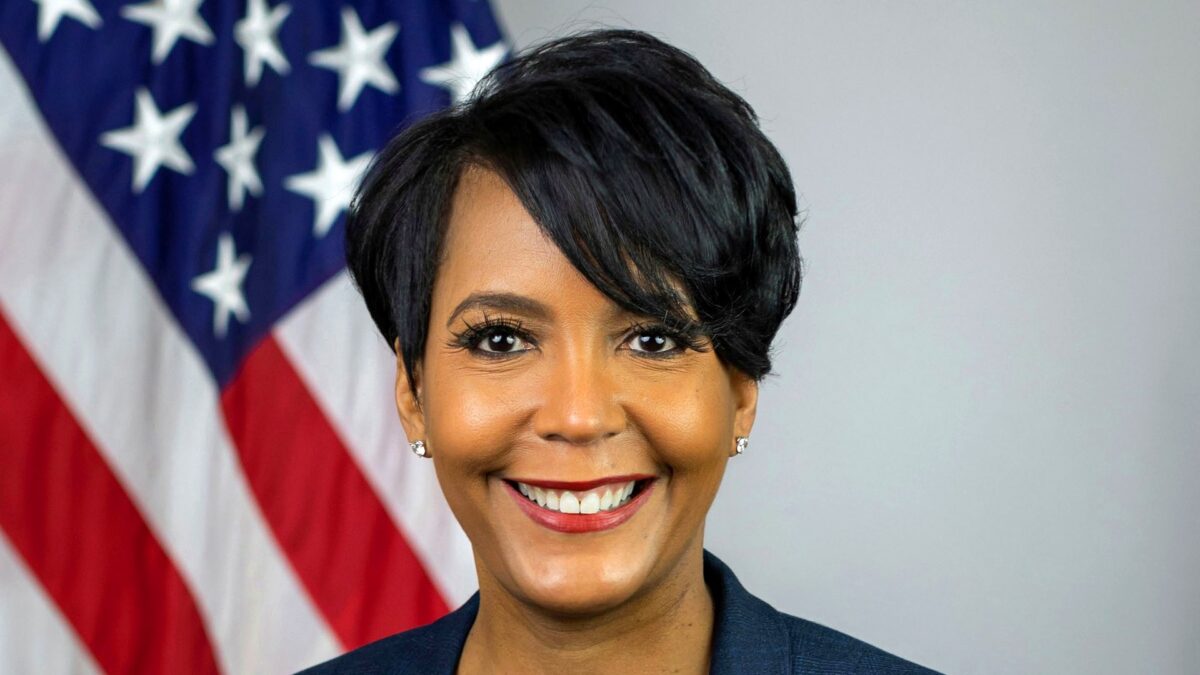
Let me put the facts before you plainly, because the facts themselves carry the drama. In Georgia, Keisha Lance Bottoms, the former mayor of Atlanta, defeated the billionaire Republican Rick Jackson with 54.31 per cent of the vote, 2,268,462 votes to his 1,908,261. She became the first Black woman ever elected governor of an American state, and the first woman ever to govern Georgia. The Associated Press called the race at 9.24 in the evening. It was also the first time in twenty-four years that Georgia had chosen a Democratic governor, the first since Roy Barnes lost in 2002. The same night, the voters of Georgia handed the Democrats their entire executive slate, lieutenant governor, secretary of state, attorney general and all, and re-elected Senator Jon Ossoff with 59 per cent of the vote.
In Texas, Gina Hinojosa, a 52-year-old state representative, defeated Greg Abbott, a governor who had held the office for eleven years, by nearly 53 per cent of the vote. She became the first Latina governor in the history of Texas, and the first Democrat to win the state’s highest office since Ann Richards left it in 1995. In New Mexico, Deb Haaland, a member of the Laguna Pueblo and a former Secretary of the Interior, defeated Gregg Hull and became the first Native American woman ever elected governor in the history of the United States. Standing before her supporters that night, she said, “Tonight, in our nation’s 250th year, I stand before you as the first Native American woman elected governor in U.S. history.” In Michigan, Abdul El-Sayed became the first Muslim ever elected to the United States Senate. In Minnesota, Peggy Flanagan became the first Native American woman ever elected to the Senate. Florida elected Byron Donalds as its first Black governor. Ohio and Minnesota elected their first women governors. These are not footnotes. These are the headlines, and they arrived all on one night.
The scale of it was staggering. The Democrats picked up at least thirty-one seats in the House, crossing the 218-seat threshold for a majority in the early hours of Wednesday morning, and flipped at least seven Senate seats, in Kansas, Iowa, Texas, Ohio, Maine, North Carolina and South Carolina. Kansas had not elected a Democratic senator since 1932. Think about that. Ninety-four years. A state that had voted Republican for a senator for nearly a century looked at its ballot and chose otherwise. Hakeem Jeffries, the Democratic leader in the House, is now expected to become Speaker when the 120th Congress convenes in January 2027. The prediction markets, which had put the chance of a Democratic sweep at roughly 75 per cent on the day of the vote, were proved right. But markets do not make history. Voters do.
History Is the Only Honest Mirror
I have always believed that the present can only be understood by holding it up against the past, and the American midterm election is an old mirror with a very honest reflection. In 1994, the Republicans swept Congress in a wave so large that it ended forty years of Democratic control of the House, and the country learned the name of Newt Gingrich. In 2010, the Tea Party wave took sixty-three House seats from the Democrats and taught Barack Obama the limits of his mandate. In 2018, the Democrats answered with their own wave, and Nancy Pelosi returned as Speaker. Every one of these waves had the same shape. A president overreaches. The people wait. And then, at the first lawful opportunity, they answer.
What happened on the 3rd of November belongs in that company, but it is larger than any of them in one respect: it was not only a change of party, it was a change of faces. The American republic is two hundred and fifty years old this year, and in all those two and a half centuries, no Black woman had ever governed a state. No Native American woman had ever governed a state. No Muslim had ever sat in the Senate. These barriers did not fall because someone gave a fine speech about them. They fell because voters in Georgia and Texas and New Mexico and Michigan decided, in the privacy of the voting booth, that the old rules no longer applied. That is how history actually moves. Not by proclamation, but by millions of small private decisions made on the same day.
And Georgia, of all places, is where the mirror shines brightest. This is the state of the civil rights movement, of Martin Luther King Jr. preaching in Atlanta, of John Lewis marching across the Edmund Pettus Bridge in Selma and carrying the scars of that day for the rest of his life. This is the state where Stacey Abrams, in 2018, became the first Black woman ever nominated by a major party for governor, and lost by a single percentage point. She ran again in 2022 and lost again. Lesser movements would have called that a defeat and moved on. But history does not work in straight lines. Eight years after Abrams came within a point of the office, Keisha Lance Bottoms won it by nearly nine. The arc of the moral universe, as King himself said, is long, but it bends toward justice. On the 3rd of November, in Georgia, you could watch it bend.
Texas and the Wall That Fell Quietly
If Georgia is the story of a long arc, Texas is the story of a wall that everyone assumed would stand forever. No Democrat had governed Texas since Ann Richards, the sharp-tongued governor of the early 1990s, left office in 1995. Greg Abbott had held the governor’s mansion for eleven years and seemed immovable. The state had voted Republican in every presidential election since 1980. Political professionals spoke of Texas as a Republican fortress, and they said it with the confidence of men describing the weather.
And then a state representative named Gina Hinojosa, running on affordability and healthcare and the simple argument that ordinary Texans were being squeezed, beat him. She did not win by a whisker. She won with nearly 53 per cent of the vote. The first Latina governor of Texas, in a state where nearly four in ten people are Hispanic, is not a curiosity. It is a correction. For decades, the politics of Texas looked nothing like the people of Texas. On the 3rd of November, the picture and the people finally matched.
There is a lesson here that reaches far beyond Texas. Every fortress in politics is a fortress until the morning it is not. The Berlin Wall looked permanent on the 8th of November 1989. The Soviet Union looked permanent in the summer of 1991. The Republican hold on Texas looked permanent on the morning of the 3rd of November 2026. History has a habit of humbling the people who mistake a long run of luck for a law of nature.
Why the Voters Turned
You will ask me why it happened, and I will answer you honestly: the voters told us why, in every poll taken before the election. Two reasons dominated everything else. The first was the cost of living. On the day of the election, the national average price of diesel stood at 6.29 dollars a gallon, and families across America were paying prices for food and housing that their wages could not match. The second was the war in Iran. A Pew Research Center survey in October found that 65 per cent of Americans disapproved of President Trump’s handling of that war, while only 33 per cent approved. Voters punished the governing party for inflation and for a foreign war, exactly as voters have done in every midterm in living memory. There is nothing mysterious about it. When people cannot afford their lives, they change their rulers. When they believe their sons may be sent to die in a distant desert, they change their rulers faster.
The Democrats understood this. They ran, above all, on affordability: on Medicaid expansion, on housing, on free community college, on the price of groceries and medicine. Keisha Lance Bottoms made her campaign about Medicaid expansion and a trust fund for housing and rent. Gina Hinojosa made hers about healthcare and the cost of living. They did not run as revolutionaries. They ran as repairers. And in a country tired of noise, repair turned out to be the most radical promise on the ballot.
I want to be fair here, because fairness is the duty of anyone who writes about politics. Donald Trump remains a formidable figure, and his supporters did not vanish on the 3rd of November. The Republican Party still holds great power in the states, and it will contest every inch of the next two years. But fairness also demands that we say what the night plainly said: a president who won re-election in 2024 by promising to bring prices down and to end foreign wars was judged, two years later, to have done neither, and the judgement was delivered in the only language a democracy fully understands.
What Happens Now
The practical consequences begin in January, when the 120th Congress convenes. With the House in Democratic hands, Hakeem Jeffries will hold the Speaker’s gavel, and the committees of the House, with their power to issue subpoenas and to investigate, will pass to the Democrats. The Senate, with its new Democratic majority, will shape every confirmation and every treaty. The Democrats, however, will fall short of the sixty votes needed to overcome a filibuster, which means that the next two years will be years of divided government: a Democratic Congress and a Republican president, each able to stop the other, neither able to govern alone.
That is not a recipe for harmony. It is a recipe for gridlock, for investigations, for vetoes, and for a long public argument about who is to blame for the stalemate. The two parties will spend 2027 blaming each other for it, and the voters will spend 2028 judging them both. This is the American system working as designed, which is to say, working slowly, loudly, and with constant friction. The Founders built a machine that makes it hard for any one man to rule alone, and on the 3rd of November, the voters used that machine exactly as intended.
There is also the question of 2028. A midterm wave is never only about the midterm. It is a weather report for the presidential election two years away. The Democrats will now spend two years trying to prove that the wave of 2026 was a beginning and not an accident, and the Republicans will spend two years trying to prove that it was an accident and not a beginning. Both sides will be right about half the time. The truth, as always, belongs to the voters, who have not yet decided.
The Deeper Meaning of That Night
But I did not write this column to give you numbers. You can find numbers anywhere. I wrote it because something deeper happened on the 3rd of November, and I believe it deserves to be named plainly. In the 250th year of the American republic, the voters of the oldest democracy on earth chose leaders who look like the whole of America, not only a part of it. A Black woman will govern Georgia. A Latina will govern Texas. A Native American woman will govern New Mexico, the state whose land her ancestors walked long before there was a United States. A Muslim will sit in the Senate. These are not gifts handed down by a generous elite. They are offices won, in open elections, by candidates who persuaded their neighbours.
Consider what that means. The American experiment was founded on a promise, written in 1776, that all men are created equal, a promise that was false on the day it was written, because the men who wrote it owned slaves. For two and a half centuries, the country has been arguing with its own founding document, trying to make the promise true. Some generations advanced it. Some generations betrayed it. On the 3rd of November 2026, a generation of voters in Georgia and Texas and New Mexico advanced it again, not with a protest and not with a slogan, but with a ballot.
And here is the part that should give hope to every reader, wherever you live. Democracies do not die in a single night, and they are not saved in a single night either. They are saved the way they were saved on the 3rd of November: by ordinary people doing an ordinary thing, walking to a polling station, marking a paper, and going home. No drama. No blood. No revolution. Only the quiet, stubborn belief that your vote matters. That is the whole miracle of democracy, and it is a miracle that repeats itself every time a people refuses to surrender it.
So I ask you, as I ask myself: when the tide turns in your own country, in your own city, in your own life, will you be standing on the shore watching it, or will you be part of the water? The voters of America answered that question on a Tuesday night in November. The rest of us would do well to remember their answer.
Sources & References
- USA Today — Georgia’s Keisha Lance Bottoms becomes first Black woman governor
- USA Today — Midterm elections results: Democrats win control of House and Senate
- Statista — Democrats win majority in House and Senate, 2026 midterms
- Augusta Chronicle — Georgia’s political map shifts as Democrats dominate midterms
- The Daily Jagran — US Midterms 2026: first Muslim senator, first Black woman governor among seven who made history
- New Mexico Senate Democrats — Senate Democrats congratulate Governor-elect Deb Haaland on historic victory
- Fox News — Fox News Voter Poll: 2026 midterm elections usher in a blue wave
- WHRO — Georgia elects the nation’s first Black female governor

About the Author — Abdul Mannan
Related Articles

The Earth Has Stopped Whispering: 2026 and the Warning We Can No Longer Ignore
The WMO's new report lands on COP31's opening day: 2026 will be one of the four warmest years…

Abu Dhabi’s Table: Dayton or Munich? The Two Days That Will Decide Ukraine’s Fate
Three delegations sit down in Abu Dhabi on 10–11 November 2026 to talk about ending Europe's bloodiest war…

Thirty-One Summits Later, the Earth Is Still Waiting: What COP31 in Antalya Must Finally Answer
On 9 November 2026, nearly 200 nations gathered in Antalya for COP31 — the thirty-first climate summit in…