OpenAI to Test Visual Ads in ChatGPT’s Image Generation Later This Month

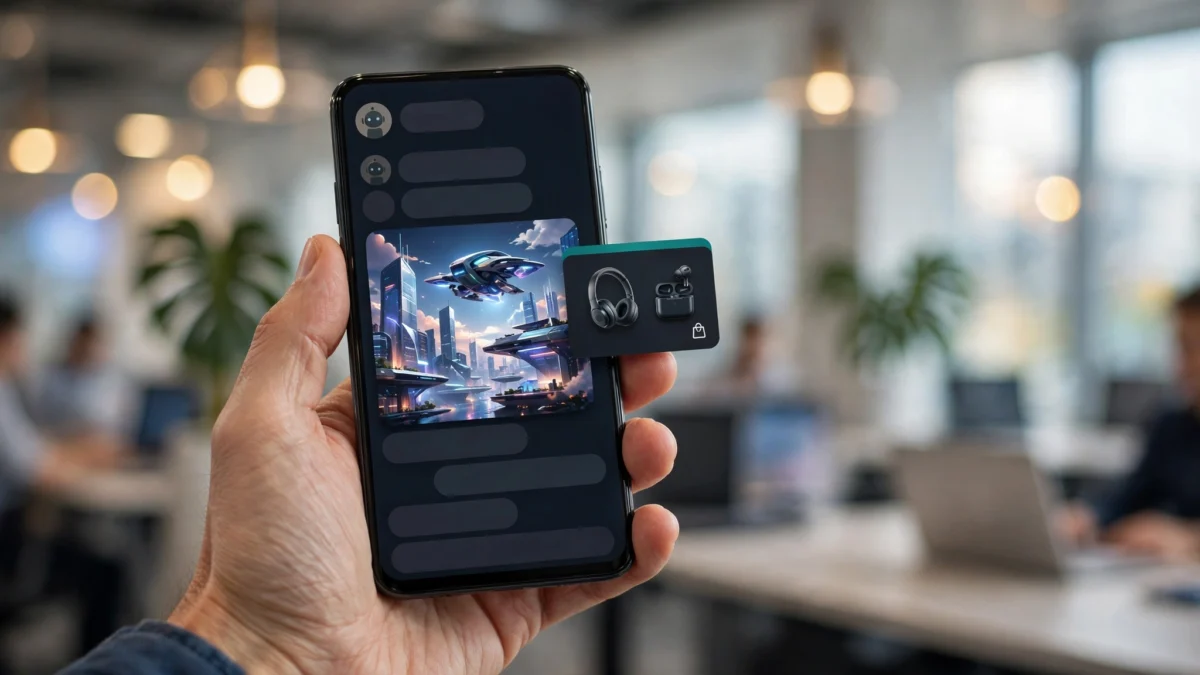
OpenAI will start testing visual display ads inside ChatGPT later this month, placing commercial imagery alongside the pictures the chatbot generates — the company’s most ambitious push yet to turn its 1.2-billion-user assistant into an advertising platform, according to TechCrunch.
The company announced the new format on Monday, October 5. The ads will begin appearing later in October in the United States only, with an initial group of advertisers. OpenAI says the placements will be clearly labelled and kept separate from the images users create, and that advertising will not influence the answers ChatGPT provides.
Unlike the text-based ad blocks OpenAI introduced earlier, the new format uses full images, allowing advertisers to show products in use, demonstrate how they are used, or depict the experiences associated with a service. Someone generating a picture of a redesigned living room, for example, could see a relevant furniture ad while the image renders — the ad appearing as a clearly marked commercial placement rather than part of the generated artwork.
The move extends an advertising strategy OpenAI launched earlier this year to support its free and low-cost subscription tiers, which was expanded to India in August. Advertising is aimed squarely at the users who do not pay: free-tier users will see the visual ads, while Plus, Pro and Enterprise subscribers will not, according to reports.
Alongside the new format, OpenAI is expanding the machinery that sells advertisers on ChatGPT. The company has added click-attribution integrations with firms including AppsFlyer, Adjust, Branch and Kochava, plus measurement partners such as Fospha, Measured and INCRMNTAL, according to TechCrunch. It is also working with Haus, Measured and WorkMagic on geo-based experiments to measure whether the ads generate additional business, and running brand-suitability pilots with DoubleVerify and Integral Ad Science that do not give those firms access to users’ private conversations.
OpenAI is already circulating early results. According to Technobezz, measurement partner DV Rockerbox says WeightWatchers’ acquisition cost through ChatGPT Ads came in 15.3 per cent below its combined paid-search benchmark, while Triple Whale says 93 per cent of visitors reaching Portland Leather through ChatGPT Ads were new customers. Those figures are company claims rather than independently verified audits, but they show how OpenAI intends to pitch the channel: not as interruption, but as discovery from users whose intent is already warm.
The timing is pointed. The announcement lands at the start of Advertising Week New York, where OpenAI executives are courting marketers directly, and it follows the launch of Meta’s Muse, a free agentic AI app positioned as a rival to ChatGPT. With capable free competitors giving assistants away, OpenAI needs its own free tier to pay for itself — and tech press gagadget reports its ad revenue already reached $1 billion in August 2026, with a stated target of $100 billion by 2030.
There is an obvious tension in the design. TechCrunch notes that inserting commercial content into the creative moment — the seconds when a user is imagining something with the chatbot — risks making the experience feel cluttered or less trustworthy. OpenAI’s counter is architectural: keep the ad physically separate and labelled, and keep it out of the answers. That boundary is easy to promise at launch and harder to hold once revenue targets and advertiser pressure build.
Analysis: Why It Matters
This is a trust experiment as much as a revenue move. ChatGPT is not a search results page; users treat it as a thinking partner. Placing ads beside the pictures it generates pushes commercial content into a space that feels collaborative and personal. If users begin to suspect — fairly or not — that an answer or an image was shaped by who paid, the product’s core asset, trust, erodes in a way no attribution dashboard can measure.
The economics are hard to argue with. At 1.2 billion weekly users, the free tier is the most valuable unsold inventory in AI — and it is also the tier that costs OpenAI the most to serve. Visual ads do two jobs at once: they monetise the non-paying majority, and they quietly nudge annoyed users toward paid plans simply to get a cleaner interface. OpenAI is unlikely to mind either outcome.
Advertisers’ early appetite is the more interesting signal. Image generation reveals intent without a search query: a user mocking up a bedroom is a furniture lead; one planning a trip is a travel lead. If the Rockerbox and Triple Whale numbers hold even approximately, ChatGPT is selling advertisers something Google cannot — purchase intent expressed to a conversational agent that users address by name. Watch whether brand-safety incidents, user-backlash data and any regulatory interest in the answer-ad separation arrive before the global rollout does.
Sources
- TechCrunch — “OpenAI launches visual ads that appear alongside image generation results” — https://techcrunch.com/2026/10/05/openai-launches-visual-ads-that-appear-alongside-image-generation-results/
- Technobezz — “OpenAI to Test Visual Ads in ChatGPT Image Generation” — https://www.technobezz.com/news/openai-visual-ads-chatgpt-image-generation-tests
- Android Headlines — “ChatGPT Gets Visual Ads During AI Image Generation” — https://www.androidheadlines.com/2026/10/chatgpt-visual-ads-image-generation.html

About the Author — Abdul Mannan
Related Articles
OpenAI Unveils Invisible Text Watermark for ChatGPT in the EU
OpenAI has unveiled "textGrain", an invisible watermark that will be embedded in eligible ChatGPT and Codex text outputs…

Anthropic Commits $100 Million to Train 10,000 Engineers in Claude Frontier Academy
Anthropic has launched Claude Frontier Academy with a $100 million commitment to train 10,000 "frontier deployed engineers" by…
Trump Names Leadership for ‘Super Intelligence Force’ AI Task Force
President Donald Trump has named Director of National Intelligence Jay Clayton to lead the new 'Super Intelligence Force',…