Separatist Parti Québécois Wins Quebec Election, Returns to Power With Minority Government

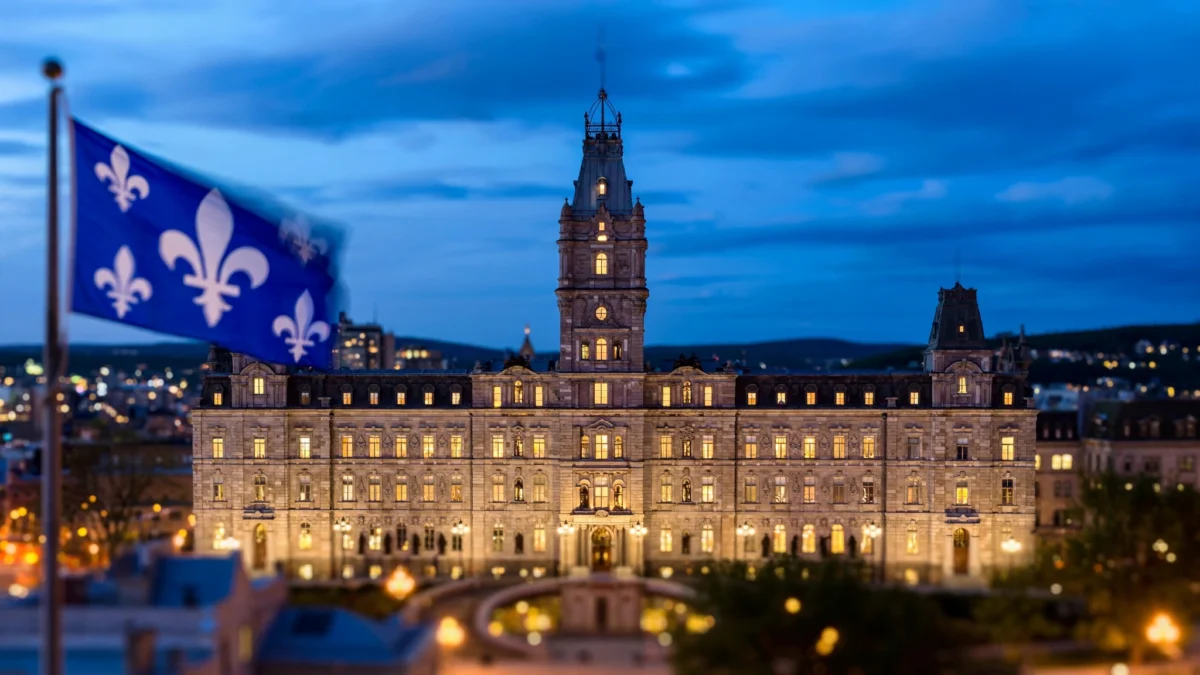
The separatist Parti Québécois has won Quebec’s provincial election, ending eight years of rule by the Coalition Avenir Québec and putting a party that promises an independence referendum back in power for the first time in more than a decade, according to Radio-Canada and Reuters.
With all results reporting at 02:30 EDT, the Parti Québécois captured 59 of the 127 seats in the National Assembly — five short of the 64 needed for a majority — and will form a minority government under its 49-year-old leader, Paul St-Pierre Plamondon, who is set to become Quebec’s next premier. Turnout stood at 66.89 percent.
The governing Coalition Avenir Québec, led by Christine Fréchette, suffered a historic collapse: despite winning about 13.35 percent of the popular vote, it did not win a single seat, after taking 90 seats and a sweeping majority in 2022. The Liberals, led by Charles Milliard, took 40 seats on roughly 24 percent of the vote; the Conservative Party of Quebec under Éric Duhaime won 19 seats; and Québec solidaire, led by Ruba Ghazal, took nine seats, according to the final tally.
Remarkably, the Parti Québécois won the election with only about 28 percent of the popular vote — a product of Quebec’s first-past-the-post system, which converted a modest plurality into nearly half the legislature’s seats.
During the campaign, St-Pierre Plamondon promised to hold a third referendum on Quebec’s independence during his first mandate — but he has ruled out calling one while Donald Trump is president of the United States, arguing the political and economic uncertainty would hijack the debate. In practice, that means no referendum before January 2029, when Trump’s term ends.
Quebec has voted twice on independence before: federalists won comfortably in 1980, and the 1995 referendum failed by the narrowest of margins, with just 50.58 percent voting to remain in Canada. There has been no referendum in the three decades since, and the Parti Québécois has not governed since its 2012–2014 term. As recently as 2022, the party won just three seats.
Analysis: Why It Matters
The headline — a separatist party back in power in Quebec — looks dramatic, but the deeper story is subtler and arguably more consequential.
First, this is not a province that voted to leave Canada. Polling throughout the year put support for sovereignty at around 30 to 35 percent, low by historical standards. As McGill political scientist Daniel Béland told The Associated Press, the result reflects Quebec’s fractured multiparty landscape — vote-splitting handed the Parti Québécois a seat count far beyond its popular support, rather than a surge of secessionist feeling. Polling chief Jean-Marc Léger put it bluntly: “Voters want this government, but without the referendum.” The 39-day campaign was dominated not by constitutional destiny but by cost-of-living pressures, hospital wait times, homelessness and crumbling infrastructure.
Second, the referendum promise is deliberately parked in the future, and that timing is the real political story. By ruling out a vote while Trump is in office — “extremely unpopular” and “very toxic” in Quebec, as Béland notes — St-Pierre Plamondon has bought himself time and insulated the project from being wrecked by American turbulence. But it also means years of managed ambiguity: Ottawa, investors and opposition parties must now calibrate every move against a referendum that is pledged but not dated.
Third, the result redraws the national-unity map for Prime Minister Mark Carney. His federal Liberals enjoy broad national support, and many Canadians credit him with standing up to Trump — but a separatist government in Quebec, arriving barely two weeks before Alberta holds a non-binding independence-related vote, makes national unity a live, grinding issue rather than a settled one. As Béland observed, even the Trump administration will read the Quebec result as a signal that Canada’s unity remains contested despite Carney’s popularity.
What to watch next: whether St-Pierre Plamondon can hold his minority together — five seats short of a majority, he will need opposition support to survive confidence votes; whether Ottawa opens early negotiations or keeps its distance; and how Alberta’s vote this month interacts with the Quebec result to shape the federal-provincial conversation. The referendum question is not if the Parti Québécois wants one — it is how, and when, the “informed and calm debate” St-Pierre Plamondon promises actually begins.
Sources
Reuters — Separatist party wins Quebec election, says Radio-Canada (via Devdiscourse)
AFP — Separatists win Quebec election in test for Canada PM
2026 Quebec general election — final seat tally and results

About the Author — Abdul Mannan
Related Articles

South Korea’s President Says AI Appears to Have Been Used in Bank Hacks as Police Launch Full-Scale Probe
President Lee Jae Myung says AI models are believed to have been used in recent hacking attacks on…
Fifteen-Year-Old Injured by Police Grenade as France’s School Protests Enter Third Week
A 15-year-old student was seriously injured in Lens on Monday as France's school protests over underfunding and teacher…
Sánchez Calls Snap Spanish Election for 29 November After Housing Defeat in Parliament
Pedro Sánchez has called a snap general election for 29 November after parliament rejected his housing decrees, gambling…