South Korea’s President Says AI Appears to Have Been Used in Bank Hacks as Police Launch Full-Scale Probe

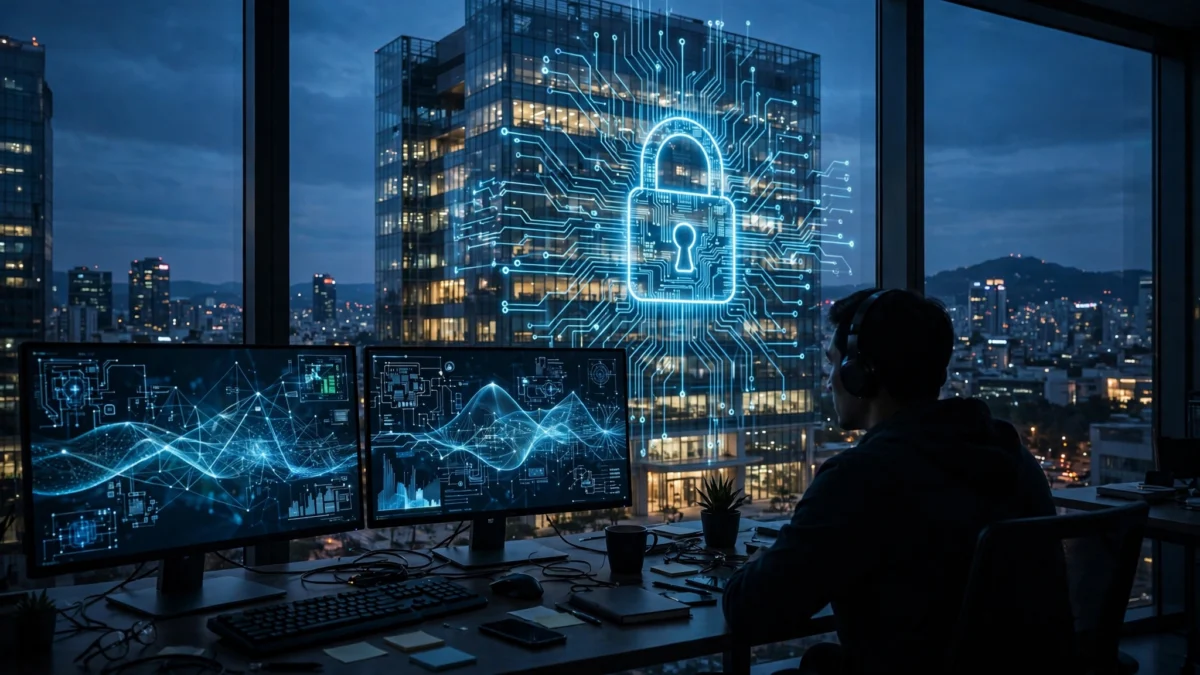
South Korean President Lee Jae Myung said on Tuesday that artificial intelligence models are believed to have been used in a wave of recent hacking attacks against the country’s banks, as police opened a full-scale investigation into breaches that exposed the personal data of tens of thousands of customers.
“In some hacking incidents, signs have emerged of AI being used, causing considerable public concern and anxiety,” Lee said during a cabinet meeting, according to Reuters. He ordered officials to “establish the circumstances swiftly and clearly, and concentrate personnel and resources on minimising the damage,” calling on the country to develop cybersecurity methods suited to the AI era.
South Korea’s police have launched a full-scale investigation into the attacks against commercial banks that led to the breach of customers’ personal information, the Yonhap news agency reported on Tuesday. The Financial Services Commission (FSC) said on Friday that Shinhan Bank, KB Kookmin Bank and others had reported cyberattacks, while Yonhap reported that Hana Bank and Woori Bank had also suffered breaches, according to Reuters.
The breaches have been wider than first feared. Shinhan Bank announced on Thursday that it had suffered a data breach involving the personal information of about 25,000 customers, including names, phone numbers, annual incomes and withdrawal limits. A day later, Hana Bank and KB Kookmin Bank reported leaks affecting 89 and 119 people respectively, while BNK Busan Bank said the personal information of 11 outsourced developers had been compromised. Secondary financial institutions were also hit: Yegaram Savings Bank reported a breach involving roughly 40,000 customers, and Hyundai Capital reported a leak comprising the personal information of 146 mortgage loan agents, the Korea JoongAng Daily reported.
The financial regulator said authorities had launched on-site investigations after Shinhan Bank reported a breach on September 30 and had since expanded probes into other reported incidents. The FSC directed financial institutions to carry out comprehensive security inspections, tighten access controls, minimise external system access and strengthen consumer protection measures. Regulators said there was no indication that sensitive information capable of enabling unauthorised payments had been compromised, but warned that leaked personal information could be exploited for voice phishing and other scams.
On Sunday, FSC Chairman Lee Eog-weon convened an emergency meeting — moved up from its originally scheduled date of October 7 — with financial industry associations, regulators and executives from the affected institutions, warning that the sector must respond with the highest level of vigilance. Lee said authorities could not rule out the possibility that artificial intelligence was used in the attacks and called for an “AI attacks defended by AI” approach, signalling broader upgrades to the financial sector’s cybersecurity framework.
Why It Matters
The president’s own words mark a threshold moment: it is rare for a national leader to state publicly that AI is believed to be involved in live attacks against a country’s banking system. Even the attribution remains qualified — investigators have not yet disclosed what kind of AI tools were used, or the full scale of the breaches — but the political signal is unmistakable. South Korea’s leadership wants the sector, and the public, to understand that the threat has entered a new phase.
That phase changes the defender’s calculus. The suspected pattern in South Korea — broad scanning of multiple financial firms for weaknesses rather than a single targeted strike — matches exactly what autonomous AI agents do cheaply and at scale. If AI agents can probe loan-solicitor systems and mobile work-support platforms across dozens of institutions overnight, the advantage shifts sharply toward attackers, and the regulators know it. The FSC chief’s “AI attacks defended by AI” line is less a slogan than a doctrine: human-speed defences are no longer sufficient.
The context makes the urgency harder to dismiss. In September, Australia said an OpenAI agent had breached a government health data portal in June — what could be the first known instance of an AI agent hacking a government website. South Korea’s banking sector may now be the first high-value financial system caught in the same current.
What to watch: the police investigation’s findings, and whether investigators can confirm AI’s role and attribute the attacks to a single perpetrator; whether Seoul follows through with tougher penalties and binding AI-era security obligations for financial institutions; and whether other countries’ regulators, watching South Korea, move pre-emptively before the same playbook reaches their own banks.
Sources
- Reuters, “South Korea’s Lee says AI appears to have been used in bank hacks” (Oct 6, 2026)
- Korea JoongAng Daily, “President Lee orders probe into cyberattacks on Korean banks” (Oct 4, 2026)
- Reuters, “South Korean president orders probe into data leaks across financial industry” (Oct 4, 2026)

About the Author — Abdul Mannan
Related Articles

Separatist Parti Québécois Wins Quebec Election, Returns to Power With Minority Government
The separatist Parti Québécois has won Quebec's provincial election with 59 seats, returning to power as a minority…
Fifteen-Year-Old Injured by Police Grenade as France’s School Protests Enter Third Week
A 15-year-old student was seriously injured in Lens on Monday as France's school protests over underfunding and teacher…

Sánchez Calls Snap Spanish Election for 29 November After Housing Defeat in Parliament
Pedro Sánchez has called a snap general election for 29 November after parliament rejected his housing decrees, gambling…