The Last Phone Call: What Prince Harry’s Regret Teaches Us About Grief, Guilt, and the Words We Never Said

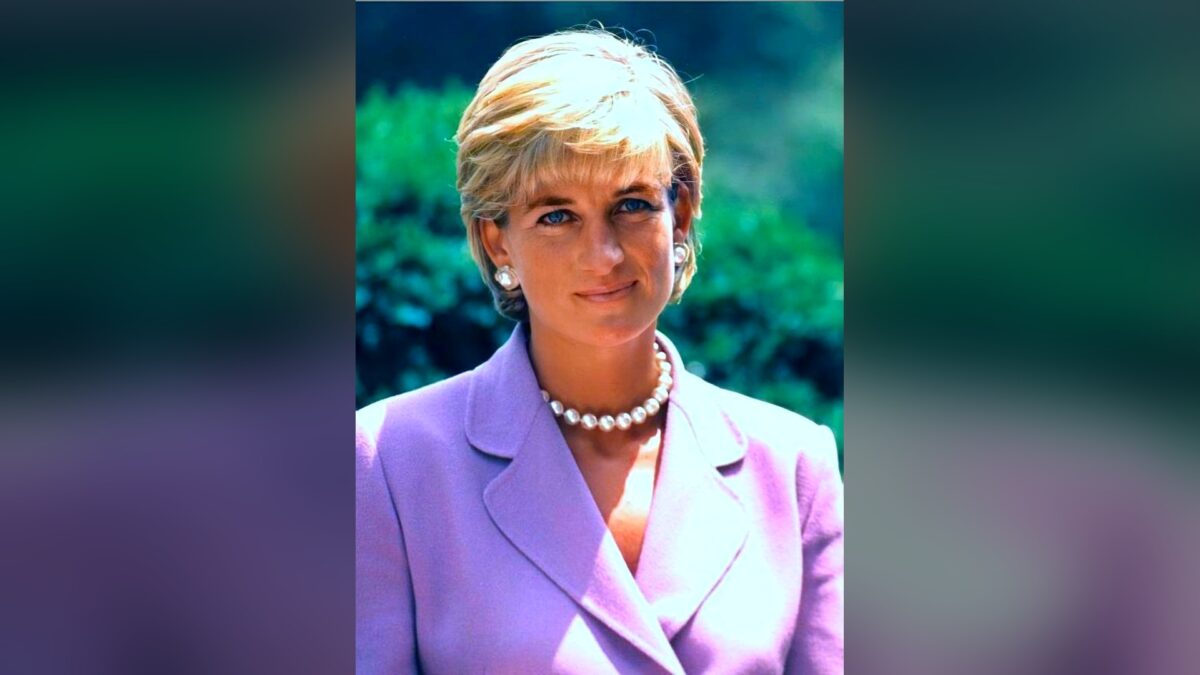
There is a question I want to ask you, reader — and I do not want your answer to come quickly. Sit with it the way one sits with a photograph of someone who is gone: hold it up to the light, turn it, let it hurt a little before you speak.
If you knew — if you knew with the certainty of stone — that the next time you say “hello” into a telephone would be the last word that person ever heard from you… what would you say?
Do not answer yet. Because on Tuesday, 20 October 2026, a 42-year-old prince sat down in the GQ offices at One World Trade Center in New York, and a journalist named Zach Baron asked him to open the oldest wound in his life — and the man who has worn uniforms, medals, and the weight of a thousand years of monarchy answered not as a prince, but as a twelve-year-old boy who once cut a phone call short because he wanted to go back outside and play.
The Call That Would Not End — and Then Did
Let us be precise, because facts are the soil in which thought grows. On the night of 30 August 1997, Diana, Princess of Wales — then 36 years old — telephoned her two sons from Paris. They were at Balmoral, the Queen’s Scottish retreat, running in the grass with their cousins. The call, by all accounts, was short. Harry, twelve, and William, fifteen, were impatient with it. There was playing to be done. They hung up.
Hours later, in the Pont de l’Alma tunnel in Paris, a Mercedes crashed into the thirteenth pillar, and Diana was gone. That phone call — the short one, the impatient one — was the last time Harry ever heard his mother’s voice.
“I had a mom taken away from me too soon,” Harry told GQ. “I have spoken openly about one of my biggest regrets — that last phone call I had with her. If I’d known it was the last call with her, how different that conversation would’ve been.” And then the sentence that has travelled around the world in the last forty-eight hours, quoted in a hundred headlines, felt in a million chests: “And I’m the one that has to live with that.”
“And the fact that as a twelve-year-old kid,” he went on, “all I wanted to do was go off and run and play with my cousins.”
The Mirror of History
This column has a rule I have kept for years: never look at the present without holding it up to the mirror of history, because history is the only honest critic of our feelings. And history tells me something about last words that I want you to hear.
History remembers the last words of kings as carefully as crowns. The words attributed to Tipu Sultan of Mysore, as Seringapatam fell in 1799 — that he would rather die like a soldier than live like a dependent — live on in memory whether or not they were spoken exactly so. Civilisations have always believed that the last thing a man says is the truest verdict on the life he lived.
And then there is the other history — the history of those who never got to say the last thing. Queen Victoria, after Albert died in 1861, wore black for the remaining forty years of her life, ordered his dressing room kept exactly as it was, and had his clothes laid out every morning. An empire was told to grieve forever, and so it did. But tell me, reader: was Victoria mourning Albert, or was she mourning the things she never got to say to him?
That is the question Diana’s death forced upon an entire generation. I remember 1997 — and you remember it too, wherever you were. On the morning of 31 August the world woke to a radio announcement, and by 6 September, when her funeral was held at Westminster Abbey, an estimated two and a half billion people — nearly half the planet — watched a coffin move through London while Elton John sang a rewritten “Candle in the Wind.” Outside Kensington Palace the flowers piled five feet deep, and the bottom layer had already begun to compost. Why did millions weep for a woman they had never met? Because she had walked the minefields of Angola holding the hands of the forgotten, because she had shaken the hand of an AIDS patient when the world was still afraid to touch. But also — and this is the part the historians miss — because every single one of them had their own unfinished phone call. Diana was the mirror in which the whole world saw its own unspoken goodbyes.
The Boy on the Stairs
Picture the scene the documentaries have given us. It is 1997, and two boys walk behind their mother’s coffin through streets lined with silent crowds. The elder is fifteen; the younger, twelve. The cameras record every step, and the world calls it courage. What the cameras do not record is the guilt that follows a boy for thirty years — the quiet arithmetic of the mind: if only I had stayed on the phone a minute longer.
Harry told GQ that before he became a father, that guilt “was a bit of guilt and stuff that just really stuck with me. It was heavy.” Only when his son Archie was born — only when he began lifting a small boy from his mother’s arms and feeling, through his own chest, everything his child carried — did he begin to understand the boy he had been. “As a parent,” he said, “we’ve just got to be so conscious about what we carry, that they can pick up.”
There is something in this that belongs to no royal family and no news cycle. Every parent reading this knows the exact temperature of that sentence. Your child feels your stress before you have named it. Your child carries your unspoken storms in her own small weather. The twelve-year-old who ran back to his cousins did not know he was teaching himself, three decades later, how to be a father.
The Fatigue of the Crowd
And now — here is the part I have been waiting to say to you, reader, because it is the part nobody else is saying.
The moment Harry’s interview appeared, the world split in two. On one side, millions who shared the clip, the quote, the pain. On the other, a louder army: Get over it. It’s been nearly thirty years. Stop cashing in on your mother’s death. Go to therapy privately. I have read these comments. The contempt is real, and it is worth examining honestly, because contempt — like love — is never really about the person it is aimed at.
Ask yourself why a prince’s grief makes so many people angry. Harry gave you the answer himself, in the same interview. “I certainly don’t want any sympathy,” he said. And when Baron pressed him — why? — he answered: “Because I’m a prince.”
Read that sentence twice. It is the most honest sentence any royal has spoken in a generation.
“Because I’m a prince” is the admission that privilege is a wall, and grief — the most democratic of all human experiences — cannot pass through it in the public’s imagination. The logic runs: you have castles, so you may not have wounds; you have a title, so your tears are content. We have invented a mathematics of suffering in which a man’s wealth is subtracted from his pain, and whatever is left over we refuse to acknowledge.
But grief does not check your bank balance before it arrives. Ask the widow in a palace and the widow in a slum whether their nights feel different — the pillows are softer in one, that is all. The darkness is the same darkness. When we tell Harry to stop speaking because he is rich, we are not giving him advice. We are giving ourselves permission to ignore pain we cannot monetise. We are saying: your suffering does not qualify for my empathy. And that, reader, is a small cruelty we practise far beyond this one man.
“This Grief Can Either Hold You Back or Help You Grow”
There is a second half to this story, and it is the half that makes this week genuinely important rather than merely viral. Harry did not come to GQ only to confess a regret. He came to mark the release of a twenty-session MasterClass, Redefining Grief: Building Resilience Through Loss, built with the grief scholar Dr. Mary-Frances O’Connor. In it — by his own careful framing — he is not the expert. He calls himself “a student of grief.”
Consider what that means. A man the world believes has every reason to be trapped by the past is trying to teach the world how to move with the past instead. The GQ headline for the interview chose his sentence for its masthead: “This grief can either hold you back or help you grow.”
That is not therapy-speak. That is the oldest wisdom in every tradition you and I inherited. The Qur’an does not command the bereaved to forget; it commands them to be patient — sabr — which is not the absence of grief but the refusal to let grief become the whole of you. The Stoics wrote the same thing in different Greek: memento mori, remember you will die, and let the remembering make you kinder today. Harry’s sentence — hold you back or help you grow — is the same door, opened with a modern key.
And there is a detail in his account that I cannot stop thinking about. He said he thinks about his mother “almost every day” — and that sometimes he asks her questions, “looking for some kind of response, and sometimes I do get a response.” “Maybe I’ve spent too much time in California,” he laughed, “but… there is a connection still with my mom that I really do feel her energy at certain times.”
Dismiss it if you wish. But every grieving person on earth knows this moment: the question asked of an empty room, the sense — unscientific, unprovable, unforgettable — that someone answered. The scholars of grief have a name for it now, but the poets have had it for three thousand years. It is not madness. It is love, refusing to accept that death is the end of a conversation.
The Brother, the Father, and the Scars That Stick Around
The interview went further, into the territory that makes royal-watchers hold their breath: the fractured relationship with his brother, Prince William, and his father, King Charles III. When Baron asked whether he grieves those broken relationships too, Harry answered plainly: “Yes, of course.”
“There’s sibling disagreements, there’s broken relationships between kids and their parents, kids and one parent,” he said. “That continues to come up with me the whole time by people that I speak to. So I know how relatable it is.”
And then the two sentences that will define this interview for years: “Some people don’t want it to work out. I want it to work out.” And, when pressed: “Look, scars stick around forever.”
Scars stick around forever. I want you to put that sentence beside the other one — “I’m the one that has to live with that” — and see what the man is really telling you. He is telling you that reconciliation is not the erasing of a wound. It is the decision to live nobly beside it.
Here the context matters. Harry, Meghan, Archie (now seven) and Lilibet (now five) moved back to Britain this August after six years in California; the children are in a British school; the family’s first joint appearance came on 15 October in Nottingham, at a community kitchen and a food bank. Whether this homecoming heals the royal house, only time will tell. A spokesman was quick to clarify that Harry’s “some people” remark was not aimed at his brother or any family member. But the plea stands on its own, and it is the most universal thing he said: the most important thing is to reconcile.
How many families reading this have their own William? Their own unanswered calls, their own thirty-year silences? The palace is just a bigger house. The estrangement is the same one that sits at a thousand dinner tables this week — the chair nobody mentions, the name that changes the weather of a room.
The Question Comes Back to You
So now I return to the question I asked you at the beginning, and I ask it without the prince in the frame, without the cameras, without the monarchy — just you, and the telephone, and the people you love.
If you knew it was the last call, what would you say?
Here is the terrible, beautiful truth that no interview and no MasterClass can say for you: you do not know, and you never will. Every call could be the last one. The twelve-year-old at Balmoral did not know. The thirty-six-year-old in Paris did not know. None of us knows, and that is not a cruelty of fate — it is the whole point. The uncertainty is what gives our words their weight. If we knew which call was last, we would all be poets on the telephone, and none of it would mean anything.
So the wisdom is not to wait for the last call. The wisdom is to speak, today, as if every call carried the weight of a last one — not with drama, not with dread, but with the simple fullness of attention. Tell your mother you noticed the thing she did for you. Tell your father the story he told you mattered. Tell your brother the scar is there, and that you are ready to live beside it. Tell your child that your stress is yours, not theirs, and that you are carrying it away from them.
A prince told the world this week that he is the one who has to live with his regret. But you, reader — you have something he does not have. You have time. The telephone is still in your hand. The person you are thinking of right now is still on the other end of it.
Do not wait for GQ to ask you what you wish you had said.
Say it now.
Sources & References
- People — “Prince Harry Reveals What He Regrets About His Final Phone Call with Princess Diana: ‘I’m the One That Has to Live with That'”
- The Times — “Prince Harry: I want to heal our family rift. Some people don’t”
- Page Six — “Prince Harry details his heartbreaking ‘biggest regret’ about Princess Diana’s death”
- InStyle — “Prince Harry Makes Rare Comments About Prince William Rift and How ‘Scars Stick Around Forever'”
- Parade — “Prince Harry Reveals What He Regrets About His Final Phone Call With Princess Diana”
- Wikipedia — Diana, Princess of Wales (death, funeral, and public mourning, 31 August – 6 September 1997)

About the Author — Abdul Mannan
Related Articles

The Machine That Solved the NSA’s 25-Year Secret in 30 Minutes
Twenty-five years of suspicion about the NSA's hidden numbers beneath global encryption — ended in thirty minutes by…

The Sea’s Most Honest Photograph: A Great White Shark, a Smiling Woman, and the Truth That Needed Proving
She smiled for the camera, and behind her, death jumped out of the sea. The viral Marina State…

What Is the Price of a Generation? Musk’s $10.5 Billion Gift to America’s Children
What is the price of a generation? I do not ask this as an economist. Economists have their…