Iran Offers to Mediate Between Saudi Arabia and the Houthis as Airport Attacks Escalate

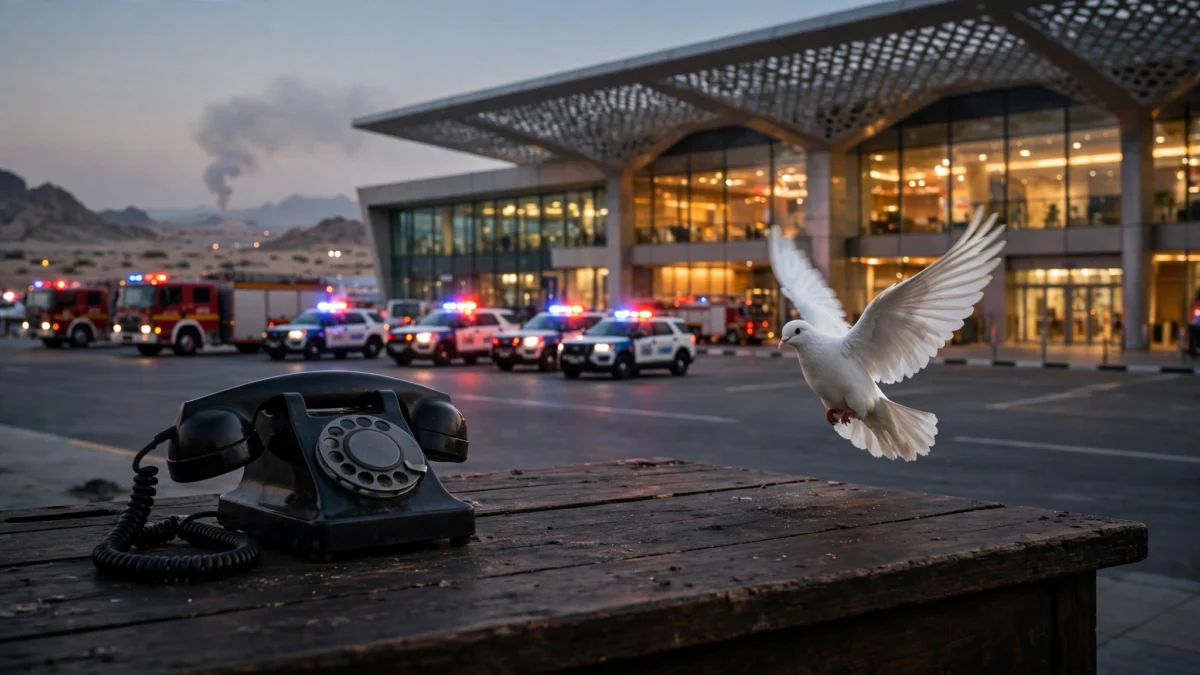
The phone call
Iranian Foreign Minister Abbas Araghchi told his Saudi counterpart, Prince Faisal bin Farhan, in a telephone call on Sunday night that Tehran is ready to help start talks between Saudi Arabia and Yemen’s Houthi rebels, according to Iran’s official account of the conversation. The call, first reported by The New York Times on October 12, was the first publicly reported direct contact between the two foreign ministers since violence across the region sharply escalated earlier this month.
Saudi state media confirmed that Prince Faisal received the call and said the two ministers discussed the recent escalation after Houthi attacks on Saudi airports. The Saudi account did not say how Prince Faisal responded to the offer, and in its own shorter summary Riyadh said only that the ministers had addressed the recent escalation in the region and the efforts being made in that regard, according to reporting on the Saudi statement.
According to Iran’s foreign ministry, Araghchi warned during the call that insisting on a military approach while ignoring political solutions would make the situation even more complicated, and said the region’s crises could not be resolved by force. In a statement posted on his Telegram channel, Araghchi said Iran was ready to provide any assistance to help talks begin between the two sides. Iran’s state news agency IRNA described it as Tehran’s first publicly reported outreach to Riyadh since the current crisis erupted.
“Good offices”: Tehran makes its pitch publicly
The mediation offer did not stay confined to a diplomatic readout. At his regular weekly briefing in Tehran on Monday, Iranian Foreign Ministry spokesman Esmaeil Baghaei said his country was “deeply concerned” about the attack on the airport in the Saudi capital and repeated that Tehran was prepared to use its good offices to facilitate dialogue between the parties, according to accounts of the briefing carried by regional media.
Baghaei said Tehran had stated on multiple occasions that it was ready to make every effort to facilitate dialogue between the parties and to offer its good offices. He argued that continued escalation would only benefit Israel, saying that Tehran did not want hostilities and war to continue between two Islamic countries.
Baghaei also expressed regret that the dispute had not been settled earlier through negotiations, pointing to a road map that Saudi Arabia and Yemen had previously agreed. He said a road map had been agreed between the two sides at the time, and that Iran had supported its full implementation, but that it ultimately did not come to fruition, according to the same accounts.
The framing is notable. Saudi Arabia accuses Tehran of arming and supporting the Houthis, the Iran-aligned movement that has been striking Saudi airports and oil facilities. Iran denies providing military assistance to the group while acknowledging political alignment. Tehran is now offering to mediate a conflict in which Riyadh considers it a principal backer of the other side.
A week of attacks that brought the region to the brink
The diplomatic opening comes after a week of Houthi attacks that have inflicted the deadliest violence on Saudi soil in more than a decade. On Saturday, October 10, a missile struck a departure terminal at King Khalid International Airport in Riyadh. Saudi Arabia’s General Authority of Civil Aviation said 12 people were killed and 309 were injured; the Indian embassy in Riyadh later said an Indian national had died on Sunday, raising the toll to 13. The Saudi-led coalition said its air defences intercepted a cruise missile near the airport the same day.
On Sunday, a second strike hit terminals at the same airport, killing one person, a Pakistani resident, and injuring 11 others, according to the civil aviation authority. The authority also said the Houthis had targeted King Fahd International Airport in Dammam, in the kingdom’s Eastern Province, on Sunday evening, with damage assessments under way. Houthi military spokesman Yahya al-Saree claimed responsibility for Saturday’s strike and claimed the group had also hit Dammam and two Aramco facilities; Saudi Arabia and Aramco have not confirmed those claims.
The attacks have emptied the skies over the Saudi capital. Riyadh’s international airport was ordered to remain shut until October 17, and some airlines have extended flight suspensions further into the year. The US Federal Aviation Administration advised American airlines to exercise caution when flying into or over parts of Saudi Arabia, and Britain’s Foreign Office advised against travel to Jeddah, Dammam and all Saudi airports other than Medina. On Monday, the Saudi-led coalition said it had intercepted another Houthi ballistic missile headed toward Khamis Mushait in southwestern Saudi Arabia, after sirens sounded over nearby Abha. The Houthis also renewed their warning for airlines, airport workers and travellers to avoid Saudi airports.
Running low on interceptors
The mediation offer arrived as signs mounted that Saudi Arabia’s air defences are under severe strain. The Wall Street Journal reported that the kingdom is running low on interceptor missiles, forcing it to reposition missile batteries to protect critical energy infrastructure and royal palaces, according to The Media Line’s account of the Journal’s reporting. The shortage is constraining Saudi Arabia’s ability to defend its territory against continued drone and cruise missile attacks by the Houthis, the report said.
The kingdom has also intensified its own strikes against the group. Yemeni television said Saudi-led forces hit targets in al-Jawf province on Monday, and Houthi-run media claimed a Saudi strike had hit Sanaa’s airport on Sunday, though Riyadh has not commented on that claim.
Washington, meanwhile, is weighing its own intervention. President Donald Trump said after the first Riyadh strike that he would reconsider the US role in Yemen and weigh a resumption of strikes, reversing last month’s rejections; the United States has already sent military and intelligence operatives to assist with targeting. Turkey and Pakistan are expected to send troops to support Saudi Arabia under a defence pact signed earlier this year, and Syria has sent drone operators to Aden, according to earlier reporting. The United Arab Emirates’ presidential adviser Anwar Gargash called on Monday for Gulf states to strengthen their security and defence partnership, saying the attack on Saudi Arabia threatened security across the region.
A fragile channel: the 2023 deal and March warning
The phone call itself underscores how much has changed since Iran and Saudi Arabia restored diplomatic relations under a 2023 agreement brokered by China, ending a seven-year diplomatic rupture. Since that deal, embassies have stayed open and direct contact between the ministers has been routine. But relations have worsened since the US-Israel war on Iran began in late February, with Tehran and its aligned forces striking US military assets and energy infrastructure across the Gulf.
As recently as March, Prince Faisal warned Iran that Saudi tolerance of attacks on the kingdom and its Gulf neighbours was limited and urged Tehran to recalculate its strategy. Against that backdrop, Iran’s offer to play peacemaker — delivered at a moment when Saudi batteries are running down and Saudi airports are burning — is as much a signal as a proposal.
Analysis: Why It Matters
This is a story about a paradox and a pressure point, and the paradox is the headline. Tehran is offering to mediate between two parties in a war in which Riyadh believes Tehran is one of the combatants. That sounds absurd until you consider that it may also be the only channel with direct access to both sides. Saudi Arabia will never formally accept Iran as a neutral broker — no mediator can be one party’s accused arms supplier — but the call itself does something important: it keeps a line of communication open between Riyadh and Tehran at the exact moment the region’s escalation ladder is missing rungs. In crises, the existence of the line often matters more than what travels over it.
The pressure point is the one the Journal exposed: interceptors. Air defence is not an abstraction; it is a magazine, and magazines run empty. Saudi Arabia’s need to ration its most expensive defensive resource — moving batteries to cover palaces and refineries while airports take hits — tells you more about Riyadh’s strategic position than any statement. A country running low on interceptors has every incentive to want the shooting to stop, or at least to pause, and Tehran knows it. The mediation offer lands, deliberately or not, at the moment Riyadh is most exposed. Whether Saudi Arabia reads it as a genuine opening or as an adversary pocketing leverage will determine whether the offer goes anywhere.
There is also the American variable. Trump is weighing direct US intervention against the Houthis and possibly Iran, while simultaneously managing the politics of foreign entanglements ahead of the November midterm elections. A credible diplomatic track — even one Riyadh won’t formally endorse — gives Washington a reason to delay the “very quickly” decision Trump has promised. Conversely, if the strikes continue, the offer will be remembered as the olive branch extended just before the hammer fell. Watch how the White House talks about it: silence suggests the offer is being banked as cover for patience; dismissal suggests patience is exhausted.
Finally, there is the road map Baghaei mentioned. It is the ghost of the Saudi-Houthi de-escalation track that was taking shape before this year’s regional conflagration swallowed it — the one that once promised a permanent ceasefire in Yemen and a Saudi exit from the war it entered in 2015. Its revival, in any form, would require the Houthis to stop striking Saudi airports first. The real test of Tehran’s sincerity is not what Araghchi told Faisal on the phone; it is whether Houthi missiles stop arriving over Riyadh in the days after. If they do, the call was a channel. If they don’t, it was theatre — and the interceptor count, not the diplomacy, will decide what happens next.
What to Watch Next
- Riyadh’s formal response: Whether the Saudi foreign ministry acknowledges the mediation offer publicly — or buries it with silence — will reveal whether any private track exists beneath the public freeze.
- The Houthi tempo: Any pause in attacks on Saudi airports would be the first de facto signal that Tehran’s outreach is being taken seriously in Sanaa.
- Trump’s decision: The promised US verdict on intervention, and the planned Trump call with Crown Prince Mohammed bin Salman, could override every diplomatic track in the region overnight.
- The air campaign: The pace of Saudi-led strikes on Yemen — and whether Sanaa airport or other Houthi infrastructure is hit again — will show whether Riyadh is escalating while talking.
- The road map’s return: Whether the previously agreed Saudi-Yemen de-escalation road map re-enters public discussion, or stays buried, will signal how far either side is willing to go.
Sources
- Seoul Economic Daily (via The New York Times): Iran Offers to Mediate Between Houthis and Saudi Arabia
- The Insight International (via Reuters): Iran’s foreign minister offers to help start Saudi talks with the Houthis
- The Media Line (via The Wall Street Journal): Saudi Arabia Running Low on Interceptor Missiles; Iran Offers To Mediate Houthi Conflict
- TBS News (via Reuters): Saudi Arabia faces new missile and drone fire after major attacks on airports
- AnewZ: Iran offers to mediate Saudi-Houthi tensions

About the Author — Abdul Mannan
Related Articles
Houthi Campaign Widens to Dammam as Riyadh Death Toll Rises to 13, Trump Weighs US Strikes
King Fahd International Airport in Dammam came under attack on Sunday evening as the Houthi campaign spread 400…
Riyadh Airport Hit Again: Second Strike in Two Days Sets Terminal 4 Ablaze as Air Defences Intercept Cruise Missile Nearby
A projectile struck Terminal 4 at Riyadh's King Khalid International Airport on Sunday, a day after a missile…
Saudi-Led Coalition Calls Riyadh Airport Strike a “War Crime” and Vows “Firm” Response as 627 Flights Are Cancelled
The Saudi-led coalition has branded Saturday's deadly missile strike on Riyadh's international airport a war crime and promised…